Affiliate Disclosure: This post contains affiliate links. If you buy through them, we may earn a small commission at no extra cost to you.
Your German Shepherd is ready for another walk. The sun is blazing, the sidewalk feels hot, and your dog is still looking at you with those excited eyes. You grab the leash, but there’s one question in your mind: Is it actually safe to take your dog outside in this weather?
Winter brings a different challenge. Your GSD happily runs through the snow, but you wonder whether that thick coat is really enough to keep them warm.
Here’s the deal. German Shepherds are naturally equipped for changing weather, thanks to their thick double coat. But that doesn’t make them immune to extreme heat or freezing temperatures.
A sunny afternoon, humid summer evening, or windy winter morning can affect your dog more than you might expect. Even an enthusiastic German Shepherd that never wants to come inside can struggle when the weather becomes uncomfortable.
That’s why understanding German Shepherd temperature tolerance matters.
In this guide, we’ll explain the ideal temperature range to aim for, how your dog’s coat handles different weather conditions, and what you can do to keep them comfortable during summer and winter. You’ll also learn when to adjust outdoor activities and which everyday accessories can make seasonal care easier.
Let’s start with the temperatures.
What is the Ideal Temperature Range for a German Shepherd?
German Shepherds generally handle cool and mild weather well, but they don’t have one fixed temperature range that works for every dog.
A healthy, active adult GSD with a well-maintained double coat may enjoy a chilly morning walk, while another German Shepherd might prefer staying indoors when the wind picks up.
Age, coat condition, humidity, sunlight, wind, activity level, and how well your dog is accustomed to the local climate all make a difference.
For a general starting point, around 70°F is considered moderate weather for dogs, but that doesn’t mean every German Shepherd will feel comfortable at that temperature. As conditions become hotter or colder, pay closer attention to your dog’s behavior.
German Shepherd Temperature Tolerance at a Glance
The following table offers practical planning guidance for everyday outdoor activities. These are not guaranteed safe or unsafe temperature limits.
| Outdoor Temperature | What it means for your GSD | What you should do |
|---|---|---|
| 50–70°F | Often comfortable for healthy, acclimated adult dogs | Enjoy regular walks while watching your dog’s behavior |
| 70–80°F | Warm conditions that may become uncomfortable with direct sunlight or humidity | Choose shaded routes, carry water, and adjust exercise |
| 85°F and above | Increased concern about heat exposure, especially during physical activity | Avoid strenuous exercise and consider indoor activities |
| Near freezing (32°F) | Cold exposure deserves closer attention, particularly with wind or wet fur | Keep an eye on comfort and shorten outdoor outings when needed |
| Below freezing | Prolonged exposure can become uncomfortable and increase cold-weather risks | Provide dry shelter, supervise outdoor time, and consider extra protection |
Remember: These temperatures are general reference points, not a breed-specific safety chart. A humid 78°F afternoon can feel more challenging than a dry morning at the same temperature. Similarly, a windy, wet 35°F day may be harder for your dog than a calm, dry day.
Why the Same Temperature Can Feel Different to Two German Shepherds
Imagine two German Shepherds living in different parts of the United States.
One lives in Texas and spends most of the summer indoors with air conditioning. The other lives in Colorado and regularly enjoys cool outdoor weather. Even though they’re the same breed, their bodies may be accustomed to different conditions.
That’s acclimation at work.
Here are some other factors that influence temperature comfort:
- Age: Puppies and senior dogs may need closer supervision than healthy adult dogs.
- Coat condition: A healthy, well-maintained double coat offers insulation, while a neglected or damaged coat may not provide the same protection.
- Body condition: A dog’s overall condition can affect how comfortably they handle temperature changes.
- Humidity: Hot, humid weather can make cooling more difficult.
- Wind and wetness: Cold wind and damp fur can make winter outings uncomfortable much faster.
- Activity level: Running and playing generate more body heat than a relaxed walk.
Expert Tip: Don’t judge your German Shepherd’s comfort by looking at another dog at the park. Your neighbor’s GSD might happily chase a ball in chilly weather while yours keeps lifting its paws and heading toward the car. Watch your own dog’s behavior and adjust accordingly.
The Cornell University College of Veterinary Medicine’s summer weather safety guide recommends adjusting outdoor activities, providing shade and water, and avoiding strenuous exercise during hot and humid conditions.
Cornell also explains in its winter safety guide that a dog’s cold tolerance depends on factors such as age, coat thickness, size, and acclimation.
What Weather Conditions Should You Pay Attention To?
Temperature is only one part of the picture. Before heading out for a walk, consider the following:
| Weather factor | Why it matters |
|---|---|
| Direct sunlight | Can make outdoor activities feel much hotter than shaded conditions |
| High humidity | Makes it harder for dogs to release excess body heat through panting |
| Hot pavement | Can become much hotter than the surrounding air and make walking uncomfortable |
| Strong wind | Can increase cold exposure, especially in open areas |
| Rain and wet fur | Can make your dog lose warmth more quickly in cold weather |
| Sudden temperature changes | Give your dog less time to adjust to unfamiliar conditions |
One detail many owners overlook is the difference between air temperature and pavement temperature.
According to the American Animal Hospital Association’s guide to hot pavement, sunny outdoor surfaces can become dramatically hotter than the air, sometimes by 40–60°F.
So, a weather app showing 80°F doesn’t necessarily mean the sidewalk is comfortable for your dog’s paws.
The bottom line: A German Shepherd’s ideal outdoor temperature depends on the dog and the conditions around them. Use temperature readings as a starting point, pay attention to your dog’s behavior, and adjust walks and outdoor activities when the weather isn’t cooperating.
How a German Shepherd’s Double Coat Handles Heat and Cold
Ever wondered how your German Shepherd can run around in the snow without seeming bothered, yet spend a warm afternoon searching for the coolest spot on your kitchen floor?
The secret is their double coat.
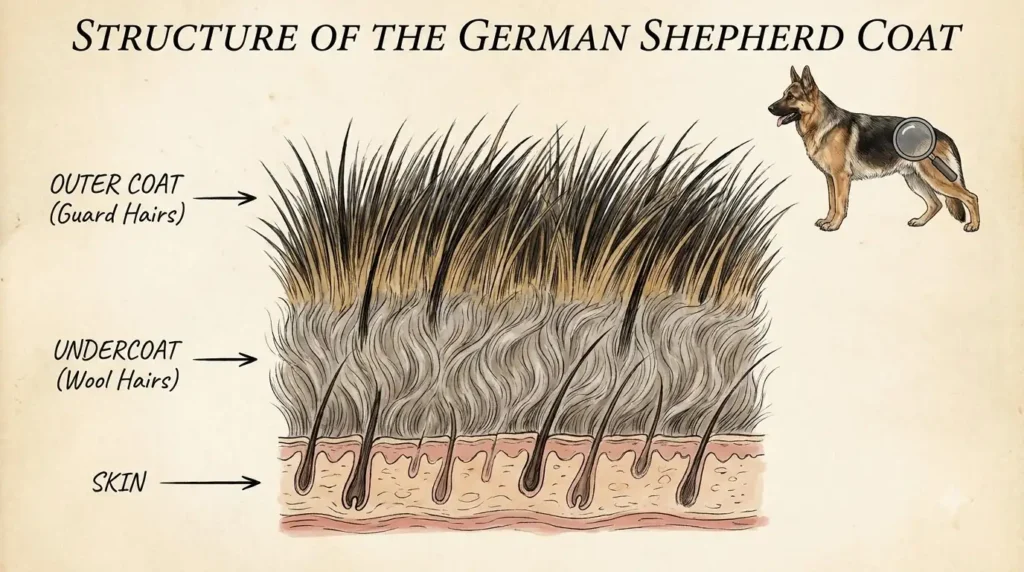
Unlike dogs with a single layer of fur, German Shepherds have two distinct layers that work together to protect their bodies from changing weather conditions.
The Double Coat Insulation Mechanism
A German Shepherd’s coat has two main layers:
- Outer coat (guard hairs): These longer, coarser hairs help protect the skin from dirt, moisture, sunlight, and other environmental elements.
- Undercoat: This softer, denser layer sits closer to the skin and traps air, providing insulation against temperature changes.
Think of the undercoat as a built-in insulating layer. It helps retain warmth in cold weather and provides some protection against outside heat during warmer months.
According to the American Kennel Club’s explanation of double-coated dogs, German Shepherds are among the breeds with this protective coat structure.
But there’s a catch. A double coat doesn’t make your dog heatproof or coldproof.
Dogs primarily cool themselves through panting, so even a thick-coated German Shepherd can struggle during hot, humid weather.
Understanding Seasonal Undercoat Shedding
Have you ever brushed your German Shepherd and ended up with enough loose fur to make another dog?
Welcome to seasonal shedding!
German Shepherds often experience heavy seasonal shedding, commonly called blowing coat. During these periods, they release large amounts of loose undercoat as their coat adjusts to seasonal changes.
Regular brushing helps remove loose hair, prevent tangles, and keep the coat in better condition.
A few grooming habits worth following:
- Brush regularly, increasing frequency during heavy shedding periods.
- Use a suitable undercoat rake or grooming brush designed for double-coated dogs.
- Pay attention to areas where loose fur collects, such as behind the ears and around the hindquarters.
- Avoid pulling aggressively through tangled hair.
You may also hear owners compare working-line and show-line German Shepherds. Their coats can vary in length, texture, and density, but those labels alone don’t tell you exactly how much insulation an individual dog has.
The German Shepherd Dog Club of America’s breed standard describes the ideal coat as a dense double coat of medium length.
Expert Tip: Don’t shave your German Shepherd just because summer arrives or the shedding becomes overwhelming. Their coat provides insulation and skin protection. Regular brushing is generally a better choice for routine seasonal grooming.
German Shepherd Heat Tolerance Guide: How to Keep Your Dog Cool
Summer can be challenging for German Shepherd owners, especially when their dogs have endless energy.
Your GSD might bring you a ball at 2 p.m., stare at you until you agree to play, and completely ignore the fact that the backyard feels like an oven.
Cute? Absolutely.
A good idea? Not always.
German Shepherds can enjoy warm weather, but owners need to adjust their daily routines when temperatures rise.
Here’s how to help your dog stay comfortable.
Adjust Walks and Outdoor Play to the Weather
The easiest way to reduce summer discomfort is to change your walking schedule.
Instead of taking your German Shepherd for a long afternoon walk, try an early-morning outing or a relaxed walk later in the evening when outdoor conditions are cooler.
Pay attention to more than the temperature on your weather app. Humidity, direct sunlight, and the amount of physical activity can all affect your dog’s comfort.
Try these simple adjustments:
- Choose shaded walking routes whenever possible.
- Avoid intense running and ball-chasing during hot afternoons.
- Take breaks instead of expecting your dog to maintain the same pace.
- Carry fresh drinking water during outdoor activities.
- Replace long outdoor play sessions with indoor training and scent games when necessary.
According to Cornell University’s summer heat safety guide, early-morning and evening activities can help dogs avoid the hottest parts of the day.
Check the Pavement Before Every Summer Walk
Here’s something many dog owners overlook.
The air might feel comfortable, but asphalt and concrete can become much hotter under direct sunlight.
Imagine walking barefoot across a sunny parking lot. Not pleasant, right?
Your German Shepherd’s paw pads are tougher than human skin, but that doesn’t mean they’re immune to hot surfaces.
Before heading out:
- Find a section of pavement exposed to the sun.
- Place the back of your hand against it for about 10 seconds.
- If you cannot comfortably keep your hand there, choose a different walking surface or skip the walk.
This is a rough screening method, not a guarantee that the pavement is safe.
Grass and shaded paths can be more comfortable alternatives, but check those surfaces too.
Create a Cool Resting Spot at Home
After a walk, your German Shepherd needs somewhere comfortable to relax.
You might notice your dog repeatedly moving from the couch to the kitchen tiles, stretching out on the floor, or avoiding their usual fluffy bed.
That’s a good reason to rethink their summer resting setup.
A shaded, ventilated indoor area with fresh drinking water gives your dog a comfortable place to settle.
Two accessories can also make that resting spot more practical.
1. Best Cooling Mat for German Shepherds
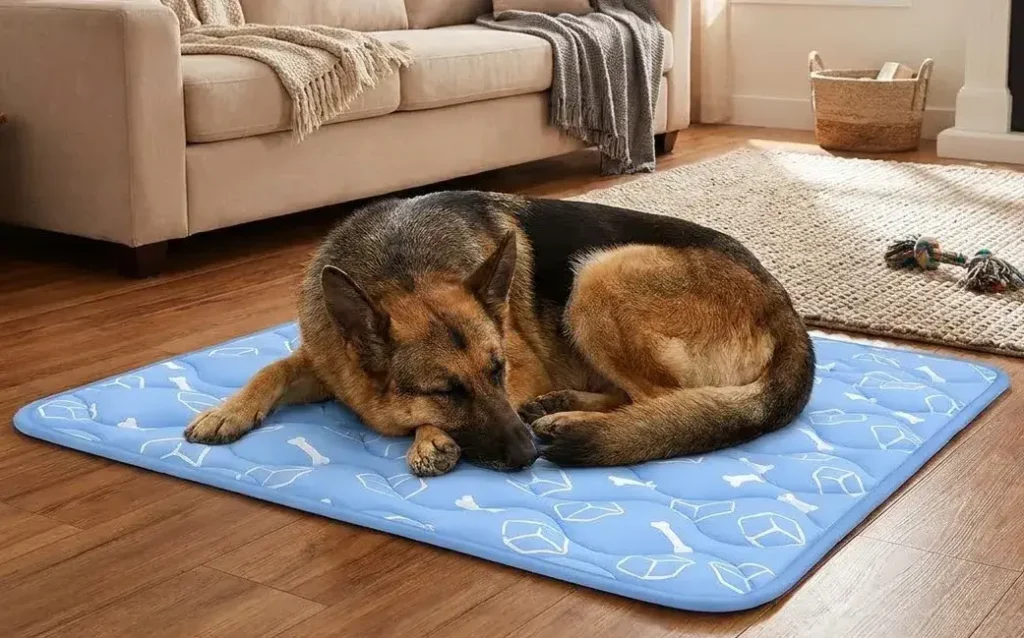
If your GSD keeps abandoning their regular bed in favor of the cold kitchen floor, a cooling mat may be worth considering.
A properly sized cooling mat provides an alternative resting surface without requiring your dog to lie directly on hard flooring.
When comparing the best cooling mat for German Shepherds, look for:
- Enough space for your dog to stretch out comfortably.
- A durable surface that is easy to wipe clean.
- Materials suitable for regular pet use.
- Clear care and safety instructions from the manufacturer.
Some cooling mats use pressure-activated materials, while others rely on water or other cooling designs. Check how each type works and whether it suits your dog’s habits.
One warning: If your German Shepherd enjoys chewing anything that resembles a toy, supervise their first few uses and inspect the mat for damage.
2. Best Elevated Dog Bed for German Shepherds in Summer
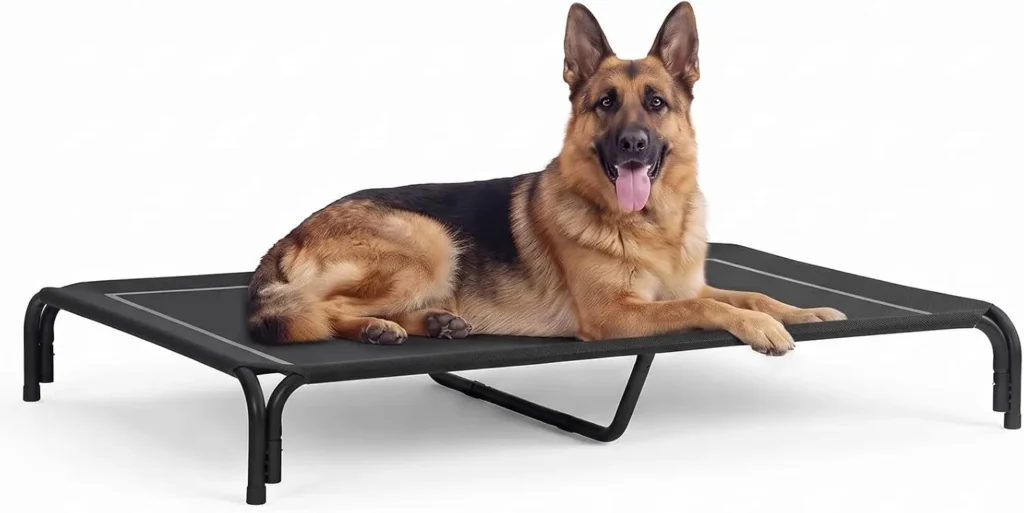
Some dogs prefer sleeping on a raised surface rather than directly on the floor.
An elevated dog bed can be useful here. Its raised design allows air to circulate underneath, which may create a more comfortable resting surface in a warm room or shaded outdoor area.
When choosing the best elevated dog bed for German Shepherds in summer, focus on:
- A frame that supports your dog’s size and weight.
- A stable design that doesn’t wobble when your dog climbs on.
- Breathable sleeping material.
- Enough surface area for your GSD to lie down naturally.
- Easy-to-clean fabric, especially after muddy backyard adventures.
Remember, an elevated bed isn’t an air conditioner. Place it away from direct sunlight and use it in a comfortably cool, well-ventilated space.
Cooling Mat vs. Elevated Dog Bed: Which One Should You Choose?
Both can make a summer resting area more comfortable, but they solve slightly different problems.
| Comparison | Cooling mat | Elevated dog bed |
|---|---|---|
| Main benefit | Offers a cooler-feeling resting surface | Allows airflow underneath the sleeping surface |
| Best for | Dogs that enjoy lying on cool surfaces | Dogs that prefer sleeping off the floor |
| Portability | Usually easy to move | Depends on the frame design |
| Space required | Usually compact | Needs more floor space |
| Cleaning | Often wipe-clean | Depends on removable or washable fabric |
| Limitation | Some dogs chew or ignore it | Does not actively cool the surrounding air |
Which should you pick?
Choose a cooling mat if your German Shepherd constantly searches for cool flooring. Consider an elevated bed if your dog prefers a raised sleeping surface and you want better airflow underneath.
You don’t necessarily need both.
Start with the problem your dog actually has, rather than filling your shopping cart with every summer accessory you find.
Expert Tip: Give your German Shepherd the freedom to choose where they rest. A cooling mat or elevated bed should be an additional comfortable option, not a replacement for shade, fresh water, or a cool indoor environment during extreme heat.
If your dog starts showing signs of heat-related distress, stop outdoor activity and move them into a cooler area. Heavy panting, excessive drooling, weakness, or confusion should never be brushed off as ordinary summer tiredness. Seek veterinary help promptly.
The goal isn’t to keep your German Shepherd indoors all summer. It’s to recognize when the weather calls for a shorter walk, a quieter afternoon, or an indoor play session instead.
How to Walk a German Shepherd Safely in Hot Weather
German Shepherds love their walks. Even on warm days, your dog might be waiting beside the front door with a leash in their mouth.
But summer walks need a little planning. A long afternoon walk that feels normal in spring may become uncomfortable when temperatures and humidity climb.
The goal is to keep your dog active without pushing them through uncomfortable conditions.
A Simple Summer Walking Checklist
Before taking your German Shepherd outside, run through these quick checks:
- Check the weather: Look at temperature, humidity, and direct sunlight before choosing a walking time.
- Pick a cooler hour: Early mornings and later evenings are usually better options during hot weather.
- Choose shaded routes: Parks with trees and grassy walking paths can be more comfortable than exposed sidewalks.
- Carry drinking water: Don’t assume your dog will find a clean water source during the walk.
- Take breaks: Let your dog slow down, rest, and drink whenever needed.
- Watch their behavior: Excessive panting, unusual drooling, weakness, or reluctance to continue means it’s time to stop the activity and move somewhere cooler.
If the weather is too hot, skip the outdoor workout. A few indoor scent games or short training sessions can keep your German Shepherd mentally occupied without making them run around in the heat.
Choose the Right Portable Water Bowl for Outdoor Walks
Imagine taking your German Shepherd to a dog park on a warm Saturday morning. Your dog has been sniffing around, playing with other dogs, and exploring every corner.
You reach for your water bottle, but there’s nowhere convenient for your dog to drink.
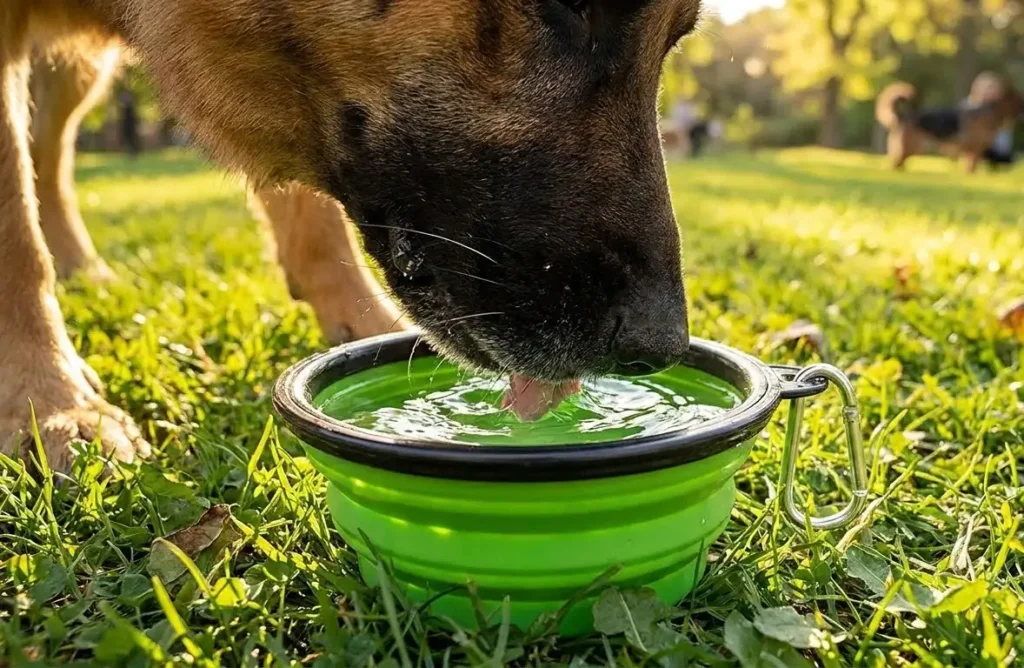
This is where a best portable water bowl for German Shepherds in hot weather becomes a practical addition to your walking kit.
A collapsible travel bowl gives you a convenient place to offer water without carrying a bulky regular dog bowl. Look for a wide opening, a stable base, food-safe materials, and easy cleaning.
Since German Shepherds are large dogs, check the bowl’s actual capacity. A tiny travel dish that works for a Chihuahua may not be particularly useful for your GSD.
Is a Portable Dog Water Bottle Better for Hiking?
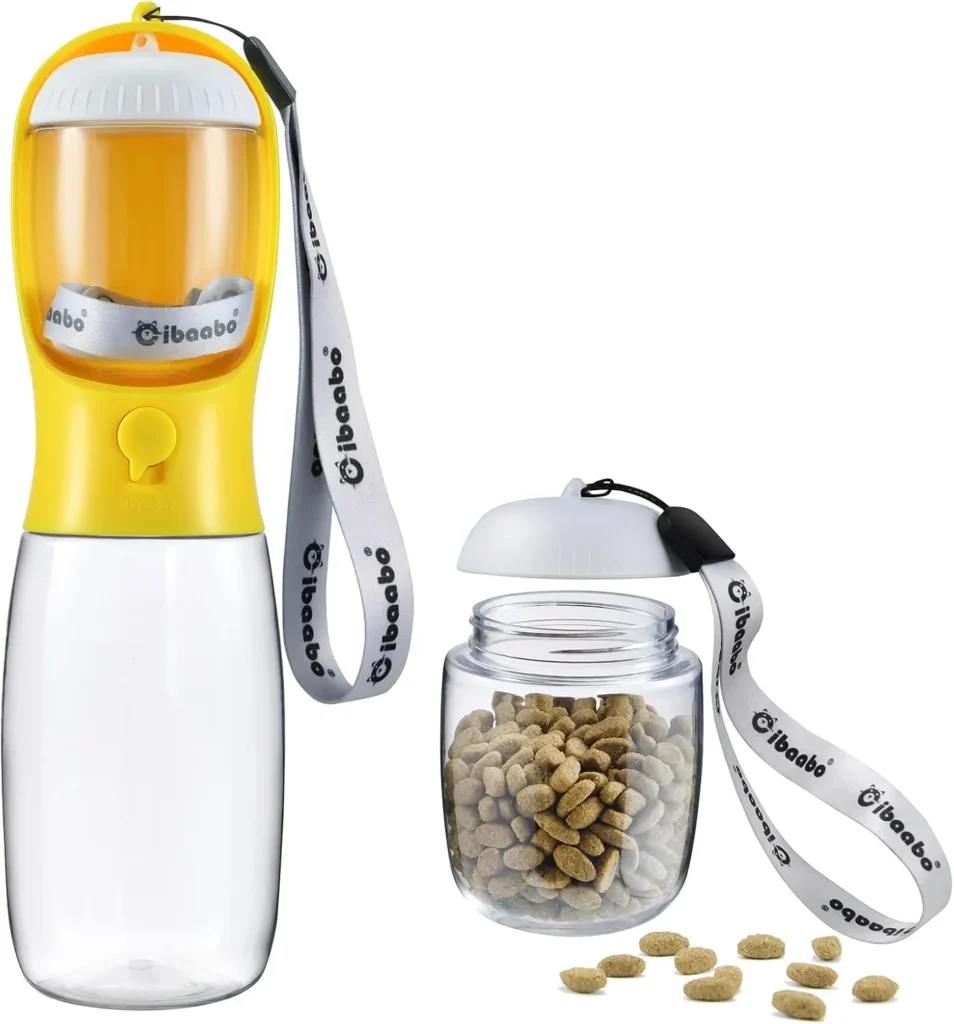
For hiking trails, road trips, and longer outdoor adventures, carrying a separate collapsible bowl can sometimes feel inconvenient.
A portable dog water bottle with bowl for hiking combines water storage and a drinking area in one travel-friendly design.
Instead of searching through your backpack for a bowl, you can release water into the attached drinking tray when your dog needs a break.
Look for:
- A water-resistant, leak-resistant design.
- Enough capacity for your planned outing.
- A bowl opening wide enough for a German Shepherd.
- A locking mechanism to prevent accidental leaks.
- Easy cleaning and refilling.
Keep in mind that a portable bottle doesn’t create an unlimited water supply. Plan refill stops, carry sufficient water, and adjust the length of your trip to the weather.
Expert Tip: Keep a dedicated travel water bottle and collapsible bowl near your dog’s leash, rather than packing them at the last minute. It makes spontaneous park trips much easier.
German Shepherd Cold Weather Tolerance: How Cold Is Too Cold?
Now let’s talk about the weather German Shepherds often seem to enjoy.
Snow!
Many GSDs love running through fresh snow, investigating frozen grass, and sticking their noses into snowdrifts. Their double coat gives them an advantage over many short-coated breeds when temperatures drop.
Still, a thick coat doesn’t make your dog immune to freezing conditions.
Even a German Shepherd can become too cold when outdoor exposure lasts too long or conditions become harsh.
Wind, wet fur, sudden temperature changes, and individual tolerance all affect how comfortably your dog handles winter weather.
How German Shepherds Handle Snow, Frost, and Freezing Temperatures
Healthy adult German Shepherds that are accustomed to cold climates can often enjoy outdoor activities in chilly weather.
However, there’s a difference between playing in the snow for a supervised outing and spending several hours outside in freezing conditions.
Pay attention to these situations:
- Dry, calm winter weather: Your dog may comfortably enjoy a short walk or supervised play session, depending on individual tolerance.
- Snowy and windy conditions: Wind and snow accumulation can make outdoor activities less comfortable.
- Wet and freezing weather: Damp fur combined with cold air can make it harder for your dog to stay warm.
- Extreme cold: Keep outdoor exposure limited and prioritize a warm indoor resting area.
A German Shepherd that recently moved from Florida to Minnesota may also need time to adjust to the colder climate.
Don’t assume your dog will immediately handle the same winter conditions as a GSD that has lived in a cold region for years.
The Cornell University College of Veterinary Medicine’s winter safety guide explains that cold tolerance depends on factors such as coat thickness, age, size, and acclimation.
How to Tell If Your German Shepherd Is Too Cold
Your dog won’t walk up and tell you that their paws are freezing.
But their body language can give you useful clues.
Watch for these behaviors:
- Shivering: Your dog starts trembling even though they’re wearing their natural winter coat.
- Lifting paws: They repeatedly pick their feet off the ground, possibly because the surface is uncomfortable.
- Hunched posture: Their body looks tense, and their tail may stay tucked.
- Slowing down: Your usually energetic dog suddenly loses interest in walking.
- Trying to go home: They repeatedly turn toward the house or car instead of exploring.
Don’t force your German Shepherd to continue the walk just because you think the breed should enjoy cold weather.
Bring them inside or into a warm, dry area if they show signs of discomfort.
Prolonged exposure to extreme cold can cause serious problems, including frostbite and hypothermia. Suspected cases need prompt veterinary attention.
Protect Your German Shepherd’s Paws From Snow and Ice
Here’s a winter problem that doesn’t always get enough attention.
Snow can collect between your dog’s toes and around their dewclaws, forming uncomfortable ice balls. Road salt and chemical de-icers can also irritate their paw pads.
After snowy walks, check:
- Between each toe for packed snow.
- Around the dewclaws for ice buildup.
- Paw pads for cracks or visible irritation.
- Legs and belly for accumulated snow and road salt.
Gently remove packed snow and rinse or wipe away any salt or de-icing residue. Dry the paws before your dog settles onto their favorite blanket.
Expert Tip: Don’t wait until you get home to check for ice buildup. During longer snowy walks, pause occasionally and inspect your dog’s paws. A little attention can prevent a small annoyance from turning into a miserable walk.
Winter Gear That Helps German Shepherds Stay Comfortable
Does your German Shepherd really need winter clothing?
Not always.
Healthy adult German Shepherds with healthy double coats may be comfortable during many ordinary winter outings without wearing a jacket.
However, some conditions call for extra protection. Freezing wind, wet snow, prolonged outdoor activities, or an individual dog that struggles with cold weather can make winter accessories useful.
The trick is choosing gear that solves an actual problem.
When Does a German Shepherd Need a Winter Coat?
A winter coat may help when your dog seems uncomfortable in cold, windy weather or when snow repeatedly collects around their chest and belly.
It can also be useful for dogs that have difficulty staying warm because of their age, coat condition, or individual circumstances.
When shopping for a German Shepherd winter coat for freezing weather, don’t choose one simply because it looks warm.
Pay attention to how it fits your dog.
Look for:
- Proper chest coverage: The coat should cover the areas that need protection without restricting movement.
- Comfortable shoulder fit: Your German Shepherd should be able to walk, sit, and run naturally.
- Weather-resistant material: Useful when your dog encounters wet snow or winter rain.
- Suitable insulation: Choose the level of warmth based on the expected conditions.
- Easy cleaning: Mud, wet grass, and dirty snow can make winter clothing messy.
A badly fitting coat can rub against the skin or restrict your dog’s movement. Check the fit after putting it on.
If your dog constantly tries to remove the jacket or looks uncomfortable wearing it, don’t force them to wear it simply because it looks attractive.
Do German Shepherds Need Paw Balm in Snow and Ice?
Winter walks can be rough on paw pads.
Ice, snow, and road salt may leave your German Shepherd’s feet dry or irritated. This becomes particularly frustrating when your dog enjoys walking but starts licking their paws after returning home.
A dog paw balm for snow and ice protection can be a useful addition to your winter grooming supplies.
It creates a protective layer on the paw pads and may help reduce dryness and cracking.
When selecting one, look for:
- Ingredients specifically labeled as suitable for dogs.
- Clear application instructions.
- A formula appropriate for your dog’s paw condition.
- Easy application without leaving a messy residue.
Remember, paw balm isn’t a substitute for checking your dog’s feet or cleaning away road salt.
Some dogs may benefit more from properly fitted dog boots, particularly when regularly walking over heavily salted sidewalks or rough icy surfaces. Boots can take time to get used to, so introduce them gradually indoors.
Winter Coat vs. Dog Boots vs. Paw Balm
Not every German Shepherd needs every winter accessory.
Here’s a quick comparison:
| Winter accessory | Main purpose | Best use |
|---|---|---|
| Winter dog coat | Adds an extra layer of warmth and coverage | Cold, windy, or wet-weather outings |
| Dog boots | Covers paw pads from direct surface contact | Snow, ice, and salted sidewalks |
| Paw balm | Helps condition and protect paw pads | Dry or exposed paw pads |
| Regular paw cleaning | Removes salt, dirt, and packed snow | After winter walks |
Which should you choose?
Start with the problem.
If your German Shepherd seems uncomfortable in freezing wind, consider whether a properly fitted coat would help. If snow and road salt collect around their paws, boots or dog-safe paw balm may be more useful.
You don’t need an entire winter wardrobe for your dog.
The Cornell winter safety guide also recommends checking paws regularly, removing snow and de-icing products, and considering protective footwear when appropriate.
Can a German Shepherd Sleep Outside in Winter?
German Shepherds have a reputation for being tough outdoor dogs.
They have a strong build, a thick double coat, and plenty of energy. So, it’s understandable that some owners wonder whether their GSD can sleep outside during winter.
Here’s the thing.
A thick coat does not automatically make outdoor sleeping safe.
A dog that enjoys a 20-minute snow walk isn’t necessarily comfortable spending an entire night in freezing weather.
For most family German Shepherds, sleeping indoors is the better option, especially during freezing, wet, windy, or rapidly changing weather.
What Makes an Outdoor Dog Shelter More Suitable?
Some owners have large yards or properties where their dogs spend time outdoors during the day.
In these situations, a properly designed outdoor shelter can provide a protected resting space. However, it should never be treated as a replacement for bringing your dog indoors during severe conditions.
An insulated outdoor dog house for German Shepherd may help provide additional protection when your dog uses an outdoor resting area.
Before choosing one, consider these features:
1. Appropriate interior size
Your German Shepherd should have enough room to stand, turn around, and lie down comfortably. A shelter that’s too small restricts movement, while an excessively large space may be harder to keep comfortable.
2. Insulated construction
Insulated walls and flooring can help reduce exposure to outside temperatures.
3. Protection from wind and rain
Look for a weather-resistant design that prevents rain and strong winds from entering the resting area.
4. Raised flooring
A raised floor can help separate the sleeping area from cold or wet ground.
5. Suitable ventilation
The shelter needs appropriate airflow without leaving your dog exposed to strong drafts.
6. Dry bedding
Keep the resting area clean and dry. Damp bedding can make an already cold environment less comfortable.
Is an Outdoor Dog House Enough During Freezing Weather?
No.
Even a well-insulated dog house cannot guarantee that your German Shepherd will remain comfortable in severe cold.
The Cornell University winter safety guide explains that dogs kept primarily outdoors need prior acclimation, an insulated enclosure protected from wind, dry bedding raised off the ground, and access to fresh, unfrozen water.
It also emphasizes that keeping dogs indoors is preferable when temperatures become too cold.
Don’t forget the water bowl. During freezing weather, outdoor water can turn into ice, leaving your dog without access to drinking water.
Expert Tip: Think of an insulated dog house as a supplementary outdoor shelter, not a place where your family German Shepherd should automatically spend winter nights. Bring your dog inside when conditions are severe, and provide a comfortable, dry sleeping space away from cold drafts.
For most pet owners, a warm indoor bed, regular exercise, and supervised outdoor snow adventures make a much better winter routine.
German Shepherd Puppies and Temperature Tolerance
A German Shepherd puppy may look like a tiny, fluffy version of an adult GSD, but don’t expect them to handle the same weather conditions.
Puppies are still developing, and their ability to regulate body temperature is less reliable than that of healthy adult dogs.
That means extra supervision during both summer and winter.
German Shepherd Puppy Cold Weather Limits
Young German Shepherd puppies need shorter, supervised outdoor breaks in cold weather.
Avoid leaving them outside for extended periods, particularly during freezing temperatures, strong winds, or wet conditions.
Watch for signs such as:
- Shivering or trembling.
- Repeatedly lifting their paws.
- Whining or trying to return indoors.
- Becoming unusually quiet or reluctant to move.
- Seeking warm places instead of continuing to explore.
Keep puppy bedding dry and comfortable, and provide a warm indoor resting area.
During summer, avoid long walks and energetic outdoor play when temperatures rise. Short outdoor breaks and indoor games are often better choices.
The Cornell College of Veterinary Medicine’s winter guidance specifically identifies puppies as more vulnerable to cold because they have limited body fat and cannot regulate their temperature as effectively as adults.
Expert Tip: Don’t use your adult German Shepherd’s weather tolerance as a guide for your puppy. A puppy that happily explores the backyard one minute may need to head indoors sooner than you expect.
Give them time to grow, adjust gradually to outdoor conditions, and make comfortable indoor rest part of their daily routine.
What to Avoid When Managing German Shepherd Temperature Tolerance
German Shepherd owners often make weather-related mistakes with good intentions. You want your dog to stay comfortable, but some common shortcuts can actually make things harder.
Here are three mistakes worth avoiding.
Mistake 1: Shaving Your German Shepherd to Keep Them Cool
This is one of the biggest misconceptions about double-coated dogs.
Shaving your German Shepherd might seem like an easy way to help them survive summer. After all, less fur sounds like less heat, right?
Not quite.
Their double coat provides insulation and helps protect the skin from sunlight and other environmental elements. Removing it can interfere with these protective functions and may affect how the coat grows back.
Instead, maintain a regular brushing routine and remove loose undercoat with an appropriate grooming tool.
The American Kennel Club’s guide to shaving dogs in summer explains why shaving double-coated breeds is generally discouraged.
Mistake 2: Assuming Snow Means Your German Shepherd Is Warm Enough
Your GSD might happily run through fresh snow, roll around in the backyard, and act like winter is the best thing ever.
That doesn’t mean they can stay outside indefinitely.
Snow can collect between their toes, while freezing wind and wet fur can make outdoor conditions uncomfortable.
Don’t ignore shivering, repeated paw lifting, or attempts to return indoors.
Check their paws after snowy walks, remove packed ice, and provide a dry indoor resting space.
Mistake 3: Trusting the Thermometer Without Checking the Environment
Your weather app says 78°F. Sounds manageable.
But what about the hot asphalt, direct sunlight, and humidity?
A comfortable air temperature doesn’t guarantee comfortable walking conditions.
According to the American Animal Hospital Association’s hot pavement guide, sunny outdoor surfaces can become 40–60°F hotter than the surrounding air.
Always consider the actual walking surface, not just the number on your phone.
Expert Tip: Before changing your German Shepherd’s grooming routine or buying seasonal accessories, identify the actual problem. A dog searching for cool flooring may benefit from a different resting setup, while a dog uncomfortable on icy sidewalks may need better paw protection. Small, appropriate adjustments often make more sense than changing everything at once.
Your German Shepherd Temperature Safety Checklist
Weather conditions can change quickly. Having a simple checklist makes it easier to prepare before taking your dog outside.
Save this section for your next summer walk or winter adventure!
Before Going Outside
Summer checklist:
- Check the temperature and humidity.
- Avoid strenuous activity during the hottest hours.
- Look for shaded walking routes.
- Check pavement and other walking surfaces.
- Carry enough fresh drinking water.
- Make sure your dog has access to a cool indoor resting area.
Winter checklist:
- Check the temperature and wind conditions.
- Avoid prolonged exposure to freezing weather.
- Check whether your dog’s coat is dry.
- Consider a suitable winter coat when extra protection is needed.
- Check paws for snow and ice buildup.
- Make sure a warm, dry indoor resting space is available.
After Every Walk
Give your German Shepherd a quick once-over before settling back into your daily routine.
- Offer fresh drinking water.
- Check for unusual panting or signs of discomfort.
- Inspect paws for cuts, ice, salt, or debris.
- Wipe away road salt and de-icing residue.
- Dry wet fur and paws after snowy walks.
- Allow your dog to rest in a comfortable environment.
One more thing: Never leave your German Shepherd unattended inside a parked vehicle during hot weather. Even a shaded parking spot or partially open window does not make a parked car a safe resting place.
The AVMA’s warm-weather pet safety guide provides additional recommendations for outdoor activities, shade, water, and recognizing heat stress.
Conclusion: Keep Your German Shepherd Comfortable in Every Season
German Shepherds are well-equipped for changing weather, but their double coat doesn’t make them immune to extreme temperatures.
Pay attention to humidity, wind, sunlight, pavement conditions, and your dog’s behavior. Adjust walking schedules, provide comfortable resting spaces, and use seasonal accessories when they solve a genuine problem.
A happy German Shepherd doesn’t need perfect weather. They need an owner who knows when to grab the leash and when to call it an indoor play day!
Frequently Asked Questions About German Shepherd Temperature Tolerance
Still have questions about your GSD’s weather tolerance? Here are quick answers to some common questions from German Shepherd owners.
What temperature is too hot for a German Shepherd to walk?
There isn’t one temperature that’s safe for every German Shepherd. Once temperatures climb into the 80s°F, especially with high humidity or direct sunlight, avoid strenuous walks. Hot pavement can also make walking uncomfortable at lower air temperatures.
Can a German Shepherd live in a cold climate?
Yes. German Shepherds generally adapt well to cold climates because of their double coat. They still need appropriate shelter, dry bedding, fresh water, and protection from prolonged exposure to freezing temperatures and strong winds.
Does shaving a German Shepherd keep them cool?
No, shaving is generally not recommended for German Shepherds. Their double coat provides insulation and helps protect their skin. Regular brushing to remove loose undercoat is a better approach to routine summer grooming.
How do you know if your German Shepherd is too cold outside?
Watch for shivering, repeated paw lifting, a hunched posture, whining, or reluctance to continue walking. Bring your dog into a warm, dry area when these signs appear rather than waiting for a specific temperature.