You know that look. It’s 7 PM, it’s raining cats and dogs outside (pun intended), and your dog is zooming around the living room like a furry little rocket who just chugged three espressos. 🚀
Yeah. We’ve all been there.
Whether you’re stuck in a tiny apartment in Chicago, dealing with a Texas thunderstorm, or just too exhausted after work to brave the cold, your dog doesn’t care. That energy? It needs somewhere to go.
Here’s the thing most people don’t realize: dogs need mental stimulation just as much as physical exercise. Skip both, and suddenly your favorite sneakers are a chew toy.
The good news? You don’t need a backyard, fancy gadgets, or even a single toy to wear your pup out.
These 15 indoor dog games are simple, fast, and surprisingly effective, even in small spaces. Most take under 15 minutes and use nothing but your time and a handful of treats (optional, but they help).
Why Dogs Need Indoor Exercise
So, why can’t dogs just chill when they can’t go outside?
Simple answer: they weren’t built to.
Dogs are naturally active animals. Even your laziest Basset Hound has instincts wired for movement, sniffing, and exploring. When those instincts don’t get an outlet, things go sideways fast.
We’re talking chewed furniture, nonstop barking, digging at the carpet, or just that manic, bouncing-off-the-walls energy that drives you nuts at 9 PM.
According to the American Kennel Club, lack of physical and mental stimulation is one of the top reasons dogs develop behavioral problems at home. That’s not a small thing.
And here’s what’s interesting: mental stimulation can tire a dog out just as fast as a walk. Sometimes faster. A 10-minute brain game can leave your dog more satisfied than a 20-minute stroll around the block.
Think of it like this: solving a puzzle is exhausting. Same goes for your dog.
Indoor play also matters when:
- Weather is bad (hello, winter in Minnesota 🥶)
- You have a packed schedule and can’t make it to the park
- Your dog is recovering from something and needs low-impact activity
- Safety is a concern, especially in busy urban neighborhoods
When we visited dog parks in Austin, we noticed owners constantly mentioning that their high-energy dogs were calmer on days when they’d played indoor games before heading out. Less reactive, more focused. That tracks.
Bottom line: indoor activities for high-energy dogs aren’t just a rainy-day backup plan. They’re a real, valuable part of keeping your dog happy, balanced, and out of trouble.
Quick Tips Before You Start Indoor Games
Before you dive in, a few things to set you up for success.
You don’t need much prep, but a little goes a long way. Trust me, you don’t want to learn the hard way that your dog’s excited tail can clear an entire coffee table in one sweep. 😄
Here’s what to do before you start:
1. Clear the space. Move fragile stuff, push furniture to the sides, and make sure there’s nothing your dog can slip on. A small rug on hardwood floors? Perfect. A puddle near the kitchen? Not so much.
2. Grab some treats (optional but helpful). Small, soft treats work best for indoor games. They’re quick to eat and keep the momentum going. If your dog is food-motivated, this is your secret weapon.
3. Keep sessions short. Aim for 10 to 15 minute bursts, not hour-long marathons. Short, focused play is actually more effective at burning energy than one long dragged-out session.
4. Match the game to your dog. A giant Labrador needs different games than a tiny Chihuahua. High-energy breeds like Border Collies or Australian Shepherds? Go for fast-moving, brain-heavy games. Older or calmer dogs? Stick to gentler options.
5. Put your phone down. Seriously. Your dog notices when you’re distracted, and these games work best when you’re fully present. Ten focused minutes beats thirty half-hearted ones every time.
Alright, now the fun part. Let’s get into the games! 🐾
15 Indoor Dog Games to Burn Energy Fast
Ready to actually tire that pup out? Here we go.
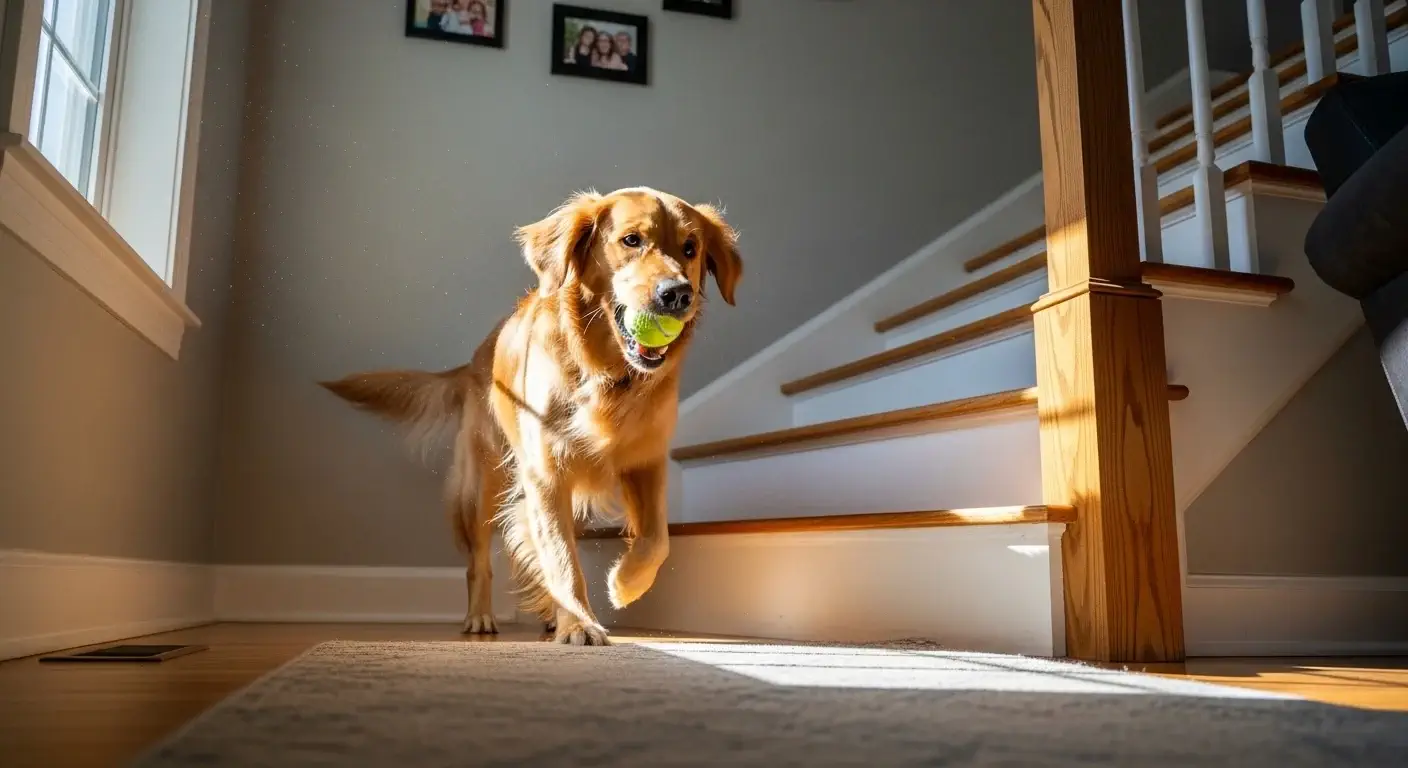
Game 1: Staircase Fetch
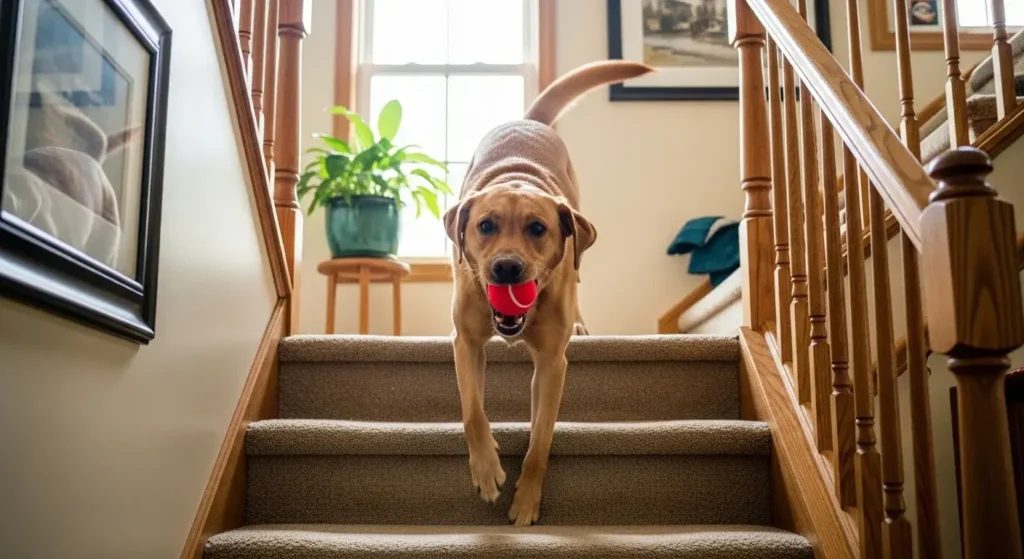
Got stairs? You’ve got a cardio machine.
Toss a toy or rolled-up sock to the top of the stairs and let your dog sprint up to grab it. Then call them back down. Repeat.
Going up stairs engages your dog’s muscles way harder than flat-ground running. Even five minutes of this and you’ll see that wild energy start to fade. It’s one of the fastest games to tire out a dog indoors, period.
Just make sure the stairs aren’t slippery. A yoga mat or grip tape on each step works great.
Game 2: Hide and Seek
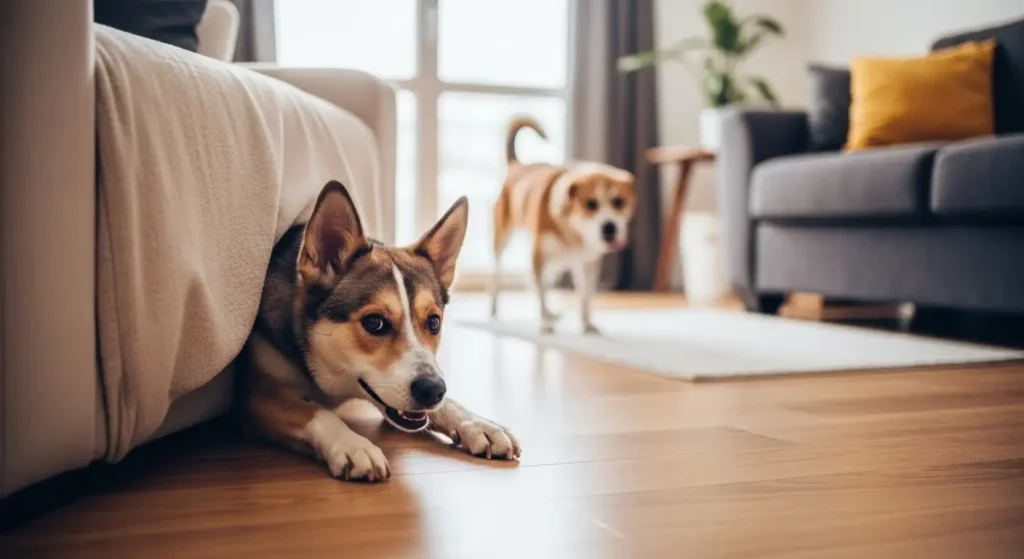
This one’s a classic for a reason.
Have your dog sit and stay (or ask someone to hold them), then go hide somewhere in the house. Call their name once and wait.
The sniffing, searching, and problem-solving involved makes this a killer mental stimulation game for dogs. When they find you, go absolutely wild with praise. Make it the best moment of their day.
Bonus: it also reinforces the “come” command, which is always a win.
Game 3: The Towel Puzzle
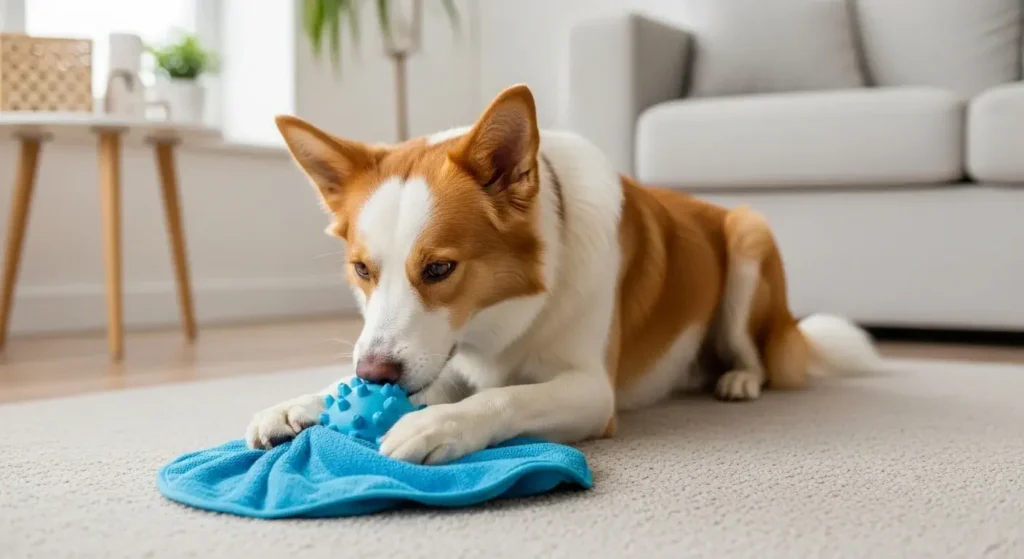
No puzzle toy? No problem.
Lay a towel flat, scatter a few small treats on it, then roll it up loosely. Hand it to your dog and watch them go to work.
This is one of the best dog enrichment activities without toys because it taps into your dog’s natural foraging instinct. They’ll sniff, paw, and unroll until every last treat is found.
It’s simple, cheap, and surprisingly tiring. Great for dogs who eat too fast too.
Game 4: Indoor Tug-of-War
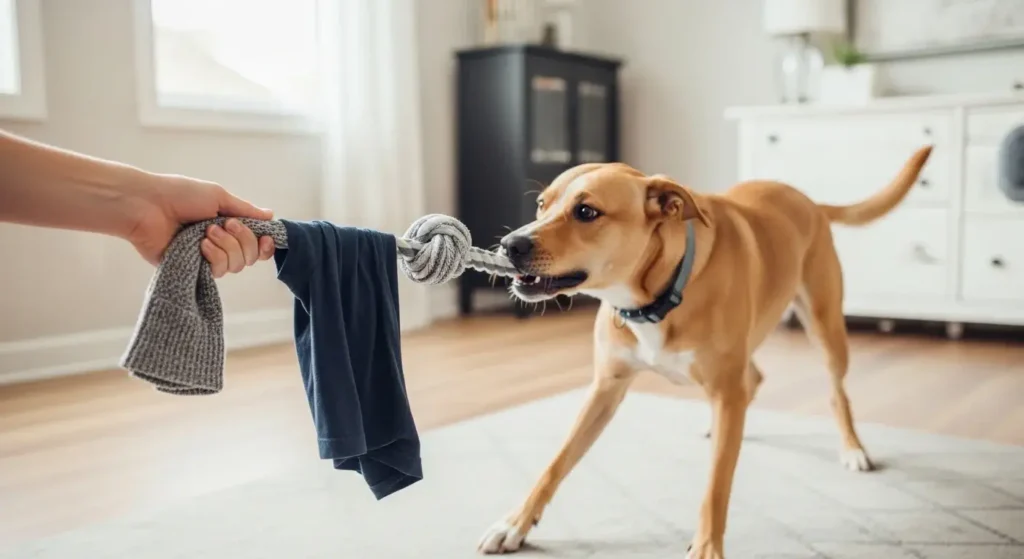
Controlled chaos. The good kind.
Grab an old t-shirt, a knotted rope, or even a thick pair of socks tied together. Get low, offer one end, and let your dog pull.
Tug-of-war is fantastic for interactive dog play indoors because it burns physical energy while also building focus and impulse control. Just set a rule: the moment your dog’s teeth touch your hand, game pauses. Keeps things safe and teaches boundaries naturally.
Pro tip: always let your dog “win” sometimes. It keeps them confident and coming back for more.
Game 5: Hallway Fetch
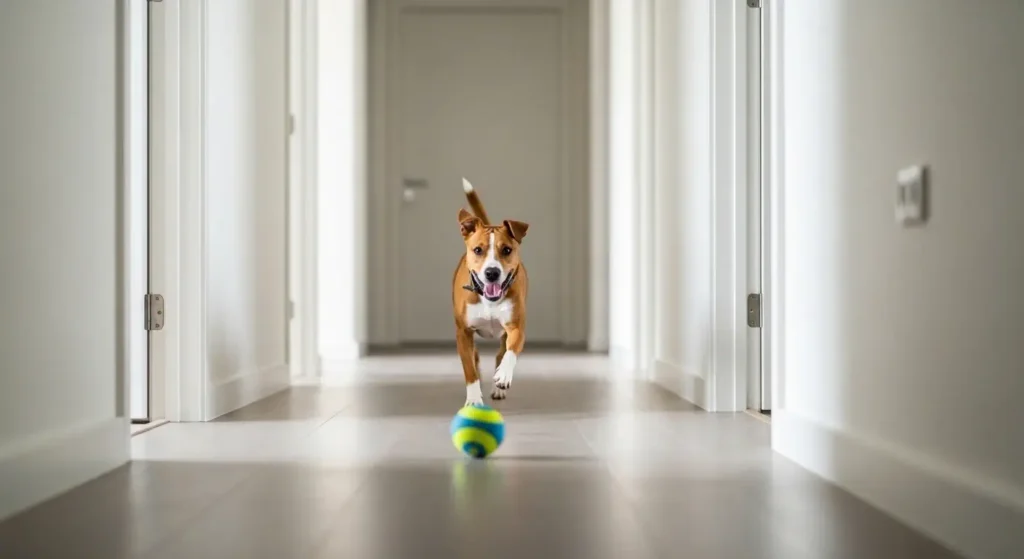
Small apartment? This one’s made for you.
You don’t need a yard for fetch. A hallway works perfectly. Roll a ball or toss a soft toy down the corridor and let your dog sprint after it.
Hallway fetch is one of the easiest indoor dog games for small spaces because the narrow layout naturally guides your dog back toward you. Less chasing the toy under the couch, more actual running.
Even 10 back-and-forth sprints will get that tail wagging and that energy dropping.
Game 6: “Find the Treat” Game
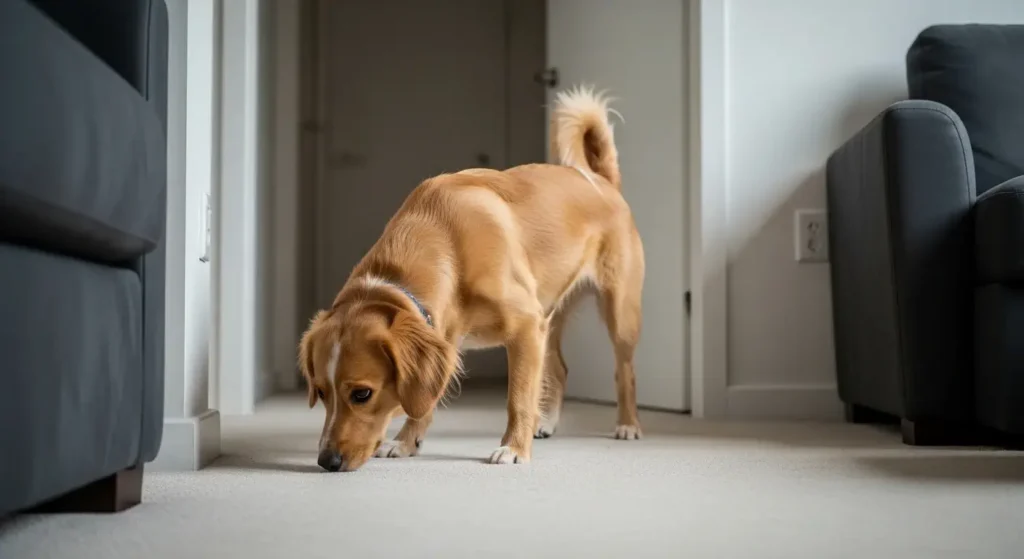
Your dog’s nose is basically a superpower. Put it to work.
Ask your dog to stay, then hide small treats around one room. Under a cushion, behind a chair leg, near the door. Then release them with a cheerful “go find it!”
This is hands down one of the best dog boredom busters at home. Sniffing alone burns serious mental energy. According to research cited by the American Kennel Club, scent work can tire dogs out faster than many physical activities.
Start easy, then gradually make the hiding spots trickier as they get better.
Game 7: DIY Obstacle Course
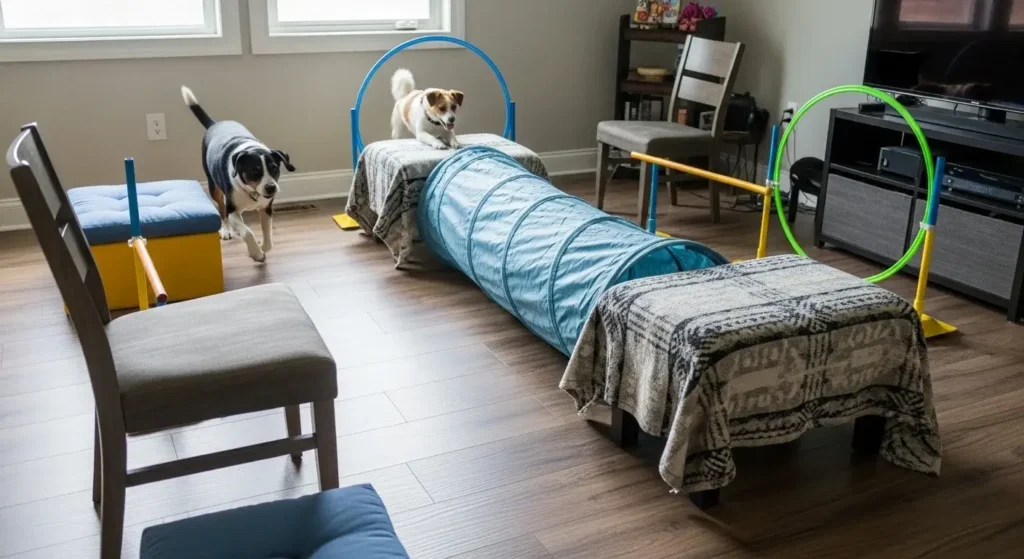
Who needs an agility ring when you have living room furniture?
Set up a mini course using what you’ve got: cushions to jump over, chairs to weave through, a blanket tunnel draped over two ottomans, a hula hoop to step through.
Guide your dog through it using treats and hand signals. This is one of the top indoor activities for high energy dogs because it combines physical movement with focus and problem-solving.
Change the layout every few days to keep it fresh and challenging.
Game 8: Follow the Leader
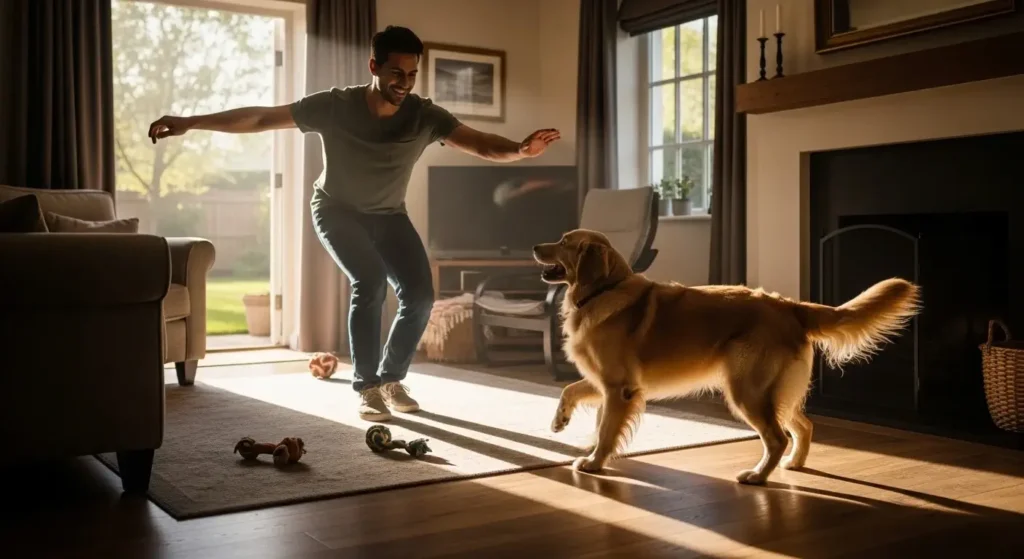
You move, they mirror. Simple and hilarious.
Walk around the room in a zigzag, hop over a pillow, spin in a circle, and encourage your dog to do the same. Use treats to lure them through each movement.
This interactive dog play idea works beautifully for bonding too. Your dog is completely focused on reading your body language, which is mentally exhausting in the best way.
It also sneakily teaches body awareness and coordination, especially useful for puppies.
Game 9: The Shell Game (Cup Game)
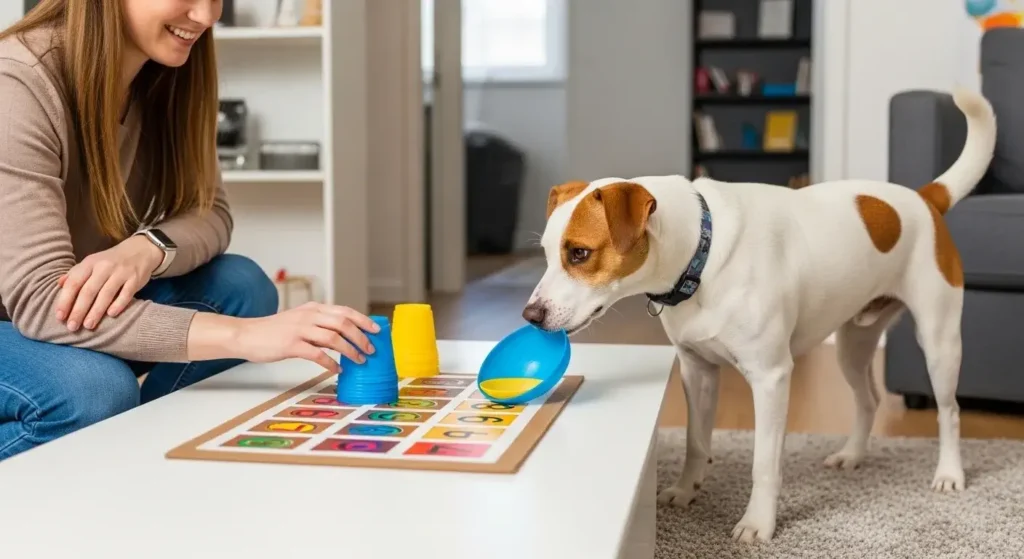
Three cups. One treat. One very focused dog.
Grab three plastic cups or bowls. Let your dog sniff a treat, place it under one cup, then slowly shuffle them around. Point to a cup and let them guess.
If they nose or paw the right one, jackpot! 🎉
This is one of the most effective mental stimulation games for dogs because it demands concentration and memory. Even short sessions leave dogs noticeably calmer. It’s basically a brain workout disguised as a game.
Game 10: Chase the Shadow or Light
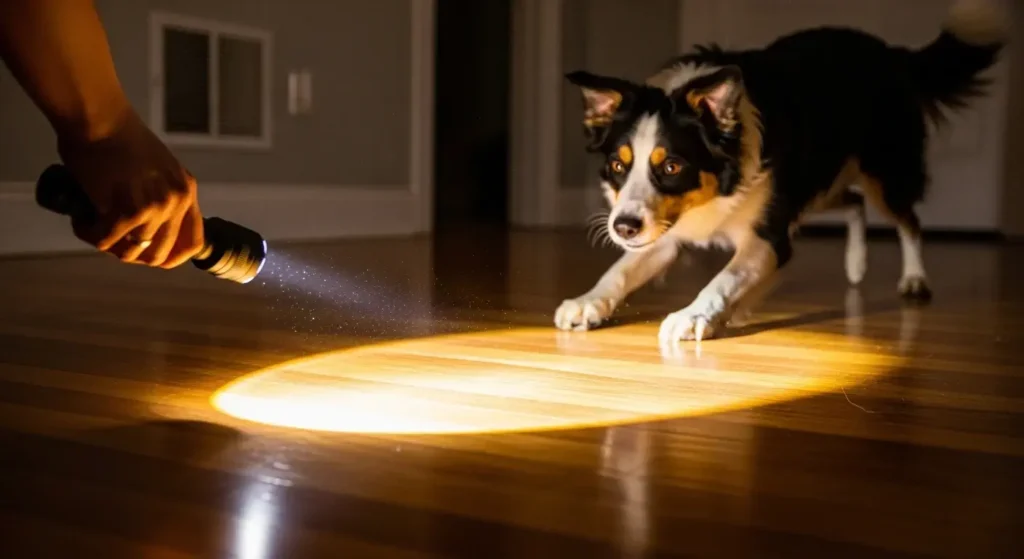
Use this one in moderation, but boy does it work.
Use a flashlight beam or let sunlight reflections bounce off a watch or phone case. Move it slowly across the wall or floor and watch your dog’s chase instinct kick in.
It’s one of the quickest ways to keep dogs active indoors with zero setup. Just keep sessions under five minutes and always end with a physical toy they can actually “catch.” This helps prevent obsessive light-chasing behavior in the long run.
Game 11: Sit-Stand-Run Drills
Think of this as interval training. For your dog.
String together a series of commands with movement bursts in between. Sit. Down. Stand. Run to the kitchen and back. Sit again. Spin. Treat.
This is a fantastic way to burn dog energy inside the house because it mixes obedience training with cardio. Your dog has to think and move at the same time, which doubles the energy drain.
Keep the pace quick and the energy high. Make it feel like a game, not a drill.
Game 12: Blanket Burrito Game
Wrap it up. Let them destroy it. Repeat.
Toss a few treats onto a blanket, then fold and loosely roll it into a burrito shape. Hand it over and let your dog figure out how to unroll it and find the goods.
Like the towel puzzle, this is a solid dog enrichment activity without toys because it engages their paws, nose, and brain all at once.
Bigger dogs will muscle through it fast. Smaller dogs might need a looser roll to start. Either way, the focus and effort involved is genuinely tiring.
Game 13: Name the Toy Game
This one sounds simple. It is anything but.
Pick up one of your dog’s toys and say its name repeatedly while playing with it. “Ball! Ball! Ball!” Do this over several sessions until your dog associates the word with the object.
Then place two toys on the floor and ask them to bring you the ball. When they get it right, celebrate like they just won the Super Bowl. 🏈
This is one of the richest mental stimulation games for dogs because it builds vocabulary, memory, and focus. Some dogs can learn dozens of toy names. It’s genuinely impressive and endlessly entertaining.
Game 14: Indoor Tag
The most chaotic game on this list. Also the most fun.
Run past your dog, tap them gently, then sprint away. Let them chase you around the couch, down the hall, through the kitchen. Then suddenly stop, let them tag you back, and reverse roles.
This is pure joy for most dogs and one of the best games to tire out a dog indoors when you want something high-energy and goofy.
Clear the space first. Move the lamps. Warn your roommates. You’ve been told. 😄
Game 15: Scatter Feeding
The calmest game on the list, and still surprisingly effective.
Instead of putting your dog’s kibble in a bowl, scatter it across a rug or the kitchen floor. Let them sniff out every single piece.
This is a brilliant way to tire out a dog indoors quickly without toys because the sniffing and searching involved is genuinely mentally draining. It also slows down fast eaters and turns mealtime into enrichment time.
Takes zero effort from you. Big payoff for your dog.
How to Calm a Hyper Dog at Home After Play
Okay, you’ve played hard. Now what?
Here’s a mistake a lot of dog owners make: they stop the game abruptly and expect their dog to instantly switch off. That rarely works.
Think of it like finishing a workout. You need a cooldown.
After a high-energy indoor session, transition gradually into calm activities. Here’s how:
1. Slow things down with gentle commands. Ask for a simple “sit” or “down.” Speak in a lower, quieter voice. Your tone signals to your dog that the excited part is over.
2. Try a licking activity. Spread a little peanut butter on a silicone mat or plate and let your dog lick away. Licking is naturally calming for dogs. It activates the parasympathetic nervous system, which basically means it tells their brain to chill out.
3. Do a quiet sniff session. Scatter a few treats in the grass (if you have a patio) or on a snuffle mat indoors. Slow, calm sniffing after play helps dogs decompress beautifully.
4. Give them a cozy spot. Direct your dog to their bed or favorite corner with a calm “go rest.” Most dogs, once the energy is burned, are happy to comply.
5. Keep your own energy calm. Dogs mirror us constantly. If you’re still hyped up and laughing loudly, they’ll stay revved up too. Take a breath, sit down, and let the calm spread naturally.
The goal is a simple rhythm: play hard, wind down slowly, rest deeply.
A dog that learns this routine becomes easier to manage every single day. And honestly? You’ll probably feel more relaxed too. It’s a two-way street. 🐾
Also, if you’re trying to understand why your dog takes so long to settle after play, it might be worth learning to understand your dog’s body language. Sometimes what looks like leftover energy is actually overstimulation or mild anxiety, two very different things that need different responses.
Mistakes to Avoid When Playing Indoor Games
Even the best intentions can backfire. Here’s what to watch out for.
Indoor play is great, but a few common slip-ups can turn fun into frustration for both you and your dog.
1. Overstimulating your dog. More isn’t always better. If your dog starts getting mouthy, jumpy, or can’t respond to basic commands, that’s a sign they’re over the edge. Stop the game, not escalate it.
2. Playing too long in one stretch. Remember those 10 to 15 minute bursts we talked about? Stick to them. Long, non-stop sessions can lead to exhaustion or injury, especially on hard floors.
3. Skipping the space check. A knocked-over lamp or a dog skidding into a glass table isn’t fun for anyone. Always do a quick sweep before you start. Seriously, move the fragile stuff.
4. Ignoring mental stimulation. A lot of owners focus only on physical games and wonder why their dog is still restless. Mental games are just as important. Mix both into every session for the best results.
5. Using inconsistent rules. If tug-of-war is okay sometimes but not others, your dog gets confused. Pick your rules and stick to them every single time. Consistency is everything.
6. Forgetting to check in with your dog. Not every dog loves every game. If your pup seems stressed, disinterested, or avoidant, switch it up. The best game is the one your dog actually enjoys.
Keep it fun, keep it safe, and you’re golden. 🐾
Final Thoughts
You really don’t need much to make your dog’s day.
No fancy agility equipment. No giant backyard. No expensive puzzle toys. Just you, a little creativity, and maybe a handful of treats.
The 15 games in this list prove that keeping your dog active and mentally sharp indoors is totally doable, even in a tiny apartment, even on the rainiest Tuesday in February.
What matters most isn’t the game itself. It’s the consistency. Two or three short sessions a day, done regularly, will transform your dog’s behavior faster than any single “perfect” activity ever could.
And here’s the thing nobody tells you: these games are good for you too. Laughing at your dog trying to figure out the cup game, or sprinting down the hallway playing indoor tag? That’s genuinely good for the soul.
A tired dog means a happy dog. A happy dog means a peaceful home. And a peaceful home? That’s priceless. 🐾
If you’re looking for more ways to keep your pup happy and healthy, check out our guides on how to keep your dog entertained while at work and how to choose the right dog trainer for your specific breed and energy level.
You’ve got this. Now go play with your dog. 🐶
Frequently Asked Questions
1. How can I tire out my dog indoors quickly?
The fastest approach is combining high-energy physical games with mental challenges. Try staircase fetch or hallway fetch for quick cardio bursts, then follow up with a find-the-treat game or the cup game to drain mental energy. Even a 10 to 15 minute combo session can leave most dogs noticeably calmer and ready to rest.
2. What are the best indoor dog games for small spaces?
Hallway fetch, hide-and-seek, scatter feeding, and treat puzzle games like the towel roll or blanket burrito all work perfectly in small apartments. You don’t need open floor space. You just need a little creativity and a willing dog.
3. Can mental games really tire out a dog?
Absolutely. Mental stimulation can be just as exhausting as physical exercise, sometimes more so. According to the American Kennel Club, scent-based activities and problem-solving games activate a dog’s brain intensely, leading to genuine tiredness. Don’t underestimate a good sniff session or puzzle game.
4. How often should I play indoor games with my dog?
Aim for 2 to 3 short sessions daily, each around 10 to 15 minutes. This works better than one long session because it mirrors a dog’s natural energy patterns throughout the day. Morning, midday, and evening bursts tend to work well for most households.
5. What if my dog gets bored easily?
Rotate your games regularly and gradually increase difficulty. A dog that’s mastered the basic cup game needs trickier hiding spots. A dog that’s aced the towel puzzle needs a tighter roll. New challenges keep things exciting and prevent boredom from setting in. You can also try introducing new training commands to keep their brain working in fresh ways.
6. Are indoor games enough exercise for dogs?
On tough days like rainy days, extreme heat, or recovery days, yes, indoor games can absolutely cover your dog’s stimulation needs. But outdoor walks are still important whenever possible. Fresh air, new smells, and varied environments offer things indoor play simply can’t fully replace. Think of indoor games as a powerful supplement, not a permanent substitute.
Found this helpful? Share it with a fellow dog parent who needs it today. Because somewhere out there, another pup is zooming around a living room at full speed, and their owner could really use these tips right now. 🐾