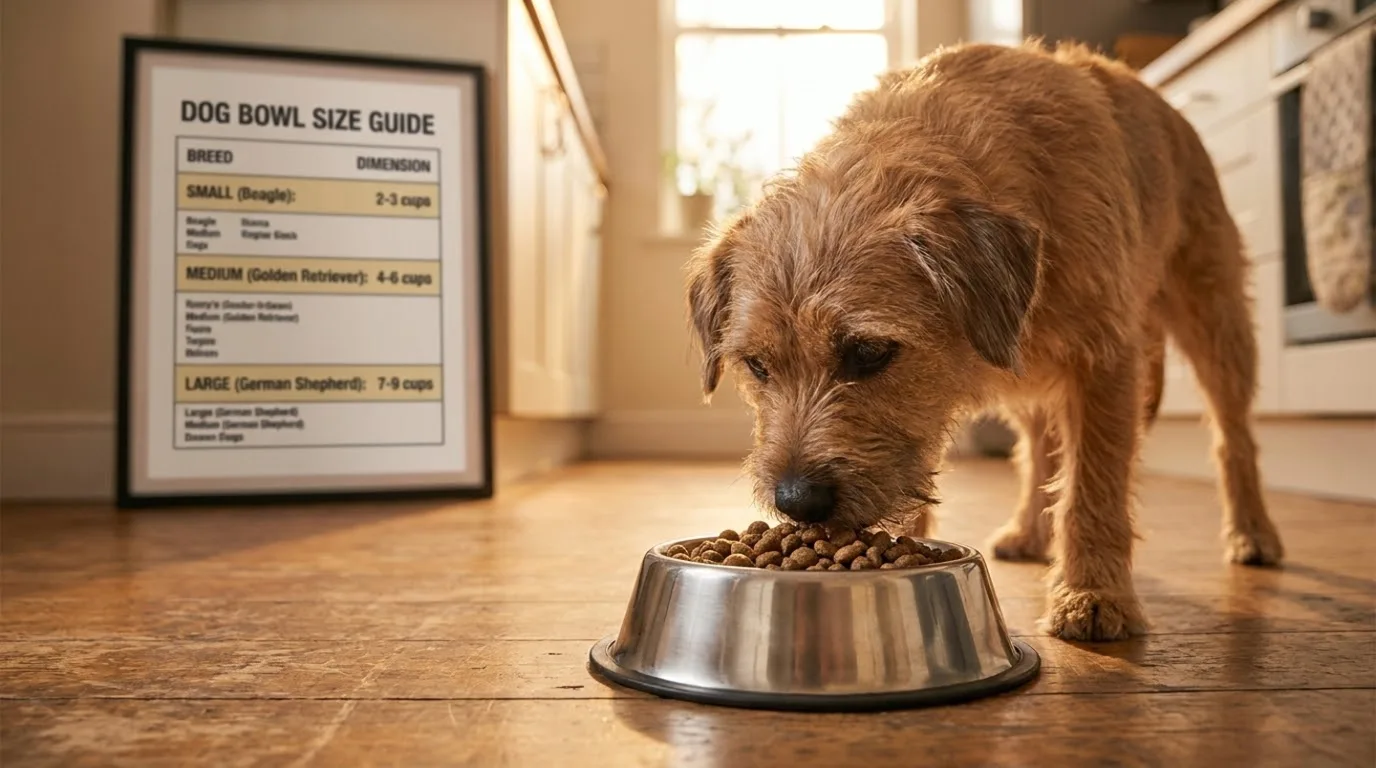
Your Chihuahua has her whole face buried in a bowl the size of a salad bowl. Or your Lab is nudging a tiny dish across the kitchen floor like a hockey puck.
Been there? You’re not alone. Bowls come labeled “small,” “medium,” and “large,” but those words mean different things on every brand.
What size dog bowl do you need? Here is the quick answer. Most small dogs do well with a 1-2 cup bowl. Medium dogs usually do best with 2-4 cups. Large dogs need about 4-8 cups.
Below, you’ll find a full dog bowl size chart by weight, plus real examples for 10, 30, and 50 lb dogs. We’ve measured and tested plenty of bowls at home, at the dog park, and on road trips. So these tips come from real kitchen floors, not guesswork.
What is the Right Dog Bowl Size Chart by Weight?
Use dog weight as your starting point. Match your pup’s weight to the capacity, diameter, and depth below. Then adjust for head shape and eating style, which we cover later.
Pet ownership is huge in the U.S. The American Pet Products Association’s industry stats show roughly two-thirds of American households own a pet. So plenty of us are standing in the pet aisle, confused by bowl labels.
The Dog Bowl Size Chart at a Glance
This dog bowl capacity chart gives you a fast answer. Find your dog’s weight and read across.
| Dog Weight | Size Category | Bowl Capacity | Approx. Diameter | Approx. Depth |
|---|---|---|---|---|
| Under 10 lb | Toy | About 1 cup | 4-5 inches | 1-1.5 inches |
| 10-25 lb | Small | 1-2 cups | 5-6 inches | 1.5-2 inches |
| 25-50 lb | Medium | 2-4 cups | 6-8 inches | 2-3 inches |
| 50-90 lb | Large | 4-8 cups | 8-10 inches | 2.5-3.5 inches |
| 90+ lb | Giant | 8+ cups | 10-12 inches | 3-4 inches |
A quick note. This chart covers bowl size, not how much to feed. For portions, follow your food bag or ask your vet.
How Do You Read the Chart?
Pick a bowl that holds two to three times one meal. That extra room keeps kibble from flying out when your dog gets excited.
Weight is just the starting line. Head shape, eating speed, and food type all change the best fit.
Here is what the size labels mean in plain terms:
- Small dog bowl size: 1-2 cups, shallow, easy to reach.
- Medium dog bowl size: 2-4 cups, wider, with a stable base.
- Large dog bowl size: 4-8 cups, heavy or non-slip, with room for a big muzzle.
Expert Tip: Treat the chart like jeans sizing. It gets you close, but you still try them on. Fill the bowl with a normal meal and watch your dog eat for a day or two.
What Do Dog Bowl Dimensions Actually Mean?
Dog bowl dimensions come down to three numbers: capacity, diameter, and depth. Know these and you can shop any brand with confidence.
How is Bowl Capacity Measured?
Capacity shows up in cups, ounces, or quarts. The math is simple: 1 cup equals 8 ounces, and 4 cups equal 1 quart.
Here is the catch. Many bowls list “max fill,” not usable space. If you fill to the brim, food spills on the first lap around the kitchen.
So size up a little. A bowl rated for 3 cups is a better pick for a 1-cup meal.
Why Do Diameter and Depth Matter?
Diameter is the width across the top. Depth is how far down the food sits.
Wide, shallow bowls work well for flat-faced dogs and small mouths. Deeper bowls suit long snouts and water.
To match diameter to your dog, measure the widest part of the muzzle. Pick a bowl at least twice that wide so your dog’s nose isn’t squished against the sides.
Does Bowl Material Change the Size You Need?
Yes, in a practical way. Material affects weight, grip, and cleaning.
| Material | Pros | Cons | Best For |
|---|---|---|---|
| Stainless steel | Durable, easy to clean, dishwasher friendly | Can slide on smooth floors | Most dogs, multi-dog homes |
| Ceramic | Heavy, stable, many colors | Can chip or crack if dropped | Medium and large dogs |
| Plastic | Cheap, light, great for travel | Scratches easily, light enough to tip | Short-term or travel use |
| Silicone (collapsible) | Packs flat, lightweight | Less stable at home | Hikes and road trips |
Heavier or non-slip bowls help bigger dogs. A pushy eater can turn a light bowl into a sliding puzzle.
How Many Cups Should a Dog Bowl Hold?
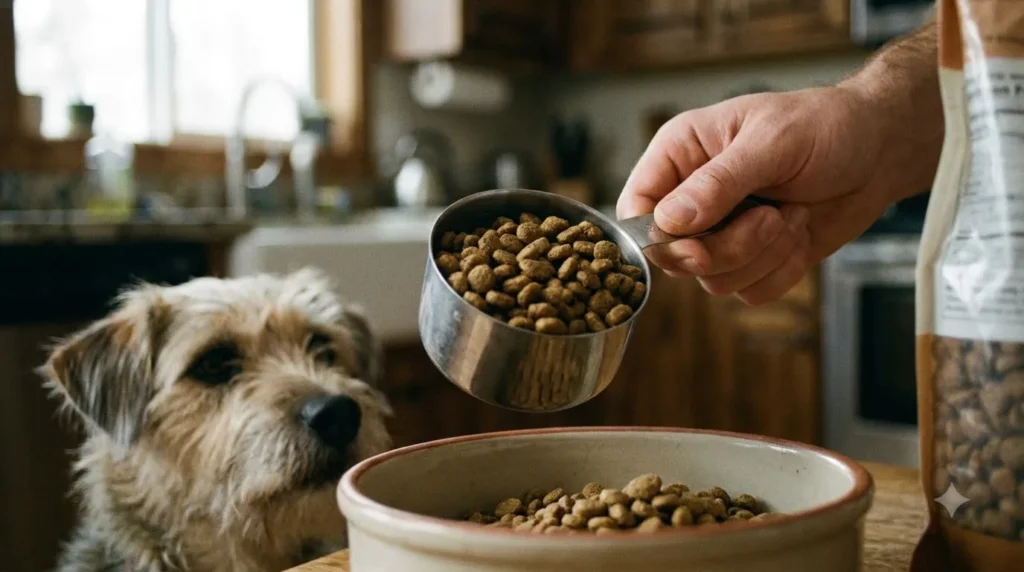
A dog bowl should hold about two to three times one meal. So a dog eating 1 cup of food needs a bowl of roughly 2-3 cups.
Bowl capacity and food portion are two different things. The bowl is the container. The portion is what goes in it.
Food type changes the math too. Big kibble takes up more space than small kibble. Wet food, toppers, and soaked kibble all need extra room.
Here is a simple capacity-to-meal guide:
| Meal Size | Suggested Bowl Capacity |
|---|---|
| 1/2 cup | 1-1.5 cups |
| 1 cup | 2-3 cups |
| 2 cups | 4-5 cups |
| 3 cups | 6-8 cups |
If you add warm water or a spoonful of wet food, bump up one size. Trust us, nobody enjoys scrubbing kibble gravy off baseboards.
What Size Dog Bowl Do You Need? Real Examples by Weight
The best way to pick is to see real dogs with real bowls. Here are three common weights, with the dog breeds you probably see at your local park.
What Size Dog Bowl for a 10 lb Dog?
Go with a 1-2 cup bowl that is shallow with a low rim. Think Yorkie, Maltese, or a small mixed breed.
Tiny dogs get frustrated fast with tall sides. A bowl about 5 inches wide and under 2 inches deep keeps meals easy.
Watch for slipping. Light bowls skate across tile when a little dog gets excited. A rubber base fixes that.
What Size Dog Bowl for a 30 lb Dog?
Choose a 2-3 cup bowl with medium depth. Think Beagle, Cocker Spaniel, or Corgi.
Many dogs this size have floppy ears that dip into the food. A slightly narrower, tapered bowl keeps ears out of the way.
A non-slip base helps too. Beagles treat dinner like an Olympic event.
What Size Dog Bowl for a 50 lb Dog?
Pick a 4-6 cup bowl that is wide and sturdy. Think Border Collie, Boxer, or Labrador mix.
At this size, stability matters most. A heavy ceramic or weighted steel bowl will stay put during enthusiastic dinners.
For water, choose a wider bowl with a higher rim. Splashing is real, and your floor will thank you.
Expert Tip: Our friend’s Lab pushed his 2-cup bowl clear across the garage every night. Switching to a heavier 5-cup bowl fixed it in one meal. If your dog chases the bowl, the problem is weight, not size.
Curious about bigger pups? Our guide to Large Dog Breeds covers the gentle giants and what they need at home.
How Do You Choose a Bowl by Head Shape and Eating Style?
Match the bowl to your dog’s face, not just their weight. Two dogs at 30 lb can need very different bowls.
This section is about comfort and convenience only. For any eating or health concerns, talk to your vet.
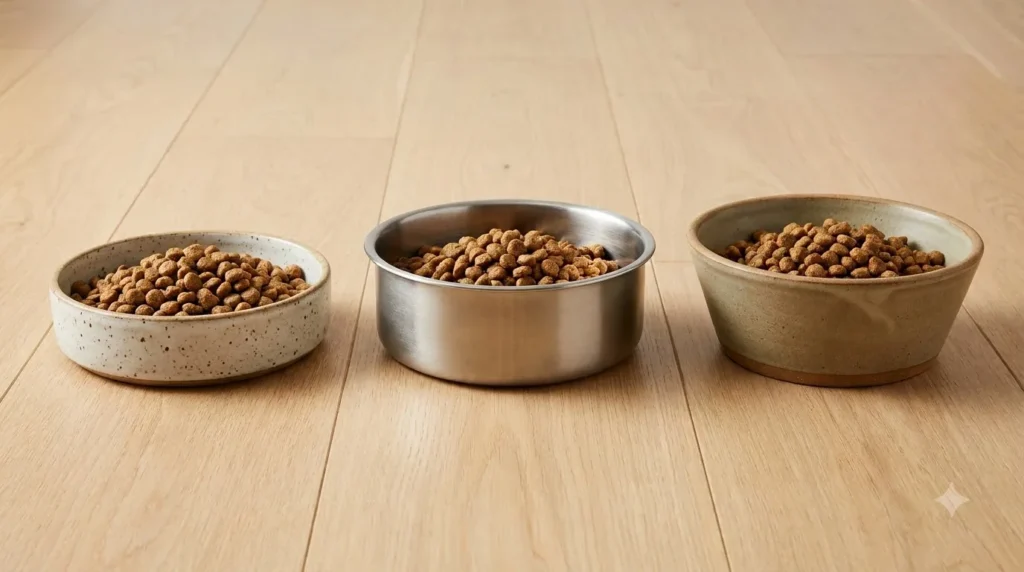
Which Bowl Works for Flat-Faced Dogs?
Pugs, Bulldogs, and Shih Tzus do best with shallow, wide bowls. Short noses reach food more easily when the sides are low.
Which Bowl Works for Long-Eared and Long-Snouted Dogs?
Basset Hounds and Collies often like narrower, deeper bowls. Tapered designs help keep long ears cleaner.
The American Kennel Club is a handy place to check typical breed traits, like muzzle length and ear type, before you shop.
What About Fast Eaters, Messy Drinkers, and Travel Dogs?
Each lifestyle needs its own tweak:
- Fast eaters: Try a slow-feeder bowl. Size up slightly, since the ridges take up room.
- Messy drinkers: Pick a no-spill water bowl with a wide base.
- Travel dogs: Use a collapsible silicone bowl. Buy one size up so it still holds a full meal when folded open.
Heading to the lake this weekend? Toss a collapsible bowl in your daily bag. It beats pouring water into your cupped hands at the trailhead.
Do Food Bowls and Water Bowls Need Different Sizes?
Yes, water bowls are usually bigger and deeper than food bowls. Dogs lap up a lot of water, especially after play.
Here is a simple way to size them:
- Indoor dogs: Water bowl holds at least 2x the food bowl.
- Outdoor dogs: Go bigger and heavier so wind and wildlife don’t tip it.
- Multi-dog homes: Use one large bowl or two medium bowls in different spots.
Keep bowls clean and filled as part of your Daily Dog Care Routine. The CDC’s Healthy Pets guidance also reminds owners to wash their hands after handling pet food and bowls.
How Do You Choose the Right Dog Bowl Size in 4 Easy Steps?
Follow these four steps and you’ll land on the right bowl. It takes about five minutes.
- Check your dog’s weight and head shape. Use the chart above and note if your dog is flat-faced, long-snouted, or floppy-eared.
- Look at the meal size and food type. Dry kibble needs less room than wet food or soaked meals.
- Pick the capacity, then size up if you’re in between. A little extra room beats spilled dinner.
- Test it for a week. Watch for spills, reach, sliding, and any awkward posture at mealtime.
Expert Tip: The Kitchen Test. Before you buy, fill any bowl you own with a normal meal. If it’s more than two-thirds full, you need a bigger one.
Pro Tips, Common Mistakes, and Myths vs. Facts
This is where most guides stop, and where the real savings start. These tips come from everyday dog ownership, from puppy phases to senior years.
What Pro Tips Do Experienced Dog Owners Swear By?
- Buy for the adult size. If you have a puppy, choose a bowl that fits full-grown size, or plan on one upgrade.
- Keep a spare bowl in a different size. It’s perfect for travel, wet food, or houseguests with dogs.
- Measure the muzzle. For mixed breeds, muzzle width tells you more than the label.
- Match colors to your space. Fun fact: bowl color can blend into your decor. Our guide to color psychology for pet accessories explains how shades affect your home’s mood.
What Common Mistakes Should You Avoid?
- Buying by label only. “Large” varies wildly by brand.
- Choosing a bowl that is too deep. Small dogs end up digging for dinner.
- Ignoring rim height. A tall rim can make eating awkward for short dogs.
- Picking a light bowl for a pushy eater. It will end up across the room.
A quick scroll through r/dogs on Reddit shows the same complaint again and again. Owners buy a bowl that looks cute, then find it tips, slides, or hides the food.
Myths vs. Facts
| Myth | Fact |
|---|---|
| Bigger is always better. | An oversized bowl can feel awkward and waste space. |
| Breed size alone decides bowl size. | Head shape and eating style matter too. |
| All “medium” bowls are the same. | Dimensions differ widely by brand. |
| One bowl works for food and water. | Water bowls usually need more room. |
Final Thoughts: What is the Best Dog Bowl Size?
The best dog bowl size fits your dog’s weight, face, and eating style. Use the dog bowl size chart as your map, then fine-tune.
Here are the three takeaways to remember:
- Start with the chart by weight.
- Match depth and diameter to your dog’s head shape.
- Leave room above the meal so nothing spills.
The right bowl won’t change your dog’s day, but it will make every mealtime a little easier. Bookmark this chart for your next shopping trip, and give your pup an extra scratch behind the ears.
Frequently Asked Questions
What size dog bowl do I need for my dog?
Match the bowl to your dog’s weight using the chart. Toy dogs need about 1 cup, small dogs 1-2 cups, medium dogs 2-4 cups, and large dogs 4-8 cups. Then adjust for head shape and eating style.
What size dog bowl for a 10 lb dog?
Choose a shallow bowl that holds 1-2 cups and is about 5 inches wide. A low rim makes it easy for small dogs to reach their food. Add a non-slip base if it slides.
What size dog bowl for a 50 lb dog?
Pick a wide, sturdy bowl that holds 4-6 cups. A heavy ceramic or weighted stainless steel bowl keeps things stable. For water, go a little bigger with a higher rim.
How many cups should a dog bowl hold?
A bowl should hold about two to three times one meal. If your dog eats 1 cup per meal, a 2-3 cup bowl works well. Wet food or toppers call for a bit more space.
Should a dog bowl be wide or deep?
It depends on the dog. Wide, shallow bowls suit flat-faced dogs and small mouths. Narrower, deeper bowls suit long snouts and floppy ears. For water, deeper is usually better.
Do puppies need a different bowl size than adult dogs?
Puppies can start with a smaller, shallow bowl. Many owners buy an adult-size bowl early so they only upgrade once. Check that the rim isn’t too tall for your puppy to reach comfortably.