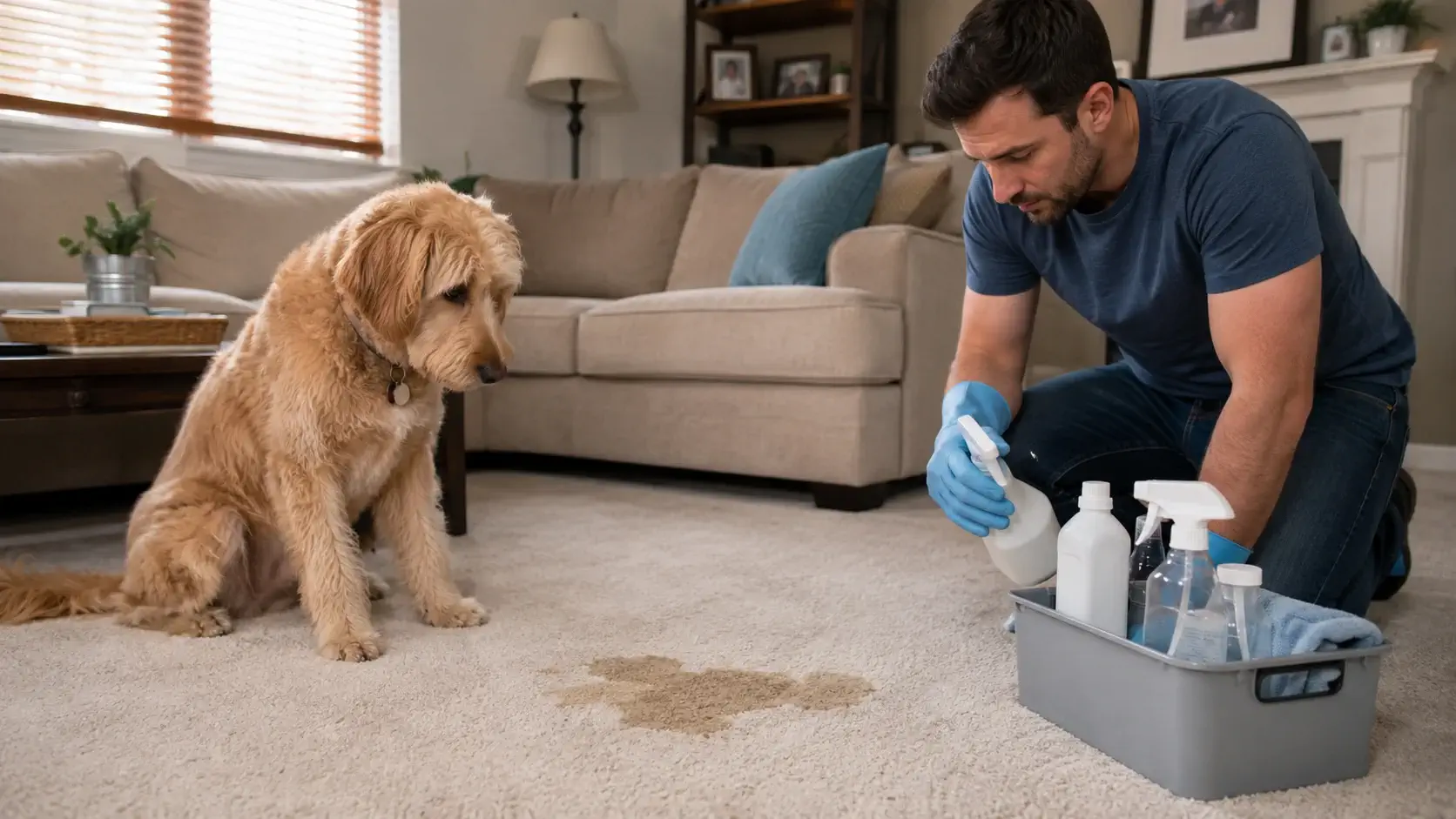
You walk into the room and spot a wet patch on the carpet. Or maybe the accident happened days ago, and now you notice that unmistakable dog-pee smell every time you enter. Either way, cleaning the visible stain is only part of the job. Dog urine can soak through carpet fibers and reach the backing or padding underneath, where moisture and odor can linger.
So, how do you clean dog pee from carpet effectively? Start by blotting up as much urine as possible, clean the affected area, use an appropriate pet urine cleaner, and let the carpet dry completely. For stubborn stains or lingering odors, deeper cleaning may be necessary.
In this guide, you’ll learn how to handle fresh accidents, dried stains, and persistent smells, including DIY cleaning methods, enzymatic cleaners, and situations where the carpet padding may also need attention.
What You’ll Need to Clean Dog Pee from Carpet
Before you start scrubbing, grab a few basics. Having everything on hand saves you from running around mid-cleanup.
Basic Cleaning Supplies
- Paper towels or absorbent cloths – for soaking up fresh urine
- Clean water – to lightly rinse the area
- Spray bottle – for even, controlled application
- Soft cloth or sponge – for gentle blotting, not scrubbing
- Vacuum cleaner – to lift moisture once the carpet is dry
- Baking soda – helps with light surface odors
- Pet-safe enzymatic cleaner – breaks down the actual source of the smell
Each item plays a specific role. Skipping the enzymatic cleaner, for instance, means you’re often just masking the odor instead of removing it.
What to Check Before Cleaning
Take a minute to assess the situation first:
- Is the accident fresh or already dried?
- How big is the affected area, really?
- Did the urine likely reach the carpet padding?
- Is the carpet still damp anywhere nearby?
This quick check helps you pick the right approach instead of guessing.
Expert Tip: Use a UV flashlight in a dark room to spot old or hidden urine stains. Dried urine often glows under UV light, even when it’s invisible in normal lighting.
How to Clean Fresh Dog Pee From Carpet
Quick answer: Blot the urine with absorbent cloths, lightly rinse the spot, apply a pet urine cleaner, then blot again and let it dry fully.
Fresh accidents are honestly the easiest to handle, if you catch them in time.
1. Blot Up as Much Urine as Possible
Grab several layers of paper towels and press down firmly. Don’t rub.
Rubbing pushes urine deeper into the fibers and spreads it wider. Blotting pulls moisture out instead.
Replace the towels as they get saturated. Keep going until they come away mostly dry.
2. Lightly Rinse the Area
A small amount of clean water can help dilute leftover residue.
Pour it slowly, then blot again right away. Avoid soaking the carpet, since excess water can push urine even further into the padding.
3. Apply a Pet Urine Cleaner
This is where an enzymatic cleaner earns its keep. These products are formulated specifically to break down the compounds in pet urine, not just cover the smell.
Follow the label directions closely, including how long to let it sit. Contact time matters more than most people realize.
4. Blot and Let the Carpet Dry
Blot up the excess cleaner, then let the area air dry completely. Avoid walking on it or setting furniture back down too soon.
A fan or open window can speed things along.
5. Check for Any Remaining Odor
Once the carpet is fully dry, give it a sniff test. Odor is often easier to detect on dry carpet than on damp carpet, so don’t judge too early.
If you’re also working on prevention, teaching your dog to signal before accidents happen can make a real difference. Our guide on how to train your dog to ring a bell to go potty outside walks through the process step by step.
How to Remove Dried Dog Urine From Carpet
Quick answer: Find the full affected area, rehydrate and treat it with a proper cleaner, let the product work, then allow complete drying before checking results.
Dried urine is trickier because the residue has usually settled deeper into the fibers.
Find the Entire Affected Area
The visible stain is rarely the whole story. Urine spreads as it soaks in, so the actual affected zone is often larger than what you can see.
Press gently around the edges of the stain to feel for stiffness or texture changes in the carpet.
Rehydrate and Treat the Area Carefully
Follow the instructions on your chosen carpet or pet urine cleaner. Don’t start mixing random household chemicals hoping for a stronger effect.
Some combinations can create harmful fumes, so stick to what the label recommends.
Give the Cleaner Time to Work
It’s tempting to wipe the product away right after applying it. Resist that urge.
Enzymatic cleaners need time to actually break down the urine compounds. Wiping too soon cuts that process short.
Allow Complete Drying
Don’t judge the result while the carpet is still damp. Wet carpet can trap odor temporarily, making things seem worse or better than they actually are.
Give it a full day if possible, especially in humid climates.
How to Get Dog Pee Smell Out of Carpet
Quick answer: The smell often lingers because urine reached the padding or subfloor, not just the surface fibers. Use a dedicated enzymatic cleaner and let the area dry fully before assessing.
Removing a visible stain and removing the smell are two different problems. This trips up a lot of pet owners.
Why Dog Pee Smell Can Come Back
Urine doesn’t stay put on the surface. It can travel through:
- The carpet fibers
- The carpet backing
- The padding underneath
- The subfloor itself, in more severe cases
That’s why a spot that “looked clean” can start smelling again once humidity rises. The odor source was never fully addressed.
Use a Cleaner Designed for Pet Urine
Enzymatic cleaners are built to target the actual compounds in urine, rather than just perfuming the area. The ASPCA notes that thorough, prompt cleanup of pet accidents matters, since dogs may return to a spot if the odor lingers behind.
Don’t expect a single application to solve everything, especially with older or larger stains. Repeat treatment is often part of the process.
Let the Carpet Dry Completely
Odor assessment should always happen after drying, not during. A damp carpet can hide or exaggerate smells in ways that mislead you.
Expert Tip: Place a fan pointed at the treated area for several hours. Faster, more even drying gives you a more accurate read on whether the odor is truly gone.
Can Baking Soda Remove Dog Pee Smell From Carpet?
Quick answer: Baking soda can help absorb light surface odors, but it doesn’t reach urine that has soaked into the padding. It works best as a finishing touch, not a full solution.
Baking soda is a classic go-to, and for good reason. It’s cheap, safe around pets, and genuinely helps absorb odor molecules on the surface.
But here’s the catch. It sits on top of the carpet and doesn’t penetrate deep enough to reach urine trapped in the padding.
Sprinkle it on after cleaning, let it sit for a few hours, then vacuum thoroughly. Think of it as a helper step, not the main event.
Does Vinegar Remove Dog Urine Smell From Carpet?
Quick answer: Diluted white vinegar can help neutralize mild odors on fresh stains, but it rarely handles deeply set or older urine on its own.
Vinegar shows up in a lot of DIY cleaning advice, and it’s a common one for household odors in general.
Some people mix diluted white vinegar and water as a first pass on a fresh spot. It can help with mild surface smells.
For deeper, older stains, though, vinegar alone usually isn’t enough. It doesn’t break down urine compounds the way enzymatic cleaners do.
Never mix vinegar with other household cleaning chemicals, especially anything containing bleach. Always follow product label directions when using commercial cleaners alongside it.
What If the Carpet Still Smells Like Dog Pee After Cleaning?
Quick answer: If your carpet still smells like dog pee after cleaning, urine may have reached deeper layers of the carpet, or the area may need another round of appropriate cleaning.
This is one of the most frustrating parts of dealing with pet accidents. Let’s break down why it happens.
The Urine Reached the Carpet Padding
Carpet padding is spongy and absorbent, which means it holds onto liquid (and odor) far longer than the carpet surface does.
If urine made it that far, surface cleaning alone won’t cut it.
The Accident Was Larger Than It Looked
What you saw as a small wet circle may have spread underneath, well past the visible edges.
Treating only the obvious spot can leave untreated urine right next to it.
The Carpet Wasn’t Fully Dry
Judging a still-damp carpet is like judging a cake before it’s out of the oven. Wait until it’s completely dry.
The Area Needs Further Cleaning
Sometimes one round just isn’t enough, especially for older stains. Repeat the process according to your product’s instructions.
If the smell persists after multiple attempts, professional carpet cleaning may be worth considering, particularly if the padding or subfloor is involved.
Common Mistakes When Cleaning Dog Pee From Carpet
Even well-meaning pet owners fall into a few predictable traps.
Rubbing the Stain Aggressively
Rubbing spreads moisture through the fibers instead of lifting it out. It can also damage the carpet texture over time.
Using Too Much Water
More water isn’t better. Excess liquid can push urine deeper into the padding, making the odor problem worse.
Trying to Cover the Smell Instead of Cleaning It
Air fresheners and perfumed sprays mask odor temporarily. They don’t remove the source, so the smell tends to return.
Judging the Result Before the Carpet Dries
Wet carpet makes it hard to tell if the odor is actually gone. Always wait for full drying before deciding.
Mixing Cleaning Products
Never combine different household cleaners hoping for a stronger reaction. Some mixtures release harmful fumes. Stick to label directions, always.
Pro Tips for Getting Dog Pee Out of Carpet
A few extra habits can make future cleanups a lot easier.
Find the Full Size of the Accident
Check beyond the visible spot before you start treating it. It saves you from missing part of the affected zone.
Deal With Fresh Accidents Quickly
Fresh urine is much easier to manage than dried urine. The faster you blot, the less it spreads and soaks in.
Keep a Pet Urine Cleaner Ready
This is especially handy if you have a puppy, a newly adopted dog, or one still learning the house rules. Having it on hand means less panic when accidents happen.
Test Cleaning Products First
Try any new product on a small, hidden section of carpet first, following the label’s testing instructions.
Check the Area Again After Drying
A simple final walk-through, once everything’s dry, helps confirm the job is actually done.
A consistent daily dog care routine also goes a long way toward reducing accidents in the first place, especially for dogs still building bathroom habits.
Fresh Dog Pee vs. Dried Dog Pee: What’s the Difference?
Here’s a quick side-by-side comparison to help you match the situation to the right approach.
| Situation | Main Challenge | Recommended Approach |
|---|---|---|
| Fresh urine | Wetness and immediate absorption | Blot quickly, then clean |
| Partly dried | Residue beginning to set | Treat thoroughly with a cleaner |
| Old/dried urine | Persistent residue and odor | Appropriate deeper treatment |
| Odor from padding | Urine reached deeper layers | Address the deeper affected area directly |
Myths vs. Facts About Cleaning Dog Urine From Carpets
| Myth | Fact |
|---|---|
| Vinegar alone removes odor completely | Vinegar can help with mild, fresh smells, but it rarely handles urine that has soaked deep into carpet or padding |
| Steam cleaning is always the best option | Steam cleaning can actually set some stains and odors deeper if the urine isn’t treated first |
| Any carpet cleaner works as well as an enzymatic one | Regular carpet cleaners often clean the surface but don’t break down urine compounds like enzymatic cleaners do |
| A strong smell means the stain is huge | Odor intensity doesn’t always match the size of the affected area, small spots can smell surprisingly strong |
| Baking soda alone solves lingering odor | Baking soda helps with surface smells but can’t reach urine trapped in the padding below |
Final Thoughts
Cleaning dog pee from carpet isn’t complicated, but it does take the right order of steps.
Act quickly on fresh accidents. Blot instead of scrubbing. Reach for an appropriate pet urine cleaner rather than random household mixes.
Treat dried stains more thoroughly, and remember that masking a smell isn’t the same as removing it. If odor keeps coming back, the padding underneath is often the real culprit.
Let the carpet dry fully before deciding whether the job is done.
Accidents happen, especially during puppy training or when routines change. It doesn’t mean you’re doing anything wrong as a pet owner. It just means it’s time to grab the paper towels again.
Frequently Asked Questions about Dog Pee on Carpet
Does vinegar remove dog urine smell from carpet?
Diluted vinegar can help with mild, fresh odors, but it typically isn’t strong enough for urine that has soaked deep into carpet or padding.
Why does my carpet still smell like dog pee after cleaning?
Urine may have reached the padding or subfloor, or the accident may have spread further than the visible stain suggested.
How long does dog urine smell stay in carpet if untreated?
Untreated urine can linger for a long time, sometimes months, since the compounds don’t break down on their own without proper cleaning.
Can I use a steam cleaner on dog urine stains?
Steam can set some stains and odors deeper if urine isn’t treated beforehand, so clean the area first and check product guidance.
What’s the best enzymatic cleaner for dog urine?
Look for a product labeled specifically for pet urine, with clear directions and enough coverage for your carpet’s affected area.
How do I know if dog urine has soaked into the carpet padding?
If the smell returns after cleaning and drying, or the area feels damp longer than expected, the padding is likely affected.
Setting up your space to prevent accidents matters too. Check out our guide on the best window setups for dogs to keep your pup happily occupied and less prone to stress-related accidents.