
What is the Alaskan Malamute Like as a Dog?
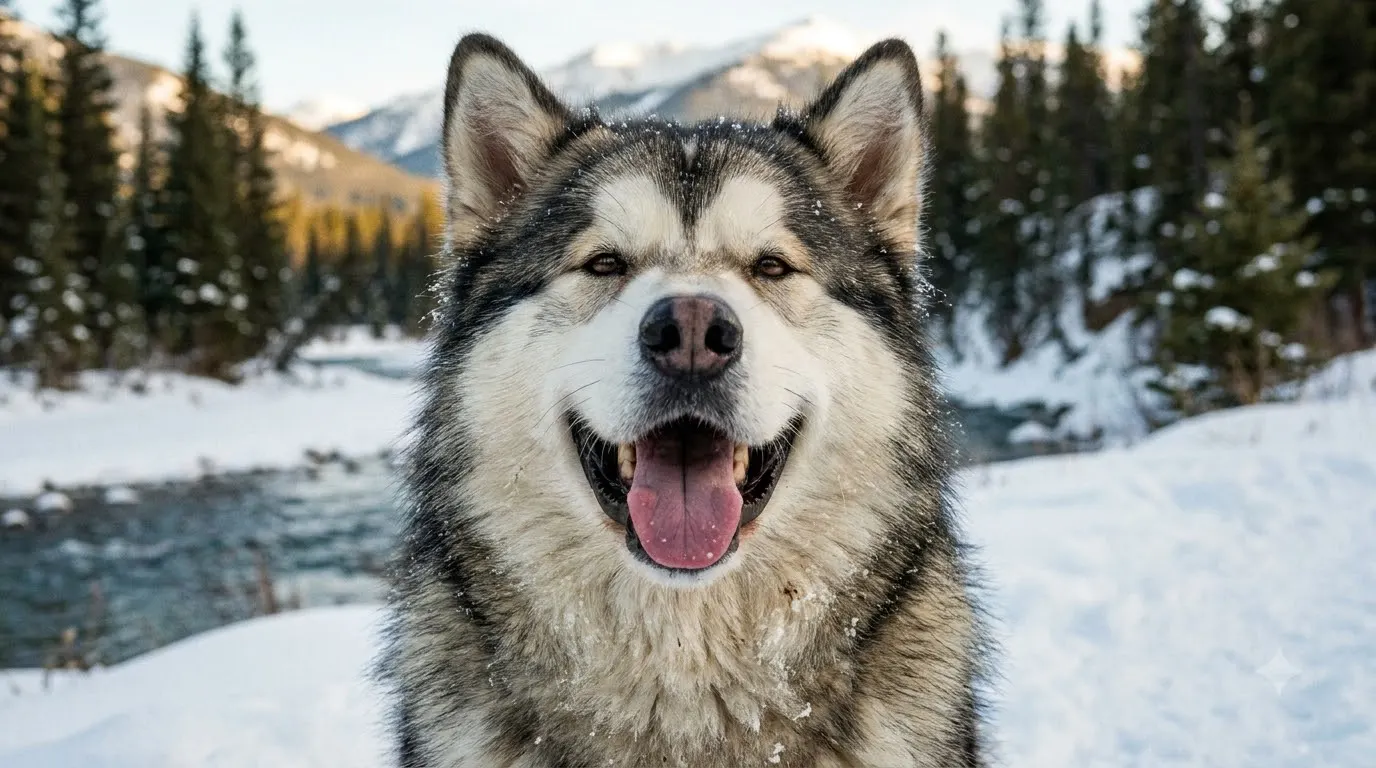
One look at an Alaskan Malamute and you might expect a fierce wolf. Then he flops onto your lap like a giant lapdog.
That’s the fun surprise of this breed. Malamutes are known for being affectionate, playful, and deeply loyal to their people.
They were originally bred as Arctic sled dogs in Alaska. According to the American Kennel Club, the breed is an affectionate, loyal, and playful but dignified dog, built for heavy freight work rather than speed.
That working history still shapes their personality today. Malamutes are strong, driven, and happiest with a job to do.
Understanding your dog’s Dog Body Language helps you read these signals early, especially with a breed this expressive.
What are Alaskan Malamutes Known For?
Malamutes are known for strength, loyalty, and big personalities. They’re intelligent, playful, and surprisingly social for such a powerful breed.
They also have famous stamina, an independent streak, and a chatty communication style. This isn’t a quiet, background dog.
Alaskan Malamute Personality and Temperament
Every Malamute is an individual. But most share a core set of traits that shape daily life at home.
Think of it as a personality “starter pack.” Your dog will add his own flavor on top.
Affectionate and Loyal
Malamutes form tight bonds with their families fast. Many want to be wherever you are, all day long.
They’ll follow you to the kitchen, the garage, even the bathroom. This is a breed that loves being included.
Independent but Social
Malamutes can be independent thinkers. That doesn’t mean they dislike people, though.
They simply like weighing in on decisions. Ask a Malamute to do something pointless, and he might just… not.
Playful and Fun-Loving
Many Malamutes stay playful well into adulthood. Backyard games, tug-of-war, and snow zoomies are all favorites.
They love family activities too. A Sunday hike or a game of fetch can make their whole week.
Confident and Strong-Willed
Their working-dog roots built serious confidence. These dogs were bred to make quick calls out on the trail.
That same confidence shows up at home. Consistent, everyday training helps channel it in a good direction.
Friendly, But Not Always a Typical “Easygoing” Dog
Friendly doesn’t always mean effortless. A Malamute can adore people and still be a handful to manage.
Their size, strength, and stubborn streak mean this breed still needs structure. Cute face, real commitment.
Expert Tip: Malamutes respond best to calm, confident leadership, not harsh corrections. Think “patient coach,” not drill sergeant.
10 Alaskan Malamute Personality Traits at a Glance
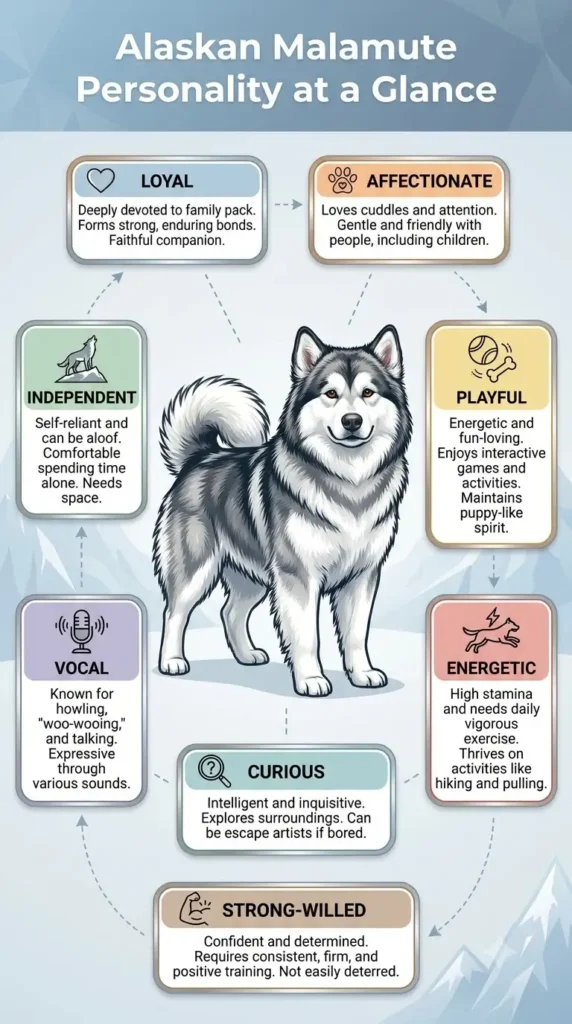
Need the quick version? Here’s a scannable cheat sheet of common Malamute traits.
| Trait | What It Can Look Like |
|---|---|
| Loyal | Stays closely connected to family |
| Affectionate | Enjoys attention and interaction |
| Independent | May make its own decisions |
| Playful | Enjoys games and activities |
| Intelligent | Can learn quickly |
| Strong-willed | May test boundaries |
| Social | Often enjoys human company |
| Energetic | Needs regular activity |
| Vocal | Communicates through various sounds |
| Curious | Likes exploring its surroundings |
Are Alaskan Malamutes Good Family Dogs?
Yes, many Malamutes make wonderful family dogs. They’re social, affectionate, and genuinely enjoy being part of the pack.
But “good family dog” comes with fine print here. This breed needs an active, hands-on household.
What Families May Love About Them
Malamutes are playful and social, and they usually love kids. Family walks, backyard games, and cozy couch time all appeal to them.
They’re the type of dog who wants to be involved in everything you do.
What Families Should Be Prepared For
This is a large, strong, energetic breed. Expect vocalization, digging, and a dog who needs daily mental and physical engagement.
Their independence means training takes patience. This isn’t a “set it and forget it” breed.
Why Lifestyle Matters More Than Looks
It’s easy to fall for the Malamute’s stunning looks. But personality fit matters far more than appearance.
A calm, low-activity household will struggle with this breed’s energy. Match the dog to your actual daily life.
How Alaskan Malamutes Behave at Home
Breed traits are one thing. Everyday behavior is another. Here’s what living with a Malamute really looks like.
They Like Being Part of the Action
Malamutes rarely enjoy being isolated in another room. They want eyes on the family, and family eyes on them.
Expect a dog who “supervises” cooking, laundry, and even your work-from-home calls.
They Can Get Bored Without Enough Activity
This is a working breed with serious drive. Without enough activity, that energy has to go somewhere.
An understimulated Malamute may become restless or find his own entertainment, often at your expense.
Their Curiosity Can Create Adventures
Malamutes love to investigate. New smells, open gates, and unattended snacks are all fair game.
Their curiosity is part of their charm, but it also means supervision matters, especially outdoors.
They Often Have a Funny, Goofy Side
Many Malamute owners describe their dogs as total goofballs. Think dramatic sighs, silly play bows, and theatrical “woo” sounds.
It’s one of the most underrated parts of this breed’s personality.
Are Alaskan Malamutes Vocal or Do They Bark?
Alaskan Malamutes are known for being vocal, but not in the typical “bark, bark, bark” way. They “talk” more than they bark.
Not every Malamute is equally chatty, though. Some are quieter than others, just like people.
Why are Alaskan Malamutes So Vocal?
Vocalizing is how Malamutes communicate excitement, attention-seeking, and connection. It’s less about alarm and more about conversation.
Many owners say it genuinely feels like their dog is “talking” back to them.
Do Malamutes Bark a Lot?
Not usually, at least not the classic repetitive bark. Instead, they tend toward howls, woos, and chatty grumbles.
Think Chewbacca energy rather than a yappy small dog.
What Their Different Sounds May Mean
A high “woo” often signals excitement or greeting. A longer howl can mean loneliness or boredom.
Grumbling sounds sometimes pop up during play or mild protest, like when it’s bath time.
Expert Tip: Record your Malamute’s different sounds over a week. You’ll start recognizing patterns tied to specific situations.
Why Do Alaskan Malamutes Dig?
Malamutes dig because of instinct, boredom, curiosity, or a desire to create a cool resting spot. It’s rarely random.
Digging is one of the breed’s most talked-about quirks, right alongside their vocal habits.
Digging Comes From Their Working-Dog Background
Arctic dogs historically dug into snow for warmth and shelter. That instinct hasn’t fully disappeared.
It doesn’t mean every Malamute digs constantly, but the drive is baked in for many.
Boredom Can Make Digging More Interesting
An understimulated Malamute may turn the backyard into a personal excavation site. Digging becomes entertainment.
The more bored the dog, the more enthusiastic the digging often gets.
How Owners Can Redirect the Behavior
Try these lifestyle-friendly strategies instead of just saying no:
- Increase supervised outdoor activity time
- Add puzzle toys and scent games for enrichment
- Set up a designated digging pit with sand or loose soil
- Redirect with a toy the moment digging starts
The ASPCA notes that regular enrichment helps pets engage in natural behaviors like sniffing and digging in appropriate, less destructive ways.
How Much Exercise and Mental Stimulation Does an Alaskan Malamute Need?
Malamutes need daily physical activity plus regular mental stimulation. One without the other rarely satisfies this breed.
Their personality is closely tied to how active and engaged their daily life is.
Physical Activities They May Enjoy
Long walks, hikes, and structured outdoor play all fit well. Many Malamutes also enjoy weight-pulling activities or carting, with proper guidance.
Age-appropriate activity matters, especially for growing puppies and senior dogs.
Mental Stimulation Matters Too
Puzzle feeders, scent games, and short training sessions all count. These challenge the brain, not just the body.
A tired body and a bored brain still add up to a restless dog.
The Goal Is a Busy Mind, Not Just a Tired Dog
Physical exercise alone rarely satisfies a smart, independent breed like this. The mind needs a workout too.
Combine both, and you’ll usually see a calmer, happier Malamute at home.
A predictable Daily Dog Care Routine makes it much easier to balance both needs consistently.
Alaskan Malamute Personality: Myths vs. Facts
This breed’s wolfish looks create a lot of assumptions. Let’s clear a few up.
| Myth | Reality |
|---|---|
| “They are basically giant Huskies.” | They are distinct breeds with their own characteristics. |
| “A friendly dog is automatically easy to manage.” | Their size, strength, and independence still require responsible handling. |
| “They only need physical exercise.” | Mental engagement can also be important. |
| “Every Malamute is loud.” | Vocal behavior varies between individual dogs. |
| “Digging always means bad behavior.” | Digging can have several natural or environmental causes. |
Common Mistakes New Alaskan Malamute Owners Make
Even loving owners can stumble here. A few patterns show up again and again.
Choosing the Breed Only Because It Looks Amazing
Looks fade fast when reality hits. Lifestyle compatibility matters far more than appearance ever will.
Underestimating Their Strength and Independence
An 80-pound strong-willed dog needs consistent boundaries from day one. Skipping training early gets harder to fix later.
Ignoring Mental Stimulation
Physical exercise alone often isn’t enough. Skipping brain games leaves a smart dog looking for his own projects.
Treating Vocalization and Digging as Personality Flaws
These behaviors usually mean something. Understanding the “why” beats simply labeling the dog as difficult.
Pro Tips for Living With an Alaskan Malamute
Owners who thrive with this breed tend to follow a similar playbook.
- Give them a predictable daily routine
- Include them in family activities
- Combine physical exercise with mental games
- Use positive, consistent training
- Give acceptable outlets for natural behaviors
- Expect some independent decision-making
- Learn their individual communication style
- Keep activities varied so life does not become boring
Expert Tip: Rotate toys weekly instead of leaving them all out. Novelty keeps a Malamute’s curious brain genuinely engaged.
Alaskan Malamute Facts Every Dog Lover Should Know
A few quick facts to round out the picture:
- Bred for Arctic freight hauling, not speed racing
- Strong, athletic build with serious pulling power
- Long history as a working sled dog
- Naturally social and people-oriented
- Independent streak inherited from working ancestors
- Known for distinctive “woo” style vocal communication
- Digging is a natural, instinct-driven behavior
- Often stays playful well into adulthood
- Needs regular engagement to stay content
- Personality can vary quite a bit between individual dogs
Conclusion: Is the Alaskan Malamute Personality Right for You?
Alaskan Malamutes are affectionate, loyal, playful, and independent all at once. They’re also vocal, energetic, and occasionally a little mischievous.
The right fit comes down to your lifestyle, not just your love of that gorgeous coat.
If you want a quiet, low-effort couch potato, a Malamute may have other plans. If you want an active, expressive companion with plenty of personality, that’s where this breed really shines.
If you’re weighing coat colors too, check out Dog Breeds With White Tipped Tails for a fun side comparison.
Frequently Asked Questions About Alaskan Malamute Personality
1. What are Alaskan Malamutes known for?
They’re known for strength, loyalty, intelligence, and playfulness. Their vocal “talking” style and independent streak also stand out among dog lovers.
2. Are Alaskan Malamutes good family dogs?
Many make excellent family dogs thanks to their social, affectionate nature. Active households that can meet their exercise needs tend to fit best.
3. Are Alaskan Malamutes vocal or do they bark?
They’re known for vocalizing more than traditional barking. Expect howls, “woo” sounds, and chatty grumbles rather than constant barking.
4. Why do Alaskan Malamutes dig?
Digging often stems from instinct, boredom, or curiosity. Providing enrichment and supervised outlets can help redirect the behavior.
5. Are Alaskan Malamutes affectionate?
Yes, most Malamutes are very affectionate with their families. They often enjoy close physical contact and being part of daily activities.
6. Are Alaskan Malamutes independent dogs?
They do have an independent streak from their working-dog background. This doesn’t mean they dislike people, just that they like having a say.