
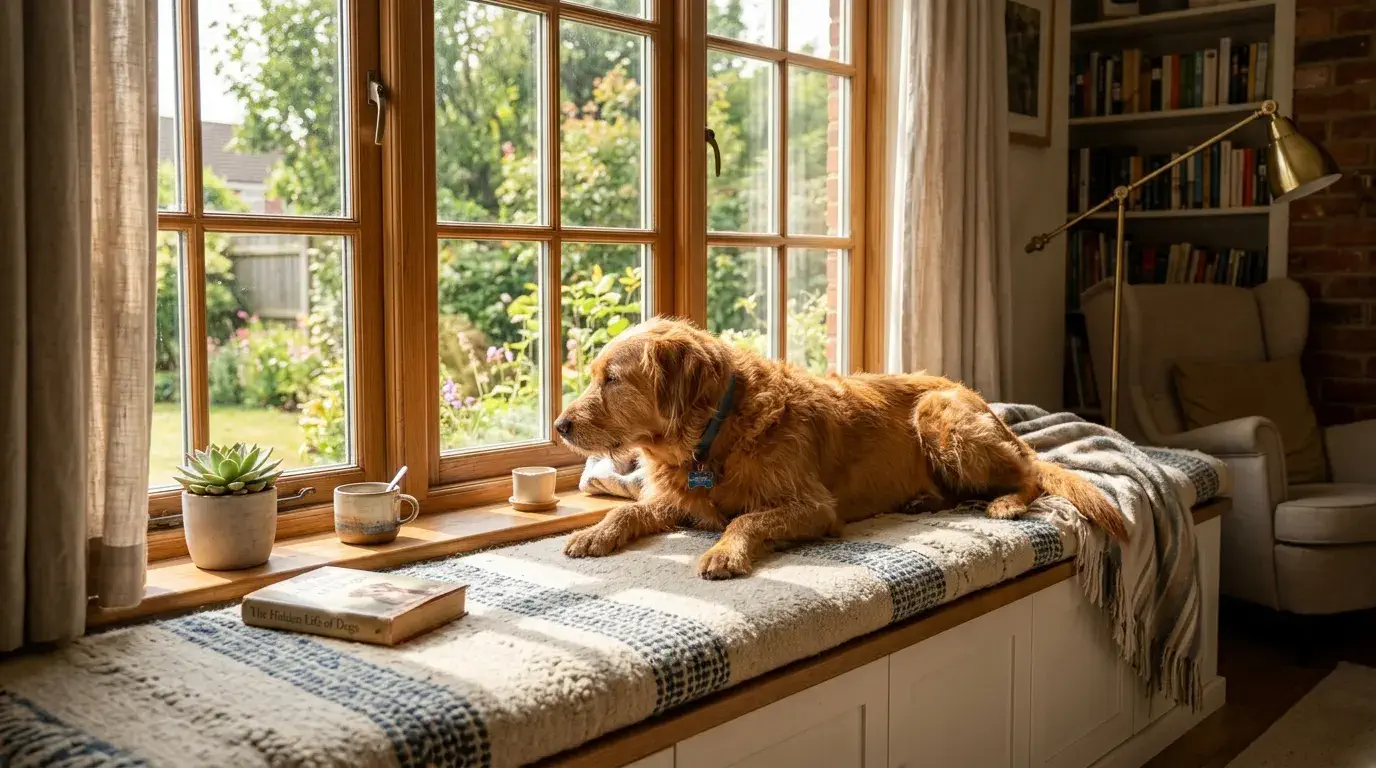
Ever catch your dog standing guard at the window like it’s their full-time job?
Mine does. Every morning, my Beagle mix camps out by the front window and narrates the entire street.
Squirrels get a bark. The mail truck gets three. A stray cat gets the full opera.
If that sounds familiar, your dog already loves a good window view. The real question is how to make that spot safe, comfy, and actually good for them.
That’s what we’re covering today. We’ll walk through the best window setup ideas for dogs, from ready-made perches to weekend DIY projects. You’ll also learn what to avoid, because not every cute window setup is a smart one.
Let’s get your pup a front row seat to the neighborhood.
Why Do Dogs Love Watching Out the Window?
Dogs watch windows because it satisfies real instincts, not just boredom.
Movement outside taps straight into their prey drive. Squirrel watching and bird watching light up the same instincts dogs once used for hunting.
It also feeds their need for enrichment. Dogs who don’t get enough mental stimulation tend to invent their own entertainment, and it’s rarely something you’ll enjoy coming home to.
Window time satisfies a dog’s territorial streak too. Your home is their turf, and watching the street is basically their job.
Visual stimulation matters more than most people realize. One study on canine TV viewing habits found that 88.3% of dogs actively engaged with a television when it was on, and plenty of dogs respond just as strongly to real motion outdoors.
With more than 68 million dogs living in American households, it makes sense that “dog window perch” searches keep climbing. For dogs who spend the day home alone, a good window spot can become one small piece of a bigger plan to keep your dog entertained while at work.
What Makes a Great Window Setup for Dogs?
A great setup comes down to 5 things: height, comfort, safety, sunlight, and easy cleanup.
How High Should a Dog Window Perch Be?
Match the perch height to your dog and your window sill.
Small dogs usually need help getting up there, whether that’s pet stairs or a low elevated dog bed. Your dog’s nose should clear the sill by a few inches, no straining or awkward jumping required.
How Do You Make a Window Spot Cozy?
Add padding. A simple dog bed cushion or folded dog blanket turns a bare ledge into a cozy corner your dog actually wants to return to.
Skip washing the blanket too often. Dogs bond with familiar scents, and a spot that smells like “theirs” gets used more.
Is It Safe to Let My Dog Sit by the Window?
Yes, with a few precautions.
Check your window screens. The ASPCA warns that unscreened or poorly secured windows are a real fall risk, and while this danger is most often discussed with cats, dogs and other pets are susceptible too.
Add a non-slip mat under any perch or bench. Hardwood and tile get slippery fast, especially for older dogs. Keep blind cords out of reach, and make sure the furniture won’t tip if your dog jumps up with enthusiasm.
Top Window Setup Ideas for Dogs
Here’s the fun part. Let’s run through the best window seat ideas for dogs, from simple to ambitious.
Classic Window Perch
A window perch is the simplest option. It’s a small platform that fits under or clips onto the sill.
Best for small to medium dogs under about 25 pounds. Check the weight rating before you buy, since not all perches are built the same. Add a thin cushion and it becomes an instant favorite.
Cozy Window Seat or Bench
A window bench works better for bigger dogs or multi-pet homes.
Build one from a low bookshelf, buy a storage bench, or repurpose furniture you already own. Top it with a dog bed or dog blanket for extra comfort.
Bonus: the storage underneath is perfect for stashing toys, leashes, or that DIY Snuffle Mat Without Rubber you made last weekend.
Window Hammock for Dogs
A window hammock hangs below the sill on suction cups, similar to the cat hammocks you’ve probably seen online.
These work best for small, lightweight dogs. Always check the weight limit first, since suction cups can fail under too much pressure. Skip this one for large or heavy breeds. A crashing hammock is a bad surprise for everyone involved.
Elevated Dog Beds Near a Window
An elevated dog bed, the kind with a raised cot frame, works great near sliding doors or bay windows.
They’re breathable, easy to hose off, and keep your dog off cold floors in winter. Place one in a sunlit spot and you’ve basically built a dog-sized beach chair.
Repurposed Furniture Ideas
You don’t need to buy anything fancy. An old dresser with the drawers removed, a low TV stand, or a sturdy ottoman can all become indoor window space for your dog.
Add a non-slip mat on top so paws don’t slide, then layer in bedding. It’s one of the most budget-friendly dog viewing window ideas out there, and it keeps furniture out of the landfill too.
| Setup Type | Best For | Price Range | DIY Difficulty |
|---|---|---|---|
| Window Perch | Small/medium dogs | $30–$80 | Easy (mostly store-bought) |
| Window Bench | Large dogs, multi-pet homes | $100–$400 | Moderate |
| Window Hammock | Small, lightweight dogs | $20–$50 | Easy |
| Elevated Dog Bed | Any size, sunny rooms | $40–$150 | Easy |
| Repurposed Furniture | Budget-conscious owners | $0–$40 | Moderate (DIY) |
How to Build a DIY Dog Window Perch
Yes, you can build one yourself. A DIY dog window perch usually takes under an hour and costs less than $30 if you already have basic tools.
- Choose a sturdy base: an old step stool, wooden crate, or stacked storage bins all work.
- Measure your window sill height and match your base to it.
- Sand down any rough edges if you’re using reclaimed wood.
- Add a thick cushion or folded dog blanket on top.
- Test the stability yourself before your dog does. Push down hard on every side.
- Add a non-slip mat underneath so it doesn’t slide on hardwood or tile.
Expert Tip: Attach rubber furniture pads to the base’s feet. It stops floor scratches and keeps the perch from creeping forward every time your dog jumps up.
This project pairs well with the rest of your dog’s daily care routine, since a consistent, cozy spot helps most dogs settle faster after walks or meals.
How to Create the Perfect Window Spot for Your Dog
Building the right spot is a step-by-step process, not a one-and-done purchase.
- Pick a low-traffic window, away from the front door, so you’re not amplifying territorial barking.
- Check the sunlight pattern in that room throughout the day.
- Measure your dog’s standing height against the sill so their neck isn’t straining.
- Choose furniture rated for your dog’s actual size and weight.
- Add comfort layers: a dog bed, blanket, or cushion.
- Test everything with your own hands before your dog tests it with their whole body.
- Supervise the first few sessions and watch how your dog actually reacts.
If your dog gets wound up watching the world go by, that energy needs an outlet. Try a few indoor dog games to burn energy before window time, so your dog settles in relaxed instead of revved up.
Pro Tips for a Dog-Friendly Window Nook
A few small tweaks make a big difference here.
- Rotate the view. Move a portable perch to a different window every few weeks for novelty.
- Add a bird feeder a safe distance from the window. Dogs who enjoy watching birds respond well to this simple change.
- Apply window film to the lower third of the glass if your dog tends to bark at every passerby, so the enrichment stays but the alarm barking drops.
- Pair window time with a puzzle toy, so your dog links the spot with calm chewing instead of guard duty.
- Keep water nearby if your dog tends to camp out for a while.
- In multi-dog homes, set up two viewing spots to avoid resource guarding.
Expert Tip: If your dog’s tail goes stiff and their bark turns sharp and repetitive at the window, that’s frustration, not fun. Swap in a puzzle toy and step them away from the glass for a bit.
Common Mistakes to Avoid When Setting Up a Window Spot
Most window setup mistakes come down to safety shortcuts or ignoring your dog’s actual behavior.
- Skipping the non-slip mat. Hardwood and tile get slippery fast, especially for senior dogs or dogs with joint issues.
- Trusting old window screens. Screens degrade over time. The ASPCA notes that falls linked to unsecured windows can cause serious injury, and dogs are not exempt from this risk.
- Using wobbly furniture. A 60-pound dog leaping onto an unstable stand is a recipe for a vet visit and a broken lamp.
- Ignoring afternoon sun. A gorgeous sunny perch can turn into a hot box by early afternoon. Check the temperature before leaving your dog there unsupervised.
- Leaving blind cords within reach. Dangling cords near a favorite perch are a real hazard.
- Skipping supervision entirely. A new window spot should be watched, at least until you know how your dog reacts to what they see.
Myths vs. Facts About Dogs and Window Watching
Window watching isn’t automatically good for every dog. It depends on how your dog reacts to it.
| Myth | Fact |
|---|---|
| Window watching is always relaxing for dogs | For reactive dogs, unsupervised window time can build frustration and rehearsed barking, according to AKC training experts |
| Only small dogs need a window perch | Large dogs benefit too, especially seniors who can no longer rest their front paws on a sill comfortably |
| More window time always means more enrichment | Quality beats quantity; a calm 20-minute session does more good than hours of alert barking |
| Barking at every passerby keeps a home safer | Constant territorial barking is often about frustration, not real protection |
The goal isn’t to ban window time. It’s to watch how your dog behaves there.
A dog who naps between squirrel sightings is getting genuine enrichment. A dog who’s rigid, barking nonstop, and can’t disengage needs a different approach, maybe a spot with blocked lower glass or scheduled supervised sessions instead of all-day access.
Final Thoughts: Give Your Dog Their Own Front Row Seat
A great window setup for dogs mixes comfort, safety, and a little common sense.
Whether you go with a simple perch, a full window bench, or a repurposed dresser with a blanket on top, the goal stays the same. Give your dog a spot they love without letting it turn into all-day guard duty.
Start small. Try one setup, watch how your dog reacts, then adjust from there.
Your dog might turn out to be more of a squirrel-obsessed sentry than a relaxed sunbather. That’s useful information too, and it just means their window time works best paired with a little extra structure elsewhere in their day.
Frequently Asked Questions
What is the best window setup for dogs who love watching outside?
The best setup matches your dog’s size and energy level. Small dogs often do well with a window perch or hammock, while larger dogs need a sturdy bench or elevated bed near a low window.
How high should a dog window perch be?
High enough that your dog’s paws and head rest comfortably above the sill without stretching. For most dogs, that’s roughly 12 to 20 inches off the floor, adjusted to your actual window height.
Can I make a DIY window perch for my dog?
Yes. A DIY dog window perch can be built from a sturdy step stool, crate, or repurposed furniture, topped with a cushion and a non-slip mat. Most projects take under an hour.
Is it safe to leave my dog on a window seat unsupervised?
It depends on your dog. Supervise the first few sessions to see how they react. Calm dogs can usually earn more independent access, while dogs who bark and pace at every passerby do better with limited, supervised window time.
Do window setups help with dog anxiety or boredom?
They can, in moderation. Watching outside offers real enrichment for many dogs. But for dogs prone to frustration or reactivity, too much unsupervised window time can add stress instead of relieving it.
What size dog window perch or bench should I buy?
Check the weight rating before buying anything. Small perches and hammocks usually top out around 25 pounds, while benches and elevated beds can handle most large breeds. When in doubt, size up.