You’re standing in a pet store, holding two collars. One’s a bright cherry red. The other is a soft sky blue. Your dog is sitting next to you, tail wagging, completely unbothered. But you’re overthinking it.
Choosing accessories for your pet feels simple until it doesn’t. Suddenly you’re wondering, “Does this color suit their vibe? Will it clash with their fur? Does my golden retriever really need a hot pink leash?“
Here’s the thing. Color psychology isn’t just for interior designers and marketing gurus. It applies to pet fashion too, and it’s more fun than you’d think.
Colors send signals. They shape how we feel, how others see us, and even how we see our pets. The right color on your dog or cat can make them look playful, regal, calm, or downright adorable.
This guide will walk you through everything you need to know about using color psychology for pet accessories. By the end, you’ll pick colors that match your pet’s personality, mood, and style without second-guessing yourself at the store.
What is Color Psychology and Why Does It Matter for Pets?
Does color actually affect pets and their owners?
Color psychology is the study of how colors influence human emotions, perceptions, and behavior. We see red and feel energy. We see blue and feel calm. It’s backed by research, and marketers use it constantly.
Now, here’s where it gets interesting for pet owners.
Dogs and cats don’t see colors the way we do. Dogs see the world in shades of blue, yellow, and gray, according to the American Kennel Club. Cats have a similar limited color range. So your pet isn’t going to appreciate a trendy burgundy harness the way you do.
But that doesn’t mean color is irrelevant.
Color choices affect three things that really matter:
- Owner perception: How you feel about your pet when they’re wearing a certain color
- Other people’s reactions: Strangers at the park respond differently to a dog in a bright orange vest versus a dull gray one
- The overall vibe: Colors set the emotional tone of your pet’s “look”
Think of it this way. You’re not dressing your pet for themselves. You’re dressing them for the world. And the world absolutely judges a book by its cover.
The color you choose also says something about your pet’s personality, or at least the personality you want to project. It’s a form of nonverbal storytelling.
Understanding Color Meanings for Pet Accessories
What does each color say about your pet?
Every color carries a meaning. Here’s a simple breakdown of what popular accessory colors communicate.
Red: Energy & Attention
Red is bold, loud, and impossible to ignore. It communicates energy, confidence, and a little bit of attitude.
Red accessories work great for playful, high-energy dogs. Think huskies, border collies, or that golden retriever who knocks everyone over at the park. Red says, “I’m here, I’m fun, try to keep up.”
It also boosts visibility during walks, which is a nice bonus.
Blue: Calm & Trust
Blue is the color of calm water and clear skies. It signals trustworthiness, gentleness, and peace.
If your dog is anxious, shy, or just very gentle-natured, blue is a beautiful choice. It softens their presence and communicates a mellow, friendly energy. Great for therapy dogs or pets who hang out with kids often.
Yellow: Happiness & Warmth
Yellow screams cheerfulness. It’s sunny, warm, and inviting.
It works perfectly for friendly, social pets. Labs, beagles, and any dog who thinks every stranger is a potential best friend will rock yellow beautifully. Just be careful with very light-furred pets, since yellow can get lost visually.
Green: Balance & Nature
Green feels earthy, fresh, and balanced. It’s the color of the outdoors.
Perfect for the adventurous pet who loves hiking, camping, or just running wild in the backyard. Green accessories blend naturally into outdoor settings while still looking intentional and stylish.
Black: Elegance & Authority
Black is timeless. It never goes out of style.
For pets with a strong, confident personality, black accessories add a layer of elegance. Great for larger breeds like Rottweilers, Dobermans, or even sleek black cats (obviously). It also hides dirt better than lighter colors, just saying.
Pink and Purple: Playfulness & Luxury
Pink feels fun, flirty, and sweet. Purple brings in a sense of luxury and creativity.
These colors work wonderfully for fashion-forward pets, especially small breeds and cats who seem to know they’re fabulous. If your pet has a diva streak, lean into it with lavender or blush pink.
How to Choose the Right Color for Pet Accessories
Great question. Here’s a practical approach that balances personality, appearance, and lifestyle.
Consider Your Pet’s Personality
Start here. Ask yourself: what kind of energy does my pet have?
- Energetic and playful? Go bold: red, orange, yellow
- Calm and gentle? Try cool tones: blue, soft green, lavender
- Shy or nervous? Stick to pastels: blush pink, baby blue, mint
- Confident and striking? Black, deep purple, or forest green
This is the most important factor. Accessories should feel like an extension of who your pet is.
Think About Fur Color and Contrast
Colors look completely different depending on your pet’s coat. Here’s a quick guide:
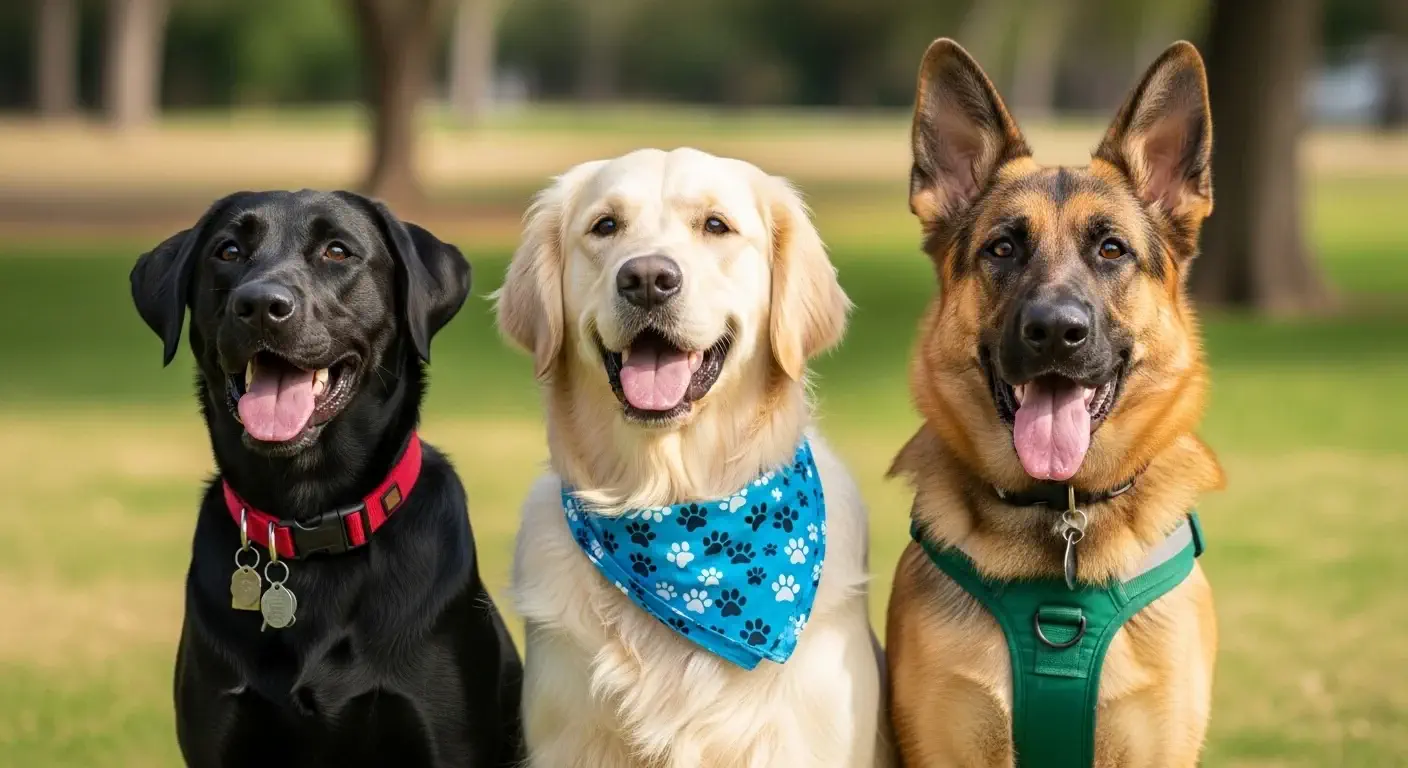
- Light or white fur: Almost anything pops. Navy blue, forest green, and bright red look stunning
- Golden or tan fur: Jewel tones like teal, burgundy, or purple create beautiful contrast
- Dark brown or black fur: Bright colors stand out best. Yellow, orange, and hot pink really shine
- Grey or silver fur: Dusty rose, lavender, and soft blue look incredibly chic
When we visited the dog parks in Austin, we noticed that lighter-furred dogs in deep jewel tones always turned heads. The contrast made every photo look intentional and polished.
Match With Occasion or Season
Think about when and where your pet wears their accessories.
- Summer: Bright, energetic colors like coral, turquoise, and lemon yellow feel fresh and seasonal
- Fall: Warm tones like rust, mustard, and deep orange feel cozy and festive
- Winter: Rich, deep colors like navy, burgundy, and forest green feel sophisticated
- Spring: Pastels and florals feel perfectly on theme
Swapping accessories seasonally is also a fun, low-cost way to keep your pet’s wardrobe feeling current.
Focus on Visibility and Safety
Especially for outdoor walks, bright colors matter. Neon orange, yellow, or reflective options help drivers and cyclists see your pet. This is especially important for early morning or evening walks.
Best Colors for Pet Collars and Clothes
For Dogs
Dogs carry accessories differently depending on their breed and build. Here are some quick tips:
- High-energy breeds (huskies, labs, retrievers): Bright colors like red, orange, or electric blue emphasize their playful nature
- Elegant or large breeds (Great Danes, greyhounds): Neutral tones like black, slate, or deep green give them a regal look
- Small or fluffy breeds (Pomeranians, shih tzus): Pastel shades and soft pinks bring out their cuteness without overwhelming their small frame
For Cats
Cats are minimalist icons. Less is more.
- Soft, muted tones (dusty pink, sage green, cream) feel refined and cat-appropriate
- If your cat has a tabby pattern, choose solid-color accessories for a clean contrast
- For black or dark-furred cats, burgundy, gold, or emerald green accessories look absolutely luxurious
Trending Color Combinations Right Now
The pet fashion world is having a moment. Some combinations that are everywhere:
- Navy blue and tan: Classic, clean, always works
- Lavender and white: Soft, dreamy, very Pinterest-worthy
- Black and gold: Instantly glamorous
- Rust orange and cream: Fall-forward and cozy
- Teal and coral: Bright, summer-ready, and very Instagram-friendly
Pet Accessories Color Ideas Based on Personality
What color matches my pet’s personality type?
This is genuinely one of the most fun parts of pet fashion. Match the color to the character.
The Energetic Explorer
This is the dog who bolts out the door at full speed, knocks over your coffee, and somehow still has energy at 10 PM.
Colors to try: Red, orange, bright yellow. These colors match their unstoppable energy and make them easy to spot when they inevitably run ahead of you on the trail.
The Calm Companion
This pet is the one curled up on the couch, totally unbothered. They’re gentle, steady, and everyone loves them immediately.
Colors to try: Soft blue, sage green, or muted teal. These colors reflect their peaceful, easy-going nature. If you’re curious what breeds tend to have this personality, check out our guide to the calmest dog breeds.
The Shy Sweetheart
This one hides behind your legs when guests arrive. They’re sweet, sensitive, and take time to warm up.
Colors to try: Soft pastels. Baby pink, lavender, or light peach. These gentle tones feel non-threatening and match their delicate personality without overwhelming them visually.
The Diva or Star Pet
You know the type. They walk into the room and everyone looks up. They sit for photos like they’ve done it before. They probably have their own Instagram.
Colors to try: Purple, gold, hot pink, or jewel tones. Go big. These pets were made for statement accessories.
Matching Pet Accessories for a Stylish Look
Once you’ve nailed the color, it’s time to think about the full outfit.
Matching Collar, Leash, and Outfit
A cohesive look doesn’t mean everything has to match exactly. Think about tonal coordination instead.
For example, a teal collar with a slightly lighter teal leash and a simple white harness looks intentional and stylish. You don’t need to buy an exact matching set. Just keep the colors in the same family.
The Owner and Pet Matching Trend
This is huge right now. Coordinating outfits with your pet is everywhere on social media, and honestly, it’s adorable.
Wearing a denim jacket and putting your dog in a denim bandana? Chef’s kiss. Rocking a floral top and adding a floral collar on your cat? Iconic. It doesn’t take much to make the connection, and it photographs beautifully.
Seasonal Color Themes
Lean into seasonal palettes for easy styling decisions.
- Spring: Soft pastels and whites
- Summer: Bright, tropical tones
- Fall: Warm browns, oranges, and deep reds
- Winter: Deep navies, forest greens, and rich burgundies
Planning your pet’s accessories around seasons is a simple way to keep things fresh without constantly buying new pieces.
Does Color Affect Pet Mood and Behavior?
Not directly. Your dog isn’t going to suddenly feel more confident because they’re wearing a red collar. That’s not how it works.
But here’s what does happen.
Colors affect how the humans around your pet respond to them. A dog in a bright, cheerful yellow outfit tends to attract more positive attention at the park. People smile, approach, and interact differently. That increased social interaction can actually affect your dog’s behavior, because dogs respond to human energy.
Colors also affect the overall atmosphere you create. A calming blue environment (think bedding, accessories, surroundings) can subtly contribute to a more relaxed space for an anxious pet. It’s not magic, but it’s not nothing either.
If you’re dealing with a high-anxiety pet, color is just one small piece of the puzzle. You can learn more about managing pet stress by exploring things like indoor dog games to help burn energy or understanding things dogs hate so you can avoid unnecessary stressors.
Quick Comparison Table: Best Colors for Pet Accessories
| Purpose | Best Colors | Why It Works | Avoid |
|---|---|---|---|
| Sleep & Anxiety Relief | Blue, Soft Green, Lavender | Lowers arousal, promotes calm | Red, Orange, Neon |
| Active Play & Fetch | Yellow, Blue, Orange | High visibility + stimulating | Brown, Olive, Dark Gray |
| Outdoor Safety | Neon Yellow, Bright Blue, Reflective Silver | Maximum visibility for humans/drivers | Black, Camouflage, Dark Navy |
| All-Day Wear (Collars) | Blue, Yellow, or Neutral Gray | Visible + non-overstimulating | Dark solid colors for nighttime walks |
| Training Tools | Yellow, Orange | High engagement, easy to spot | Red (can increase frustration) |
| Senior or Rescue Pets | Soft Pastels, Gray, White | Calming baseline, low stress | Bright or highly saturated tones |
| Multi-Pet Households | Blue (universal), Neutral base tones | Works across dog and cat vision | Neon overload |
Common Mistakes to Avoid When Choosing Pet Accessory Colors
A few things pet owners get wrong pretty often:
Ignoring fur contrast. Picking a color that blends into your pet’s coat makes the accessory disappear. Always aim for contrast.
Choosing style over comfort. A color means nothing if the material or fit is uncomfortable. Always prioritize fit and material first, then think about color.
Going too dull or too flashy without intention. Beige on a beige dog? Invisible. Neon rainbow on a skittish cat? Overwhelming. Find the sweet spot.
Forgetting the occasion. A sparkly purple harness is amazing for a birthday photoshoot. It’s a little much for a muddy hiking trail.
Buying for yourself, not your pet. It’s tempting to choose what you love. But consider your pet’s personality and coat color before defaulting to your favorite color.
Conclusion
Color psychology for pet accessories is honestly one of the most underrated parts of pet parenting. It’s not just about looking cute (though that’s a big part of it). It’s about expressing your pet’s personality, creating a cohesive look, and making intentional choices that feel good for both of you.
The formula is simple: start with personality, consider fur color and contrast, think about season and occasion, and don’t be afraid to experiment.
Your pet doesn’t care what color their collar is. But you do, and the people they meet do too. Use that to your advantage.
And hey, if you’re still standing in that pet store holding the red collar and the blue one? Get both. Life’s too short for boring accessories.
Frequently Asked Questions
How to choose the right color for pet accessories?
Focus on your pet’s personality first, then their fur color and the contrast it creates. Consider the season and where they’ll be wearing the accessories most often.
What color collar is best for a dog’s personality?
Energetic, playful dogs suit bold colors like red or orange. Calm, gentle dogs look great in blue or soft green. Shy pets do well in pastels, and confident divas should go bold with purple or gold.
Does color affect pet mood and behavior?
Not directly. Pets don’t perceive colors the way humans do. But colors influence how people interact with your pet, which can indirectly affect their behavior and social experience.
What are the best colors for pet collars and clothes?
Bright colors for visibility and playfulness, neutral tones for elegance, and contrasting shades that pop against your pet’s natural coat are all great choices.
How do I match pet accessories with my pet’s fur color?
Choose colors that contrast with their coat. Light-furred pets look great in jewel tones, while dark-furred pets shine in bright or vivid colors. Grey pets look stunning in dusty rose or lavender.
What are trending pet accessory color ideas?
Dual-tone collars, pastel palettes, and bold jewel tones are popular right now. Seasonal color themes and owner-pet matching looks are also huge on Instagram and Pinterest.