
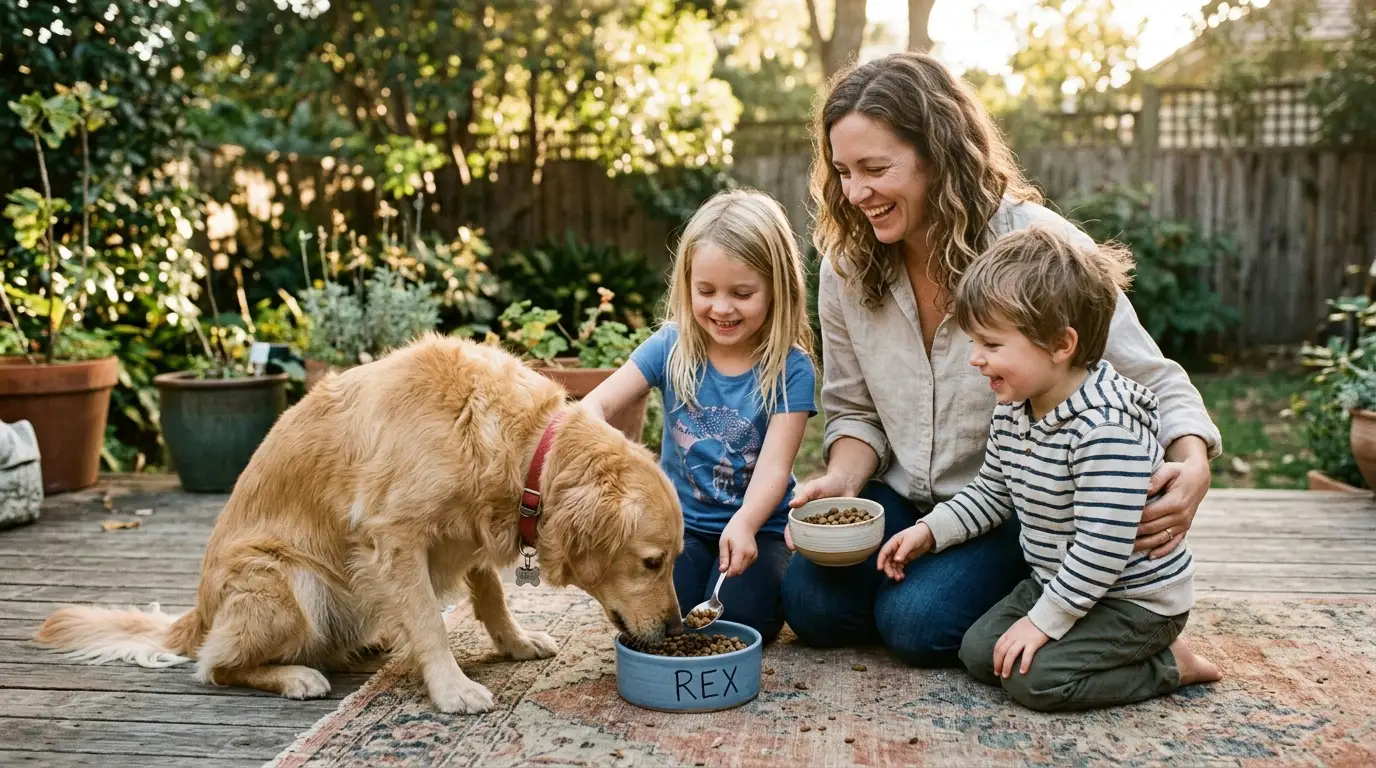
It’s 6:40 a.m. The alarm hasn’t even finished buzzing.
But you’re already up, pulling on yesterday’s socks, because Bruno needs his walk.
Your kid swore on their gaming console they’d handle this. That was three weeks ago.
Sound familiar? You’re not imagining it. Every house with a dog runs on a quiet, unspoken system.
Nobody votes on it. Nobody signs a contract. It just happens.
I call this the “dog chore economy,” and once you see it, you can’t unsee it.
This guide breaks down why it happens and exactly how to fix it. No lectures, just real fixes that work.
What is the “Dog Chore Economy,” Anyway?
It’s the invisible system that decides who feeds, walks, and cleans up after your dog.
Nobody designs this system on purpose. It just forms based on who’s home, who feels guilty, and who’s a morning person.
Think of it like the office snack fund. Someone always restocks it. Nobody remembers agreeing to that job.
Dog care works the exact same way in most homes.
A research review published by the NIH backs this up with real numbers. Mothers were found to be responsible for the majority of pet care in 34% of families, and they reported doing at least half the work in 41% of households.
Fathers led the charge in only a small slice of homes. In just 8% of households, fathers did the majority of the pet care chores.
That’s not a coincidence. That’s an economy with a pretty lopsided exchange rate.
Once you see the pattern, you can actually change it.
Why Dog Responsibilities Naturally Fall on One Person
Here’s the blunt answer: consistency wins. The person who shows up every single day becomes “the dog person” by default.
It’s not about who loves the dog more. It’s about who can’t stand seeing an empty water bowl.
The “Default Parent” Effect (Applied to Pets)
You’ve probably heard of the “default parent.” That’s the one who knows the pediatrician’s number by heart.
Well, dogs get their own default parent too. It’s usually whoever has the most flexible morning.
My neighbor Dana jokes that she didn’t “choose” to be the dog parent. Her husband travels for work three weeks a month, so the job found her.
That’s not a weakness on anyone’s part. That’s just math.
Why Kids’ Enthusiasm Fades (and What That Means)
Every parent knows this story. The kids begged for a puppy and promised the moon.
6 weeks later, “I’ll walk him” has the same energy as “I’ll clean my room later.”
This isn’t a character flaw. The American Kennel Club flat out warns parents about this before they even bring a dog home. Even if the kids promised they’d feed and walk the dog, parents are still ultimately responsible if the kids forget, and it’s the parent who winds up with the extra chores.
So if your kid’s enthusiasm fizzled, you’re in good company. Pretty much every dog-owning family goes through this.
Expert Tip: Don’t wait for motivation to magically reappear. Pair the chore with something the kid already loves, like letting them pick the walking route past their favorite house with the trampoline.
How to Fairly Divide Dog Responsibilities by Age and Schedule
The fastest way to fix an unfair system is to make the assignments visible and realistic. Nobody can dodge a job they agreed to out loud.
This is where most family dog routines fall apart. The expectations were never actually spelled out.
Age-Appropriate Dog Chores for Kids (5–17)
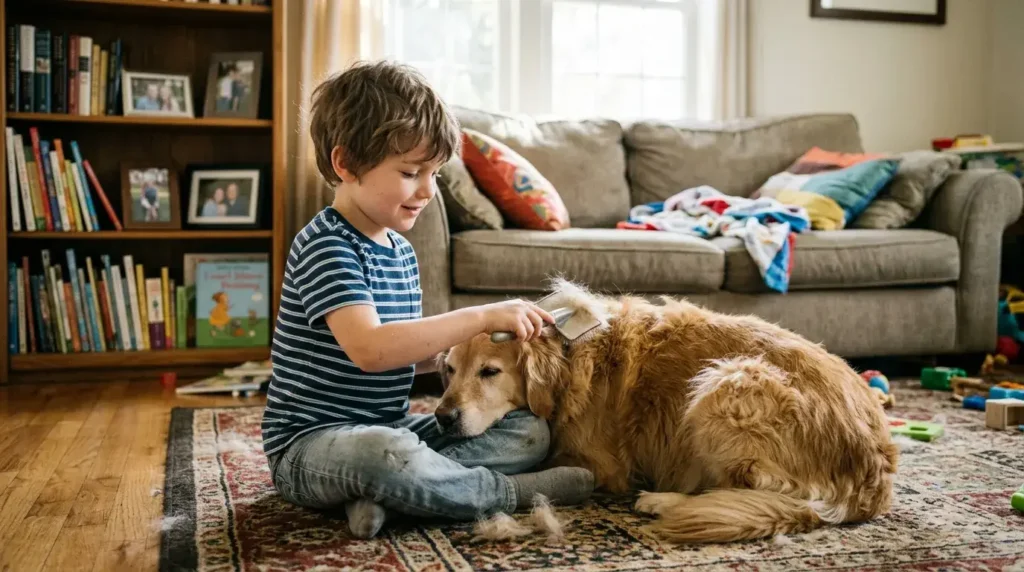
Skip the guesswork. The AKC has already mapped this out by age group, and it lines up with what most trainers recommend in real homes.
- Ages 3–4: Can scoop dry food or top off the water bowl with close supervision
- Ages 5–9: Can be the lead feeder and handle minor cleanup around the bowls
- Ages 10+: Can usually manage feeding, play, exercise, and even some grooming on a set schedule
According to the AKC’s guide on getting kids ready for a dog, tweens age 10 and up are typically capable of most day-to-day pet care, including feeding, play, exercising, and potty duty.
That’s a much bigger range than most parents assume. Kids can usually handle more than we give them credit for.
If your family is weighing breeds based on how much hands-on involvement the kids can realistically handle, our guide to calmest dog breeds is worth a look before you commit.
Splitting Tasks Between Co-Parents or Partners
Treat dog chores the same way you’d treat dishes or laundry. Whoever’s home first does the evening walk. Simple as that.
Try rotating the “annoying” jobs weekly instead of letting them default to one person:
| Task | Week 1 | Week 2 |
|---|---|---|
| Early morning walk | Partner A | Partner B |
| Evening feeding | Partner B | Partner A |
| Poop bag restocking | Partner A | Partner B |
| Weekend grooming brush-out | Both | Both |
A simple swap like this stops resentment before it starts. Nobody’s stuck with the worst job forever.
When One Person Travels or Works Long Hours
Real life isn’t symmetrical, and that’s okay. The fix isn’t a perfect 50/50 split. It’s a flexible backup plan.
Some families “batch” tasks on weekends to lighten weekday loads, like prepping food portions for the week in one go.
Others lean on a trusted neighbor or a dog walking app during crunch weeks. There’s no shame in outsourcing the gap.
Building a Simple Family Dog Routine That Actually Sticks
A predictable routine is the secret weapon nobody talks about. When the schedule is steady, the chores divide themselves more naturally.
Creating a Daily Feeding and Walking Schedule
Most healthy adult dogs do best with one to two solid walks a day, according to the American Veterinary Medical Association. Designing a safe walking program means starting with short, frequent walks and taking rests as needed, ideally after confirming with your vet that your dog is healthy enough for the activity level.
A steady dog feeding schedule (same two times every day) also makes potty timing predictable. That predictability is what makes task-swapping between family members possible in the first place.
Here’s a simple example routine for a typical family:
| Time | Task | Best Assigned To |
|---|---|---|
| 7:00 AM | Morning walk | Early riser |
| 7:30 AM | Breakfast feeding | Whoever walked |
| 12:00 PM | Quick potty break | Remote worker / kid home from school |
| 6:00 PM | Evening walk | Rotates weekly |
| 6:30 PM | Dinner feeding | Whoever walked |
Using a Family Dog Responsibility Chart
A visible chart kills the “I forgot” excuse dead. Stick it on the fridge or use a shared phone app.
This isn’t about micromanaging your family. It’s about removing the guesswork so nobody has to nag.
Expert Tip: Let kids check off their own boxes instead of a parent doing it for them. The small win of marking a task “done” builds real ownership over time.
If you’re building out a full dog care checklist for a new puppy specifically, pair it with a puppy care routine guide so the chart covers training and socialization too, not just feeding.
Pro Tips: Making Dog Chores a Team Habit, Not a Fight
- Stack chores onto existing habits. Walk the dog right after breakfast, not “sometime before work.”
- Name a “Dog Captain of the Week.” Rotating this kid-friendly title turns a chore into a tiny leadership role.
- Use one shared reminder app. Texting “did anyone feed Bruno?” into the family group chat works better than you’d think.
- Celebrate streaks, not perfection. A sticker for seven days straight beats punishing one missed walk.
- Keep gear in one obvious spot. A leash hook by the door removes the “where’s the leash” excuse entirely.
A popular thread on r/dogs on Reddit echoes this exact idea. Owners repeatedly say visible routines, not guilt trips, are what actually changed their household’s habits long term.
Common Mistakes Families Make When Dividing Dog Care
- Assuming kids will “just remember.” They won’t, at least not without a visual reminder.
- Never rotating the hard jobs. The 6 a.m. walk shouldn’t always land on the same exhausted person.
- Skipping a backup plan. What happens when Mom’s sick or Dad’s traveling? Plan for it before it happens.
- Making one person the “dog expert” by default. Everyone in the house should know basic routines, not just one go-to person.
- Not testing the new system. Give any new chore split a two-week trial before declaring it broken.
Myths vs. Facts About Sharing Pet Responsibilities
| Myth | Fact |
|---|---|
| “Kids are too young to help at all.” | Even 3-year-olds can scoop food with supervision, per the AKC. |
| “Whoever wanted the dog should do all the work.” | Shared care builds stronger bonds for the whole family, not just one person. |
| “A chore chart is babyish.” | Visible systems reduce nagging for adults too, not just kids. |
| “Dads naturally do less pet care.” | It’s situational, not biological. Schedules and habits drive the split, not gender. |
| “If everyone helps, nothing gets missed.” | Too many hands without clear ownership often means nothing gets done. Assign specific tasks. |
Sample Weekly Dog Care Checklist for Families
Print this out or copy it into your notes app. Adjust the names, not the structure.
| Task | Frequency | Suggested Owner |
|---|---|---|
| Morning walk | Daily | Rotates |
| Evening walk | Daily | Rotates |
| Feeding (AM/PM) | Daily | Whoever walked |
| Water bowl refill | Daily | Youngest capable kid |
| Brushing | 2-3x weekly | Designated “groomer” |
| Toy and bed cleanup | Weekly | Whole family, Sunday reset |
| Nail check | Weekly | Adult |
| Poop bag restock | As needed | Whoever notices first |
This kind of structure works whether you’ve got a tiny apartment dog or one of the large dog breeds that needs serious daily exercise.
Conclusion
Every family runs a dog chore economy, whether they planned to or not. The difference between a fair one and a frustrating one comes down to visibility.
Age-appropriate tasks, a rotating schedule, and one shared chart can rewrite the whole system. No more guilt, no more silent resentment.
At the end of the day, your dog doesn’t care who fills the bowl. They just want the people they love showing up, together.
That’s a pretty sweet deal for everyone involved, paws included.
Frequently Asked Questions
Who should be primarily responsible for the family dog?
There’s no single “right” answer, but research shows it often defaults to one parent unless families actively divide tasks. The healthiest setups spread daily jobs across everyone capable, rather than letting it land on one person by accident.
At what age can kids start helping with dog care?
Kids as young as 3 or 4 can help with simple supervised tasks like topping off water bowls. By age 10, most kids can independently handle feeding, play, and basic exercise routines.
How do you stop dog chores from falling on just one person?
Use a visible chart, rotate the harder tasks weekly, and assign specific names to specific jobs. Vague plans like “everyone helps” almost always collapse back to one default person.
What’s a good daily dog feeding and walking schedule for a busy family?
Most dogs do well with two feedings and one to two walks daily, ideally at consistent times. Predictable timing makes it much easier to split tasks fairly across a busy household.
Should you use a chore chart for the family dog?
Yes, especially for households with kids. A visible chart removes the need to nag and gives kids a sense of ownership over their specific job.
How do families divide dog responsibilities when both parents work full-time?
Most dual-income families rely on rotating schedules, batching tasks on weekends, or occasionally outsourcing midday walks. The key is having a flexible backup plan rather than expecting a perfect even split every single day.