You just brought home the most adorable, low-riding fluffball on the planet. Life is good. Then, fifteen minutes later, you step in a puddle in the hallway.
Welcome to Corgi parenthood.
If you’ve been Googling “how to potty train a Corgi” at 2 a.m. while cleaning up the fourth accident of the day, you’re in the right place. The frustration is real. The confusion is real. And yes, the tiny paw prints in that puddle are also very real.
Corgis are one of the smartest herding breeds recognized by the AKC. With the right schedule and consistency, you can build a solid potty training foundation in just 7 days.
Understanding Corgi Puppy Behavior Before You Start
So, why are Corgis both easy AND hard to train?
Corgis were originally bred to herd cattle in Wales. That history gave them intelligence, independence, and a whole lot of stubbornness. They pick up commands fast. They also pick up bad habits fast.
A Corgi puppy’s bladder is tiny. A general rule used by most trainers and veterinarians: puppies can hold their bladder for roughly one hour per month of age. An 8-week-old Corgi? Two hours, max.
That’s why a structured schedule isn’t optional. It’s everything.
Manage your expectations, too. Seven days will build the habit. Full reliability takes closer to 4-8 weeks. But seven days of consistency creates a foundation that makes the rest of the journey way smoother.
Essential Supplies for Fast Corgi Potty Training
What do you actually need before you start?
Don’t overcomplicate this. Here’s your starter kit:
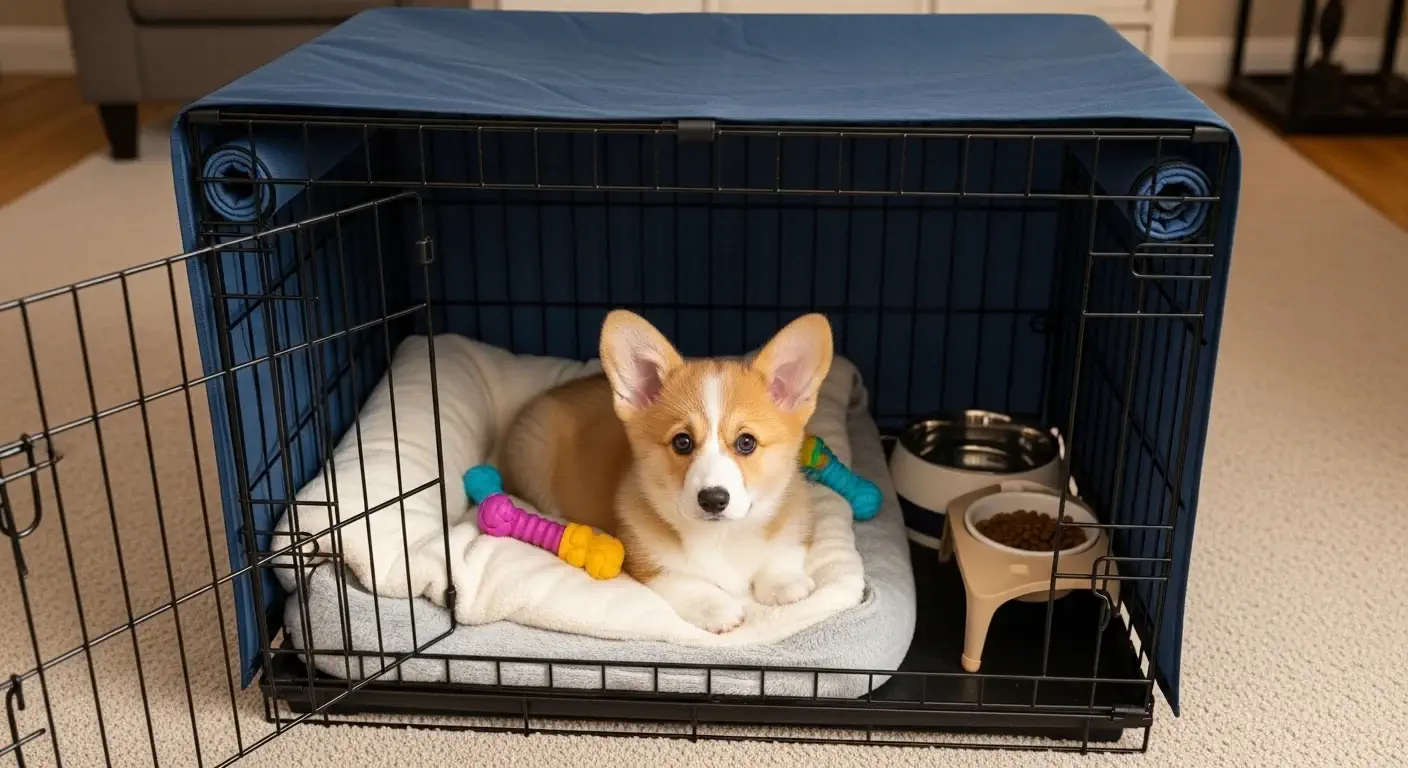
- Crate: Size matters. Your Corgi should be able to stand, turn around, and lie down. No bigger. Too much space means they’ll use one corner as a bathroom.
- High-value training treats: Small, soft, smelly. Think tiny pieces of chicken or commercial treats like Zuke’s Mini Naturals. Skip the dry biscuits for training.
- Enzyme-based cleaner: Accidents happen. Regular cleaners mask the smell to your nose but not your puppy’s. A product like Nature’s Miracle breaks down the odor at a molecular level, so your Corgi won’t return to the same spot.
- Pee pads (optional): Useful for nighttime or apartment living. But don’t rely on them long-term if your goal is outdoor potty training.
- Leash: Yes, even for potty breaks. It keeps your pup focused and prevents turning bathroom time into zoomie time.
The Golden Rules of Potty Training Success
Three things. Consistency, positive reinforcement, and clear command words. Mess up any one of them and the whole system falls apart.
Consistency in Training
Same time. Same door. Same spot in the yard. Every single time.
Repetition builds habit loops in dogs. When your Corgi walks through that door and smells the same patch of grass, their brain connects the dots faster. This is behavioral science, not magic.
Positive Reinforcement Potty Training
Reward within 2-3 seconds of the behavior. Not after you walk back inside. Not after you clap your hands and do a happy dance. Right when their little bottom hits the grass and they finish.
Punishment backfires badly. If you scold a Corgi for an accident, they don’t connect the scolding to the accident. They connect it to you seeing them pee. Then they start hiding and going behind the couch. Been there, seen it happen.
Command Words Like “Go Potty”
Pick a phrase and stick to it. “Go potty,” “do your business,” “outside” doesn’t matter what it is. Say it calmly and consistently while they go. Over time, the command triggers the behavior.
Your 7-Day Corgi Potty Training Schedule (Step-by-Step Plan)
| Day | Focus | Key Actions |
|---|---|---|
| 1-2 | Building the Routine | Potty every 2 hours, introduce crate, start commands |
| 3-4 | Reducing Accidents | Spot patterns, increase outdoor success, reinforce rewards |
| 5-6 | Strengthening Control | Extend breaks slightly, improve signaling |
| 7 | Testing Independence | Reduce supervision, evaluate progress, celebrate |
Day 1-2: Building the Routine
These two days are about flooding your Corgi’s brain with the right pattern.
Take them out every 2 hours without fail. First thing in the morning, after meals, after naps, after play sessions, and right before bed. Use your command word each time. Reward every single success.
Introduce the crate on Day 1. Feed meals inside the crate to create a positive association. Don’t rush the door-closing step. Let them explore it freely first.
When we worked with a new Corgi owner in Denver last spring, she set phone alarms every 2 hours. Felt obsessive, she said. By Day 2, her pup had already started moving toward the door on his own. That’s how fast a Corgi brain works when given structure.
Day 3-4: Reducing Accidents
By now, you’ll notice patterns. Does your pup always pee 20 minutes after eating? Circle that time. Does playtime always trigger a potty need? Watch for it.
Start actively anticipating instead of just reacting. This is the difference between a reactive owner and a proactive trainer.
Increase the enthusiasm of your rewards when they go outside. Big celebration. Soft voice of praise. Tiny treat. Make them feel like they just won a championship.
Day 5-6: Strengthening Control
Push the time between potty breaks from 2 hours to 2.5 hours during the day. Watch for signaling: sniffing the ground, circling, suddenly stopping play, or heading toward a corner.
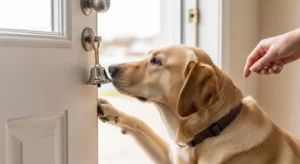
Start naming the signal. When you see your Corgi sniffing near the door, say “outside?” in a bright tone and immediately head out. You’re pairing their natural cue with your response.
Day 7: Testing Independence
Today, pull back slightly. Give your Corgi a little more room and fewer immediate prompts. See if they initiate a signal on their own.
Track how many accidents happened this week versus Day 1. If the number dropped significantly, you’ve built a real foundation. Celebrate that. Both of you earned it.
How Often Should a Corgi Puppy Pee? (Routine Breakdown)
Here’s the full list:
- Right after waking up (morning and naps)
- Within 5-10 minutes of eating or drinking
- After any play session
- After excitement (guests arriving, car rides)
- Every 2-3 hours throughout the day
The age-based rule: a 3-month-old Corgi can hold it for about 3 hours. A 4-month-old, about 4 hours. Don’t test the upper limits during training week.
Crate Training a Corgi Puppy for Faster Potty Results
Why does a crate actually help?
Dogs instinctively avoid soiling their sleeping area. A properly sized crate uses that instinct to your advantage. When your Corgi is in the crate and needs to go, they’ll hold it and signal (usually with whining) instead of just going.
That gives you a window. Take them straight from crate to outside with zero detours.
A few non-negotiables here:
- Never use the crate as punishment. It should be a safe den, not a timeout corner.
- Don’t leave a young puppy in a crate for more than 3–4 hours during the day.
- Cover the crate with a light blanket to mimic a den environment. Many Corgis settle faster with this setup.
How to Train Your Corgi to Pee Outside Quickly
Follow this every single time:
- Walk to the same outdoor spot
- Say your command word calmly: “go potty”
- Stand still. Do not walk around or chat on your phone.
- Wait up to 5 minutes.
- The moment they finish, reward immediately with a treat and praise.
- Then, and only then, allow outdoor playtime.
This order matters. If you let them play first, going potty becomes an afterthought.
Limit distractions. A Corgi puppy at 10 weeks old is distracted by literally a leaf. Keep early outdoor trips focused.
Common Potty Training Mistakes (And How to Fix Them)
Inconsistent Schedule
Life gets busy. You miss a potty break. Your pup pees on the rug. This is the number one reason training stalls.
Fix: Set phone alarms. No exceptions for the first 7 days. Treat it like a medication schedule.
Punishing Accidents
Rubbing their nose in it. Scolding after the fact. These methods are outdated and counterproductive. They create anxiety, not learning.
Fix: If you catch them mid-accident, say a calm “uh-uh,” gently interrupt, and take them outside immediately. Reward if they finish outside.
Not Supervising Enough
Too much free roam too soon is the silent training killer.
Fix: Use a leash indoors if needed. Keep your pup within eyesight at all times during the first week. Baby gates work great for limiting access to the living room.
Why is My Corgi Puppy Not Learning Potty Training?
The most common culprits:
- Too much freedom, too soon. A Corgi who can roam five rooms unsupervised will find a corner to use. Shrink the training zone.
- Inconsistent schedule. If potty breaks happen “whenever,” the puppy has no pattern to learn.
- Confusing signals. Different people in the household using different commands or doors creates real confusion for a puppy.
- Medical issue. If accidents continue past 8 weeks of consistent training, a vet check for UTI or other issues is worth it. The ASPCA recommends ruling out health causes early.
Pro Tips Most Blogs Won’t Tell You
The 10-Minute Rule. Take your puppy out exactly 10 minutes after finishing a meal. The gastrocolic reflex in puppies is strong. Eating stimulates the digestive system fast. Don’t wait 30 minutes. Ten is the sweet spot.
Use a designated potty cue sound. Some trainers use a specific whistle or clicker sound only during potty trips. This creates an audio anchor that triggers the behavior over time. We tested this with a Corgi named Biscuit in Austin, and he was signaling at the door by Day 5.
Track potty times like a mini detective. For the first week, jot down every time your puppy goes (inside or outside) and what happened right before. You’ll start seeing patterns within 48 hours. Patterns are your superpower.
Night routine hack. Limit water intake after 7 p.m. Pick up the water bowl around that time. Take them out right before bed. This significantly reduces middle-of-the-night accidents without depriving them of hydration.
Creating the Perfect House Training Environment
How should you set up your home?
Limit your Corgi’s access to the whole house in the beginning. Use baby gates to create a safe training zone, typically one room where you spend most of your time. This keeps supervision easy and accidents contained.
A training zone also means less territory to “mark” or explore. Less square footage = fewer opportunities for mistakes.
Once your pup goes several days accident-free in one zone, expand access gradually. Room by room. Earn it.
Managing Accidents Without Stress
- Interrupt calmly if you catch it happening. No yelling.
- Take them outside immediately to the usual spot.
- Reward if they finish outside.
- Clean the indoor spot thoroughly with an enzyme cleaner.
- Move on. No stress. No drama.
The cleaner step is non-negotiable. Dogs return to spots where they smell their own scent. If that scent remains, you’ve accidentally created a favorite indoor bathroom spot.
Sample Daily Puppy Schedule (Morning to Night Routine)
| Time | Activity |
|---|---|
| 6:30 AM | Wake up, potty immediately |
| 7:00 AM | Breakfast, potty 10 minutes later |
| 9:00 AM | Potty break |
| 9:15 AM | Playtime |
| 11:00 AM | Nap in crate |
| 12:00 PM | Wake from nap, potty immediately |
| 12:30 PM | Lunch, potty 10 minutes later |
| 2:30 PM | Potty break |
| 4:00 PM | Playtime |
| 5:00 PM | Potty break |
| 6:00 PM | Dinner, potty 10 minutes later |
| 7:00 PM | Remove water bowl |
| 8:30 PM | Short play, calm wind-down |
| 9:00 PM | Final potty break before bed |
| 9:15 PM | Crate for the night |
Print this out. Put it on the fridge. Share it with everyone in the household.
Can You Really Potty Train a Corgi in One Week?
Honest answer: Yes and No.
In 7 days, you can absolutely build a strong foundation. Fewer accidents, clearer signals, and a puppy who understands what you want. That’s a real win.
Full reliability, meaning zero accidents consistently for weeks, typically takes 4–8 weeks depending on the dog’s age and your consistency level.
Think of Week 1 as the launch pad. The rocket is going up. But you still need to navigate.
Stay consistent beyond Day 7. The habits you build this week will define the next several months of life with your Corgi.
Conclusion
Seven days ago, you were stepping in mystery puddles and questioning your life choices. Today, you have a schedule, a system, and a Corgi who’s starting to figure things out.
The truth is, your Corgi wants to get this right. They’re not being difficult on purpose. They’re just a baby with a small bladder and a big personality. Give them structure, patience, and a treat, and they’ll surprise you every single time.
Consistency plus patience equals clean floors. You’ve got this.
FAQs
How long does it take to potty train a Corgi puppy?
Most Corgis show real consistency within 2–4 weeks of structured training. Full reliability can take 6–8 weeks. Starting early with a clear schedule speeds up the process significantly.
What is the best potty training schedule for a Corgi puppy?
Take them out every 2–3 hours, plus after every meal, nap, and play session. Keep times consistent daily. The more predictable the schedule, the faster your puppy learns.
Why is my Corgi puppy not learning potty training?
Most likely causes are inconsistent scheduling, too much unsupervised freedom, or mixed signals from different household members. Rule out medical issues if problems persist after 6–8 weeks of consistent training.
How often should I take my Corgi puppy out to pee?
Every 2–3 hours during the day for young puppies under 4 months. Also take them out immediately after waking, eating, and playing. Use the age-in-months rule as your baseline guide.
Can you potty train a Corgi in one week?
Yes, you can build a strong foundation in 7 days with a strict schedule and consistent positive reinforcement. Full reliability will follow with continued patience beyond the first week.