
Windows down, favorite playlist on, open highway ahead and your 90-pound Golden Retriever drooling on your shoulder from the back seat.
Road trips are one of America’s greatest traditions. But when you’ve got a large breed dog in tow, that dream road trip suddenly comes with a lot of questions. Where do you stop? Will the hotel allow a dog that weighs more than some people? Can your car even fit both a suitcase and a Great Dane?
Here’s the good news: a road trip with a large dog is not only doable, it can be the best trip you’ve ever taken. You just need a solid plan before you hit the road.
This guide walks you through everything, from mapping your route to packing the right gear, so you and your big pup can hit the road with confidence.
Why Road Trips with Large Dogs Need Extra Planning
Traveling with a Chihuahua and traveling with a Bernese Mountain Dog are two completely different sports. Large breeds come with unique needs that can catch even experienced pet owners off guard.
Challenges You’ll Face
Limited space in the car. A large dog needs real room to sit, lie down, and shift positions. A cramped backseat leads to restlessness, and a restless large dog on a highway is nobody’s good time.
Frequent breaks needed. According to the Adopt A Pet, dogs should not stay in a confined space for more than 3 to 4 hours without a proper break. Large breeds, especially those prone to joint issues like hip dysplasia, feel this even more acutely.
Fewer pet-friendly accommodations. Many hotels cap pet weight at 25-50 lbs. Your 80-pound Labrador technically disqualifies at most budget chains. Finding the right stay takes real research.
Benefits of Bringing Your Dog Along
Despite the challenges, the rewards are real.
Stronger bond. Shared new experiences deepen trust and connection between dogs and owners.
Reduced separation stress. Large breeds are especially prone to separation anxiety. Keeping them with you eliminates that stress entirely.
Shared experiences. Dogs live fully in the moment. Watching your dog discover a new hiking trail or splash in an unfamiliar lake? That’s priceless.
Step-by-Step Guide to Planning a Multi-City Dog-Friendly Road Trip
Step 1: Map Out a Dog-Friendly Route
Start with the dog in mind, not just the destinations.
Use tools like BringFido to identify dog-friendly cities, parks, and pit stops along your route. Apps like Google Maps let you filter for pet-friendly businesses.
Plan your driving around what works for your dog’s energy and bladder, not just GPS efficiency. If Nashville to New Orleans is your corridor, check which towns in between have dog parks or green spaces worth a stop.
Expert Tip: Aim for cities with walkable neighborhoods or state parks nearby. Cities like Asheville, NC and Boulder, CO consistently rank high for dog-friendly travel infrastructure.
Prioritize routes that pass through or near national forests, where leashed dogs are generally welcome on trails.
Step 2: Choose the Right Vehicle Setup
Your vehicle setup can make or break this trip.
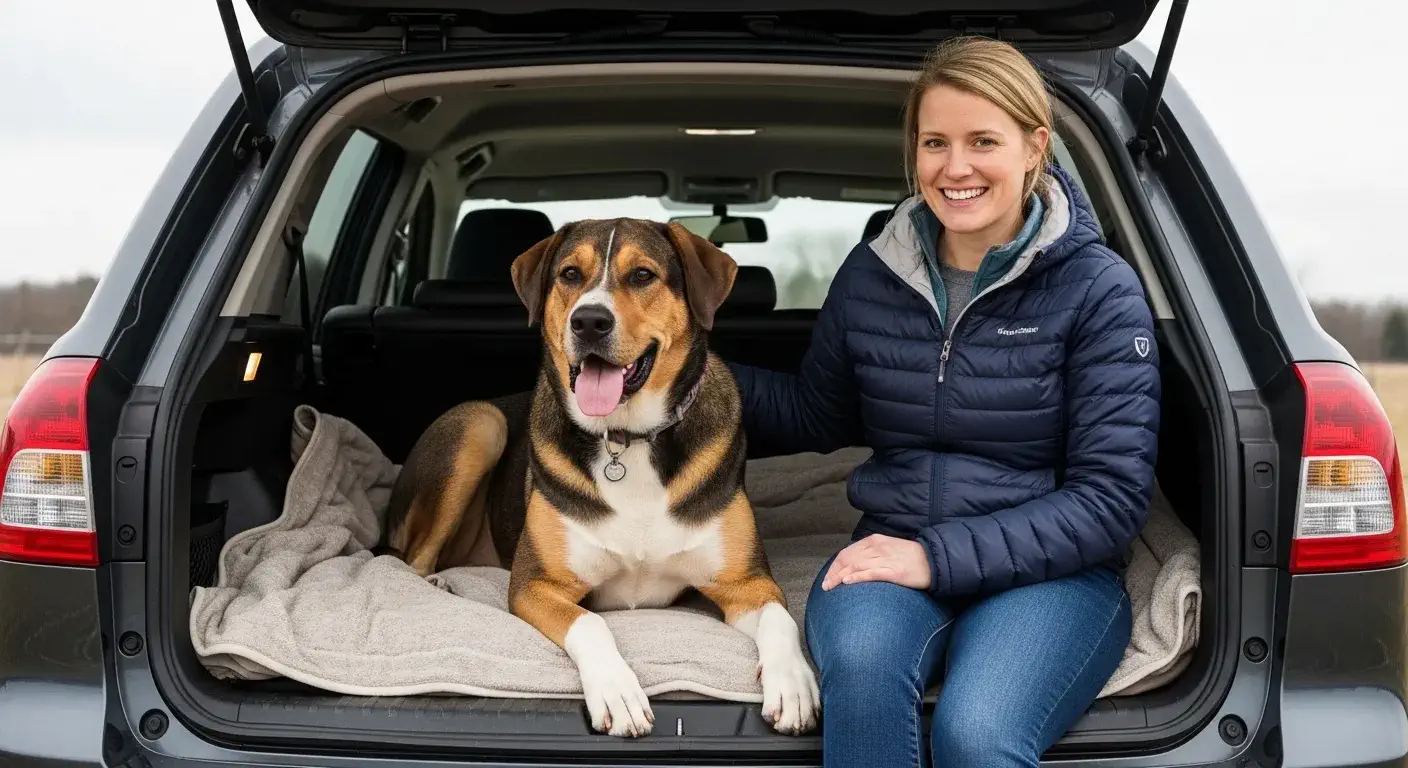
For large breeds, SUVs and minivans are your best friends. The back cargo area of an SUV, lined with a waterproof seat cover and a cushioned mat, gives a large dog room to stretch and change positions.
Consider a dog-specific travel crate that fits your cargo space. Crash-tested crates from brands like Gunner Kennels or Ruff Land Kennels offer both safety and comfort. A loose large dog in a crash becomes a dangerous projectile – for themselves and everyone in the car.
Seat belt harnesses are another option for dogs who resist crates. Look for crash-tested models from the Center for Pet Safety, which conducts independent crash testing on pet restraints.
Invest in a non-slip cargo liner, a collapsible water bowl that attaches to the seat, and a sunshade for rear windows.
Step 3: Book Pet-Friendly Stays in Advance
Do not assume a hotel is pet-friendly. Always confirm weight limits before booking.
Best strategies:
- Use Airbnb’s “Pets Allowed” filter, which typically has more flexible size policies than hotels
- Check Kimpton Hotels – they have a well-known no-size-limit pet policy across their US properties
- Call ahead to independent motels, which often have more flexible policies than chains
Always confirm: weight limit, breed restrictions, pet fees (one-time vs. nightly), and whether outdoor space is available.
Book pet-friendly stays at least 2 to 3 weeks in advance, especially during summer travel season.
Step 4: Plan Daily Driving Limits
How far is too far? For long distance car travel with a large dog, most veterinary behaviorists suggest capping driving at 6 to 8 hours per day – total moving time, not hours on the clock.
Large breeds are physically uncomfortable staying still for long periods. Dogs like German Shepherds and Rottweilers are especially prone to anxiety when confined too long.
Overdriving leads to a restless, stressed dog, which leads to a stressed driver. Keep it reasonable. A road trip is not a race.
Step 5: Schedule Breaks and Exercise Stops
The general rule: stop every 2 hours minimum.
During each stop, give your dog at least 10 to 15 minutes of active movement, not just a quick potty run. Let them sniff, stretch, and decompress. Large dogs need to physically release built-up energy.
Keep a consistent routine. If your dog is used to a morning walk, try to mirror that timing even on travel days. Familiar rhythms reduce stress significantly.
Dog Road Trip Essentials Checklist (Don’t Leave Without This!)
Here’s your complete packing framework:
Travel Essentials
- Enough food for the full trip, plus 2 extra days
- Portable, collapsible food and water bowls
- Leash and backup leash
- Well-fitted harness (not just a collar for a large dog)
- Poop bags (bring more than you think you need)
- Dog’s ID tags and microchip documentation
- Vaccination records and health certificate (required in some states)
Comfort Items
- Dog’s own bed or favorite blanket (familiar scent = less anxiety)
- 2 to 3 favorite toys
- Chews or puzzle feeders for long stretches
Safety Gear
- Crash-tested crate or seat belt harness
- First aid kit for dogs
- Reflective vest or LED collar for evening stops
- Digital copies of vet records stored in your phone
Packing Comparison Table:
| Item | Purpose | Priority |
|---|---|---|
| Crash-tested crate | Safety during travel | Essential |
| Vaccination records | Required at some hotels/parks | Essential |
| Familiar blanket | Reduces anxiety | High |
| Collapsible bowls | Hydration on the go | Essential |
| Dog first aid kit | Emergency preparedness | High |
| Puzzle feeder/chew | Mental stimulation | Medium |
How to Keep a Large Dog Comfortable and Calm During Long Drives
Comfort is not just physical. It’s emotional too.
Managing Anxiety
Bring familiar items from home. Your dog’s own bed, a worn t-shirt with your scent, or a favorite toy signals safety in an unfamiliar environment.
Before a long driving day, exercise your dog thoroughly. A tired dog is a calm dog. A 30 to 45-minute walk or play session before departure can dramatically reduce in-car restlessness.
For dogs with significant travel anxiety, speak to your vet before the trip. Options range from calming supplements like L-theanine to vet-prescribed anti-anxiety medications for extreme cases.
Temperature and Space Management
Never leave your dog in a parked car, even for a few minutes. According to the American Veterinary Medical Association, temperatures inside a car can rise 20 degrees in just 10 minutes, even on a mild day. This is deadly for large dogs.
Keep the vehicle well-ventilated. Use a fan attachment designed for car crates if needed. Avoid direct afternoon sun on your dog’s area.
Feeding and Hydration Tips
Feed your dog a few hours before driving, not right before. Motion on a full stomach can cause nausea, especially in large dogs.
Offer water at every stop, not just when they seem thirsty. Dehydration in a warm car happens faster than most owners expect.
Stick as closely as possible to your dog’s regular feeding schedule throughout the trip.
Best Types of Stops for Large Dogs on Multi-City Trips
Not all stops are created equal. Here’s what to prioritize:
Dog Parks and Open Spaces
Off-leash dog parks are gold on a road trip. Apps like Sniffspot and BringFido show you dog parks along your route. Even 20 minutes of off-leash running resets a large dog’s mood entirely.
Pet-Friendly Cafes and Rest Stops
Many independent cafes and breweries in cities like Portland, Denver, and Austin openly welcome leashed dogs on their patios. Use Yelp’s “Dogs Allowed” filter when scouting food stops.
Highway rest areas in most states allow leashed dogs in designated grassy areas. These are decent for a quick stretch, but not a substitute for a real exercise stop.
Scenic Walking Trails
Many national forest trails and state parks are dog-friendly with a leash. Check the specific park’s website before arriving, as rules vary. AllTrails has a “dogs allowed” filter that’s incredibly useful for route planning.
Common Mistakes to Avoid When Traveling with a Large Dog
Learning from others’ mistakes is smarter than making your own.
Overpacking or Underpacking
Overpacking takes up space your dog needs. Underpacking means scrambling for supplies mid-trip. Use the checklist above and stick to it.
Skipping Breaks
“We’re almost there” is how dogs end up anxious, uncomfortable, and acting out. Skipping breaks to save time almost always costs you more time dealing with the consequences.
Ignoring Your Dog’s Behavior Signals
Panting, whining, pawing at the door, or refusing to eat are signs your dog is stressed. Don’t push through it. Pull over, give them space, reassess.
Choosing the Wrong Vehicle Setup
Putting a 90-pound dog in a compact sedan with no crate or restraint is both uncomfortable and dangerous. Match your vehicle setup to your dog’s size before the trip, not after.
Pro Tips for a Smooth Road Trip with Your Dog
These are the details that separate a good trip from a great one.
Test short trips first. Before a 10-day road trip, do a 2 to 3 hour day trip with your dog. See how they handle confinement, unfamiliar stops, and the general vibe of travel. Adjust from there.
Use GPS apps built for pet travel. Apps like GoPetFriendly and Roadtrippers have pet-friendly filters that show you hotels, parks, and stops in real time along your route.
Keep digital copies of all pet documents. Save your dog’s vaccination records, microchip information, and vet contact details in a dedicated folder on your phone. Some states and parks require proof at entry.
Pack a “dog day bag.” A small backpack with a leash, water, bowl, poop bags, and a treat pouch that stays accessible in the front seat means you’re always ready to stop without digging through luggage.
Conclusion
A multi-city road trip with a large breed dog takes more planning than a solo adventure. But it also gives you something most trips can’t: a travel companion who is completely thrilled just to be with you.
With the right route, the right setup, and the right mindset, you and your big dog can cover hundreds of miles and create memories that last a lifetime. Plan well, stop often, stay flexible, and enjoy every tail wag along the way.
The road is wide open. Go explore it together.
FAQs – Real Questions Dog Owners Ask
How often should I stop during a road trip with a large dog?
Every 2 hours is the standard recommendation. During each stop, give your dog at least 10 to 15 minutes of active movement, not just a quick potty break.
What is the safest way for a large dog to travel in a car?
A crash-tested crate secured in the cargo area of an SUV is widely considered the safest option. Alternatively, a crash-tested seat belt harness provides solid protection. The Center for Pet Safety publishes independent crash test ratings for both options.
Can large dogs handle long-distance road trips?
Yes, with proper planning. Large dogs need more space, more breaks, and more pre-trip exercise than small breeds, but they are fully capable of enjoying long road trips when their needs are met.
How do I keep my dog calm in the car for long hours?
Bring familiar items from home, exercise them thoroughly before driving, maintain a regular feeding schedule, and keep the car cool and well-ventilated. For dogs with severe anxiety, consult your vet about calming supplements or medication before the trip.
What should I pack for a multi-city dog road trip?
Your core packing list: food and water, collapsible bowls, leash and backup leash, harness, poop bags, vaccination records, familiar bedding, favorite toys, and a crash-tested crate or harness. A dog-specific first aid kit is also highly recommended.
Are hotels in the USA generally pet-friendly for large dogs?
Many are not, especially for dogs over 50 pounds. Kimpton Hotels have no weight limits. Airbnb rentals with pet-friendly filters often accommodate large breeds. Always call ahead to confirm weight policies, breed restrictions, and pet fees before booking.