By Tyler Vance · Updated November 2026
Affiliate Disclosure: This post contains affiliate links. If you buy through them, we may earn a small commission at no extra cost to you.
You open the door after a rainy walk, and your dog is wearing four brown boots. Three seconds later, so is your floor.
The best dog paw cleaner for muddy paws is the one that fits your dog’s paw size, matches the kind of mess you actually deal with, and is something your dog will put up with. A cup that’s too small won’t fit a Lab’s paw. A wipe won’t cope with wet clay. And a tool that works for a calm dog can be useless for one who yanks away.
This guide covers six options: four paw washer cups, one no-rinse foam cleaner, and one absorbent mud mat. You’ll also find a simple way to measure your dog’s paw, tips for heavy caked-on mud, and what to do if your dog hates having paws touched.
One note on how this was put together: we researched these products and did not test them ourselves. The details below come from manufacturer and retailer listings, published reviews, customer feedback, and veterinary sources, and we say which is which.
Our Top Picks at a Glance
| Pick | Product | Type | Best for |
|---|---|---|---|
| Best overall | Dexas MudBuster | Paw washer cup | Everyday wet mud, wide size range |
| Best for large dogs | CHOOSEEN Dog Paw Cleaner | Paw washer cup | Big paws and heavy mud |
| Best for small paws | Tinioey Dog Paw Cleaner (mini) | Paw washer cup | Small dogs, towels included |
| Best for travel | Paw Plunger | Lidded paw washer cup | Car trips and trailheads |
| Best waterless option | PUPMATE No-Rinse Paw Cleaner | Foam with brush | No water, or a dog wary of cups |
| Best finishing step | Gorilla Grip Soak Stopper chenille mat | Absorbent mat | Catching drips after washing |
A quick shortcut: for most dogs, a correctly sized cup plus a towel handles wet mud well. Add a mat if you want a cleaner landing zone. Choose the foam if water is unavailable or your dog dislikes cups.
Sizes and specs here come from published listings and may change. Always confirm that the size you choose matches your dog’s paw width. The measuring section below shows how.
How We Researched These Paw Cleaners
We haven’t physically tested these products, and we won’t claim otherwise. Here’s what we did instead:
- Reviewed manufacturer and retailer listings for sizes, materials, and features.
- Read published roundups and product reviews to see which products come up repeatedly.
- Looked at customer feedback on retail pages to spot recurring complaints. We treat these as opinions from individual buyers, not verified facts.
- Used veterinary and pet-care sources, such as the American Kennel Club, Hill’s Pet, and PetMD, for the paw-care and safety guidance.
We judged each product on how well it fits different paw sizes, how the bristles and opening are designed, how stable it is, whether it comes apart for cleaning, whether it’s portable, and what it can’t do. Where a benefit is a manufacturer claim, such as “antibacterial” or “BPA-free,” we say so.
Which Type of Paw Cleaner Do You Actually Need?
Before you pick a product, pick a type. Each one solves a slightly different problem.
Paw washer cups
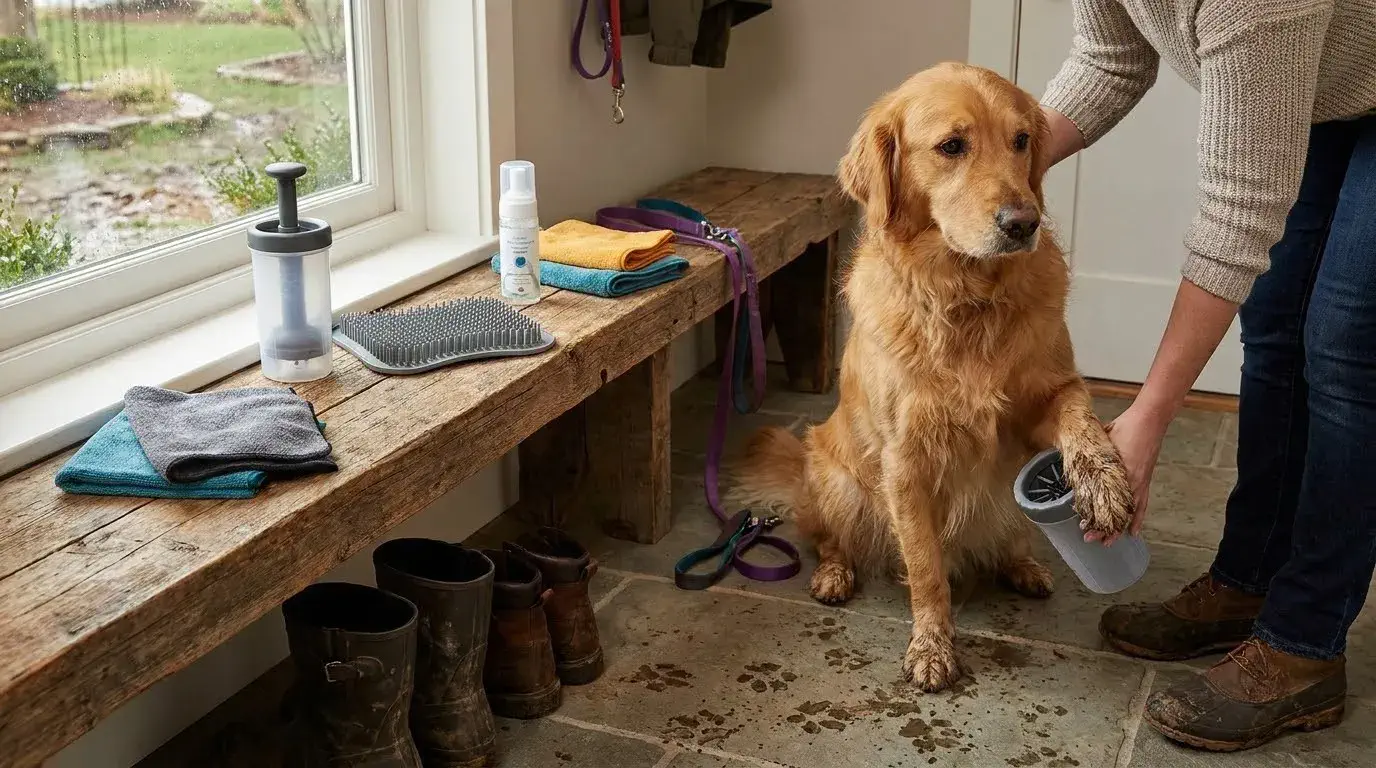
These are small cups with soft silicone bristles inside. You add water, slide a paw in, twist, and pull it out. They’re built for wet mud and sand because the mess ends up in the cup instead of on your floor.
The tradeoffs: you have to refill the water, your dog has to tolerate a paw going into a cup, and some mud may stay behind. One Chewy reviewer said they still needed an old rag for leftover mud after twisting the cup.
No-rinse foam cleaners
Foam cleaners come with a small silicone brush. You work the foam over the paw and wipe it off, with no water needed. They suit trips where you don’t have a sink, or dogs who won’t stand for a cup. They’re better for light-to-moderate dirt than for thick slop.
Wipes
Wipes are handy for quick touch-ups. The American Kennel Club notes that pet-safe wipes work for muddy, sandy, or salty paws, but that you may need a warm, soapy washcloth for serious messes. Preventive Vet makes the same point: wipes are a good follow-up or a fix for lighter messes, but not a replacement for a rinse when paws are heavily muddy.
Wipes are a different search intent and a different product type, so we’re not recommending specific wipes in this guide.
Chenille mud mats
A chenille mat doesn’t clean paws between the toes, but it soaks up moisture and loose dirt as your dog walks across it. It works well as the last step after a cup or a towel.
Automatic paw cleaners
Battery-powered cups exist. One roundup describes a model that’s cordless and rechargeable but fits only paws under about two inches wide, and it notes that the noise and movement may stress some dogs. Because of that, and the higher price, we’re not recommending one here.
Quick guide: match the tool to the mud
| What’s on your dog’s paws | Best starting point |
|---|---|
| Wet, sloppy mud | Paw washer cup, then a towel |
| Dried, caked clay | Brush off loose mud, then a cup or wash |
| Sand | Paw washer cup (bristles reach between pads) |
| Snow, ice, and road salt | Room-temperature water in a cup, then dry |
| Just damp paws | Towel or mat |
| No water available | No-rinse foam |
How to Measure Your Dog’s Paw (and Pick the Right Size)
Wrong size is one of the most common problems in customer feedback. One Chewy reviewer called a large cup comically big for a small dog and said it spilled easily when tipped. A two-minute measurement helps avoid both.
- Have your dog stand on a flat surface with weight on the paw. A standing paw spreads wider than a lifted one.
- Hold a ruler across the widest part of the paw, usually across the toes, and note the width in inches.
- Measure all four paws if you can, and use the widest number.
- Compare that number to the manufacturer’s stated range, and leave a little room so the paw slides in easily. If your dog has fluffy feet, fur adds bulk, so measure with the fur in place.
Here’s sizing information as published on retailer and review pages. Confirm it on the current Amazon listing before you order.
| Product | Published sizing details |
|---|---|
| Dexas MudBuster | Petite is listed for paws up to 2 inches wide; medium for paws 1.5 to 2.5 inches wide |
| Tinioey (Small) | Cup about 4.4 inches tall and 3.5 inches wide, suited to paws up to 2 inches wide; medium and large sizes also exist |
| Paw Plunger | Overall cup dimensions: petite 3.5 by 4 inches, medium 5.75 by 6.25 inches, large 6.5 by 9.6 inches |
| CHOOSEEN | Sold in large and extra-large; check the listing for the paw range |
Notice that the Paw Plunger numbers describe the cup, not the paw. Some brands list the paw range and others list the product’s outside size, so don’t compare them directly.
Best Dog Paw Cleaners for Muddy Paws, Reviewed
These six picks are grouped by situation. They’re listed in the order most readers will want them, starting with the most broadly useful. Measure first, then match the size.
1. Best Overall: Dexas MudBuster
Best for: Owners who want a proven, simple cup in sizes from small to large.
The MudBuster is a cup lined with soft silicone bristles. You add water, insert the paw, twist, then dab the paw dry and repeat. It’s a staple of paw-cleaner roundups, and published reviews list it as a top or best-overall pick.
What stands out
- Comes in 3 sizes and multiple colors.
- Reviewers note it comes apart for cleaning, and one lists it as dishwasher safe. Confirm that on the manufacturer’s page.
- A lidded version is also sold, which may help with spills in the car.
Pros
- Wide size range covers many dogs.
- Simple design with nothing to learn.
- Bristles are described as soft, which suits sensitive paws.
Cons
- Some buyers report leftover mud that needed a rag.
- One roundup describes it as a bit pricier than some alternatives.
- A customer who bought the large size for a small dog found it too big, so size carefully.
Check before you buy: Confirm the paw-width range for your size and whether you want the lidded version.
2. Best for Large Dogs and Heavy Mud: CHOOSEEN Dog Paw Cleaner
Best for: Owners of big dogs, such as Shepherds or Huskies, whose paws overwhelm smaller cups.
This two-in-one cup is sold in large and extra-large. One roundup says buyers with big dogs report it fits their paws, and that a few reviewers used room-temperature water to clear small bits of ice.
What stands out
- Three removable parts, according to a published review: a soft silicone top, silicone bristles, and a clear cup with a wristlet.
- The soft top can be removed and used as a grooming brush.
- Listed as BPA-free, which is a manufacturer claim.
Pros
- Built for larger paws.
- Removable parts make rinsing easier.
- The wristlet may help with grip when your hands are wet.
Cons
- A large cup holds more water, which means more weight and more potential for spills.
- Larger cups are bulkier to store by the door.
Check before you buy: Confirm the paw range for each size, especially if your dog is between large and extra-large.
[View on Amazon]
3. Best for Small Paws: Tinioey Dog Paw Cleaner (Small)
Best for: Small dogs and puppies whose paws are about 2 inches wide or less.
The mini size is about 4.4 inches tall and 3.5 inches wide, suits paws up to two inches across. It also comes in medium and large sizes.
What stands out
- The inner brush is detachable.
- It includes three absorbent towels, so you can dry paws right away.
- The brush can double as a coat brush.
Pros
- Right-sized for small paws, which avoids the oversized-cup problem.
- Towels included.
Cons
- Small dogs often have an easy time with a towel, so you may not need a cup unless mud is routine.
- If your dog is close to the two-inch limit, size up.
Check before you buy: Confirm which towel and brush pieces come with the size you’re ordering.
4. Best for Travel and the Car: Paw Plunger
Best for: Hikers, beach-goers, and anyone who wants a pre-filled cup ready at the trailhead.
Published reviews say you can fill it ahead of time, snap on the lid, and keep it in the car. It has a handle, which helps with the larger sizes, and it comes in petite, medium, and large.
What stands out
- Lid lets you carry it filled.
- Wide opening and an easy-grip handle, per one review.
- Marketed for mud, dirt, snow, and salt.
Pros
- Handle and lid make it easy to use away from home.
- Different sizes cover small to large dogs.
Cons
- One roundup says it can’t be taken apart for cleaning, and it lists the price as high.
- Customer opinions are mixed. One Chewy reviewer called it a lifesaver for a very muddy yard, and another found it a waste of money because their dog’s other paws kept flailing.
Check before you buy: Confirm whether it disassembles and whether the lid seals well enough for car travel.
5. Best Waterless Option: PUPMATE No-Rinse Paw Cleaner
Best for: Quick cleanups with no water, or dogs that won’t tolerate a cup.
This is a foam cleaner with a soft silicone brush, designed for use without rinsing. The brush is removable, and the product is marketed as safe for dogs and cats. Another describes the formula as antibacterial, hydrating, and deodorizing, which is a manufacturer-style claim we can’t verify.
Pros
- No water needed.
- Compact enough for a bag or the car.
Cons
- Can cost more than some other paw cleaning products.
- Not designed for thick, wet mud.
- Scented formulas may bother some dogs and people.
Check before you buy: Read the full ingredient list, and plan to wipe off any residue, since dogs often lick their paws. If your dog has sensitive skin or allergies, ask your vet first.
6. Best Finishing Step: Gorilla Grip Soak Stopper Chenille Mat
Best for: Catching leftover drips and dampness after a cup or towel.
Vetstreet selected a chenille doormat from this line as its best paw-cleaner mat. It won’t clean between toes, but it soaks up moisture as your dog walks across it, so it’s a no-contact way to cut down on tracking.
Pros
- No handling required, so it’s good for dogs who dislike paw touching.
- Absorbs water that would otherwise end up on your floor.
Cons
- It does not remove mud caked between toes.
- Mats need regular laundering or shaking out. Check the care label before buying.
Check before you buy: Confirm the size fits your entryway and review the care instructions.
What to Look For in a Paw Washer Cup
Size matters most, but a few other features separate a cup you’ll use from one that ends up in a closet.
- Opening size and shape. The paw has to slide in without a fight. Some brands list paw range, others list cup size, so check which one you’re reading.
- Bristles. Soft, flexible silicone is gentler on pads. Removable bristles are easier to rinse. Some cups, such as the Wahl Muddy Paw cup, are described as squeezable and able to flip inside out for emptying. Confirm US availability before you plan on one.
- Stability. A flat base lets the cup stand while you fill it. Tippy cups mean spilled muddy water.
- Lid and handle. Worth it if you travel. Not necessary for a cup that lives by the back door.
- Disassembly. Pieces that come apart dry faster and are easier to clean.
- Material claims. “BPA-free” and “antibacterial” are manufacturer claims. They’re worth reading, but we haven’t independently verified them.
How to Get Muddy Paws Clean (and Keep Your Dog Calm)
A simple door-side routine
- Set up before the walk: cup, towel, and mat by the door. Fill the cup with lukewarm water.
- Check the paw for burrs, cuts, or anything stuck between the toes before washing.
- Slide one paw in, twist gently, and lift out. Repeat on each paw.
- Towel-dry each paw. A cup can leave paws wet, and wet paws still leave prints.
- Let your dog step onto the mat on the way in.
Heavy, caked-on mud
Thick, dried mud is the hardest case. A practical approach is to let loose clumps dry and brush them off outdoors first, then use the cup for what’s left. If mud is stuck between the toes, you may need a second pass or a warm, soapy washcloth, as the AKC suggests for serious messes. For truly heavy cases, a quick rinse in a tub or with a hose may be easier than a cup.
A cup also doesn’t reach legs and belly. If those are muddy too, plan a towel or a bath.
If your dog hates having paws touched
Some dogs resist paw handling, and a cup that grabs one paw can set off a struggle. A reviewer at Business Insider suggests introducing the cup dry first, so your dog can sniff it and get used to it before any water is involved.
Build up slowly:
- Let your dog check out the empty cup, and reward calm behavior.
- Touch the cup to a paw briefly, then give a treat.
- Add water only after your dog is comfortable.
- End sessions while your dog is still relaxed.
If your dog is fearful, snaps, or seems to be in pain, stop. Talk with your vet or a qualified trainer. Foam or a mat may be a better fit for now.
Cleaning the cleaner
Empty the cup after each use, rinse it, and let it air dry. If it comes apart, take out the bristles so they can dry fully. Wiping standing muddy water out of the cup helps keep it from smelling.
Paw Safety: What to Check After Mud, Salt, and Snow
Cleaning paws is also a chance to inspect them. Hill’s Pet suggests checking for items like cockleburs and acorn shells before washing, and says to look at the feet after big outings or at least weekly.
In winter, PetMD notes that salted sidewalks can irritate paws, and the ASPCA advises washing and drying feet after walks to remove ice, salt, and chemicals.
Look for:
- Redness, swelling, or cracked pads.
- Cuts or foreign objects between the toes.
- Ticks hiding in fur between toes.
- A strong odor or constant licking, which can signal a problem.
Call your vet if you see signs of injury or infection. A paw cleaner is not a treatment tool. If you use a foam or any added soap, check the label for pet safety and wipe off residue, since dogs often lick their feet.
Common Mistakes When Cleaning Muddy Paws
- Ordering the wrong size. Measure first and read the size range on the listing.
- Skipping the dry step. Wet paws still track dirt and water.
- Using a wipe for heavy mud. Wipes are better for light messes.
- Using human soap without checking. If you add soap, make sure it’s labeled safe for dogs.
- Overfilling a large cup. More water means more spills and a heavier cup.
- Forcing a reluctant dog. It makes the next session harder.
Final Verdict: Which Paw Cleaner Should You Buy?
| If this sounds like you | Consider |
|---|---|
| Average dog, wet mud, daily walks | Dexas MudBuster in the right size |
| Big dog with large paws | CHOOSEEN (large or extra-large) |
| Small dog or puppy | Tinioey Small |
| Hikes, beach trips, car use | Paw Plunger |
| No water, or a dog wary of cups | PUPMATE foam |
| Dog hates handling, but drips are the issue | A chenille mat like the Gorilla Grip Soak Stopper |
Most households do best with one correctly sized cup, a towel, and a mat by the door. If one dog dislikes the cup, switch to foam or a mat instead of pushing it.
Whichever you choose, measure your dog’s paws first. It’s the simplest way to avoid the most common complaint.
Frequently Asked Questions
Do paw washer cups work on heavy, caked-on mud?
They work best on wet mud. Dried, caked-on clay may need to be loosened or brushed first. Some buyers report leftover mud after using a cup, so a towel or washcloth is a smart backup.
Are paw cleaner cups better than wipes?
For wet or heavy mud, a cup is usually the better tool. For light messes, wipes are fine. The AKC says wipes work for quick cleanups but that serious messes may call for a warm, soapy washcloth.
What size paw cleaner do I need?
Measure the widest part of your dog’s standing paw and compare it to the manufacturer’s stated range. Allow a little extra room. See the measuring section above for steps.
What if my dog hates having paws touched?
Introduce the cup dry, use rewards, and keep sessions short. If your dog is still resistant, try a no-rinse foam or a mat. Fear or aggression is a good reason to talk with your vet or a trainer.
What should I put in a paw cleaner?
Plain water is enough for most cleanups, according to one buying guide. In cold weather, room-temperature or lukewarm water is easier on paws. If you add soap, make sure it’s labeled safe for dogs.
Are no-rinse foam cleaners safe if my dog licks its paws?
It depends on the formula. Read the ingredient list, wipe off any residue, and ask your vet if your dog has sensitive skin or allergies. We can’t verify manufacturer safety claims.
How often should I clean my dog’s paws after walks?
It depends on your dog’s lifestyle. Hill’s Pet suggests cleaning after heavy outdoor activity such as hiking, and checking paws after big outings or at least weekly. Dogs on light neighborhood walks may only need cleaning when paws are visibly dirty or wet.
Can I use a dog paw cleaner on a cat?
Some products say they’re for dogs and cats, but many cats won’t tolerate paw handling. Check the product’s size and manufacturer guidance, and ask your vet if you’re dealing with a skin issue.
Sources
- American Kennel Club, How to Clean and Care for Your Dog’s Paws: https://www.akc.org/expert-advice/health/clean-dog-paws/
- Hill’s Pet, Cleaning Your Dog’s Paws: https://www.hillspet.com/dog-care/routine-care/cleaning-your-dogs-paws.html
- PetMD, 7 Ways to Clean Your Dog’s Paws: https://www.petmd.com/dog/slideshows/7-ways-clean-your-dogs-paws
- Preventive Vet, How to Clean Dog Paws After Walks: https://www.preventivevet.com/dogs/how-to-clean-dog-paws-after-walks
- ASPCA winter safety advice, as reported by KRTV: https://www.krtv.com/community/pawsitive-impact/winter-pet-safety-great-falls-animal-shelter-warns-of-hidden-dangers-beneath-pets-paws
This article was last updated in November 2026. Product details can change, so confirm specs and sizing on the Amazon listing before you buy.