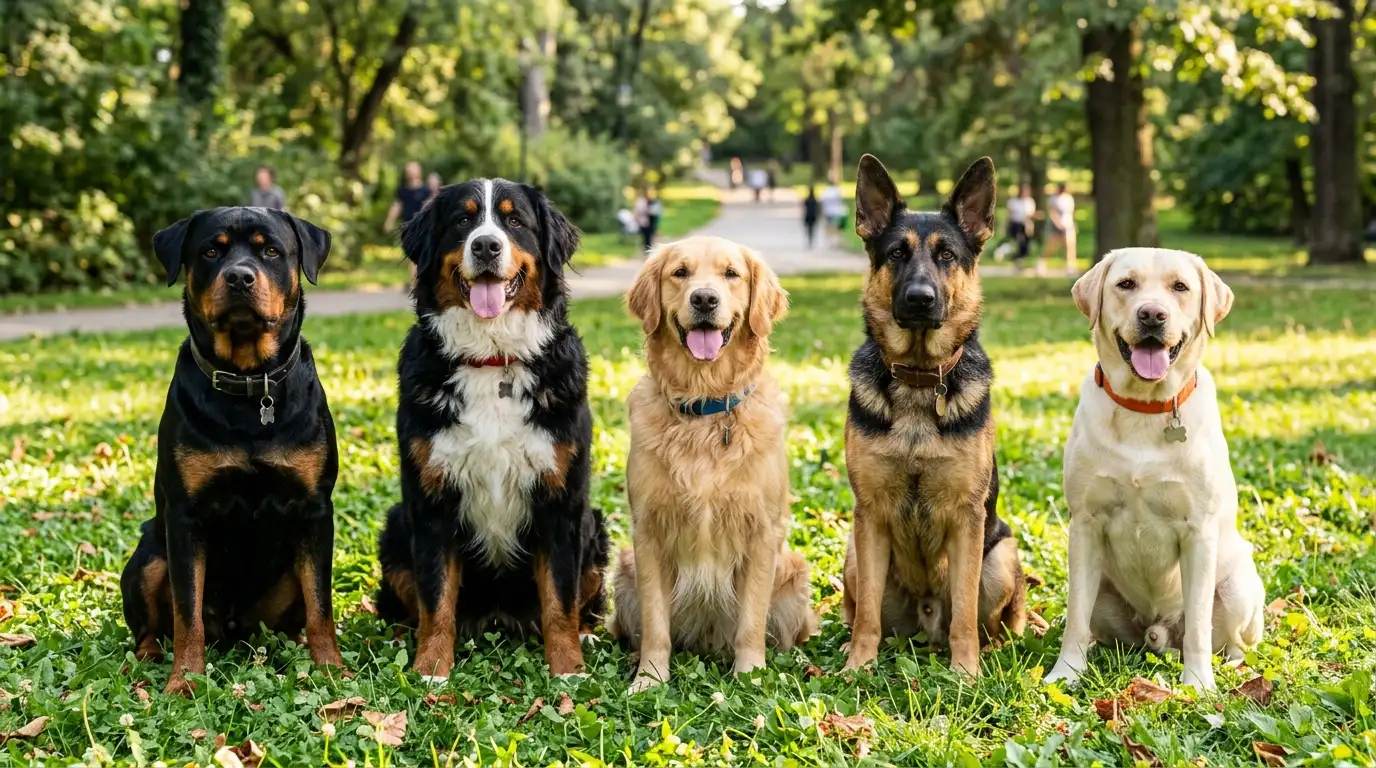
Have you ever had a 100-pound dog try to squeeze onto your lap like a toy poodle? If you have, you already understand something special about large breed dogs. They are goofy, loving, and completely unaware of their own size.
And that is the best part.
But here is the thing: searching for the right large dog breed can feel overwhelming. There are dozens of breeds out there, all with different energy levels, personalities, and care needs. What works for a family in a Denver suburb might not work for a single guy in a Brooklyn apartment.
That is exactly why we built this guide.
This is your complete list of large dog breeds, with real breed profiles, personality traits, size breakdowns, and practical tips for everyday American dog owners. Whether you are adopting your first big dog or just doing research, you will find everything you need right here.
What Actually Makes a Dog “Large”? (Size Guide for Beginners)
Before we jump into the profiles, let us clear something up. “Large” means different things to different people.
Most dog experts and organizations like the American Kennel Club (AKC) use weight as the primary measure. Here is a simple breakdown to help you understand size categories:
| Size Category | Weight Range | Height (approx.) | Example Breeds |
|---|---|---|---|
| Medium-Large | 50-65 lbs | 20-23 inches | Siberian Husky, Boxer |
| Large | 65-100 lbs | 23-27 inches | German Shepherd, Labrador |
| Giant | 100+ lbs | 27+ inches | Great Dane, Saint Bernard |
For this guide, we are using a broad definition. If a breed regularly tips the scales above 50 pounds at full adult size, it earns its spot on this list.
One quick tip: do not let size scare you. Activity level, temperament, and training needs matter far more than how much a dog weighs.
The Complete List of Large Dog Breeds: Profiles, Traits and Pictures
Ready to meet your future best friend? Here are 15 of the most popular, most loved, and most recognizable large dog breeds in the USA.
1. Labrador Retriever
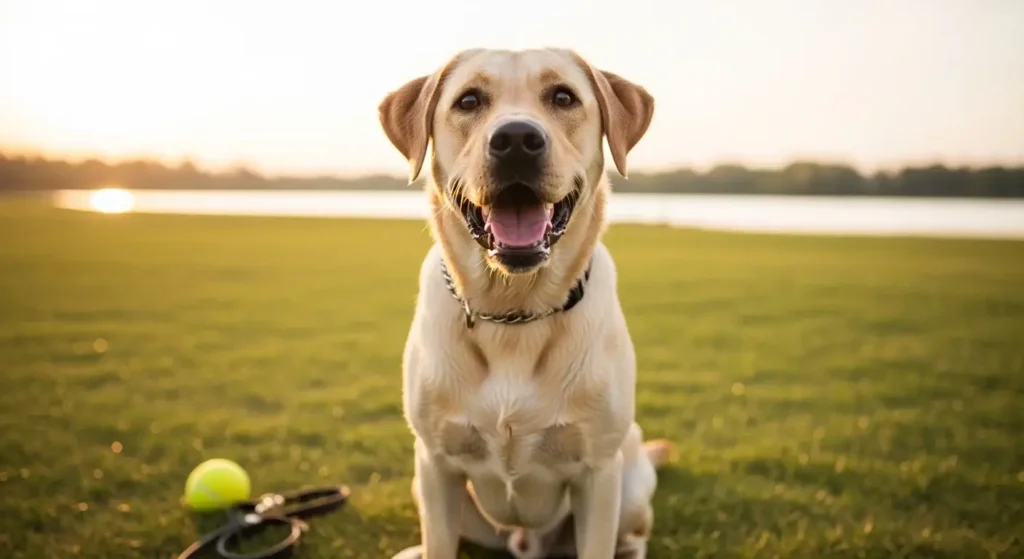
Weight: 55-80 lbs | Height: 21-24 inches | Energy Level: High
If you have ever been to an American dog park, you have seen a Lab. They are everywhere, and for good reason. According to the AKC’s most popular breeds report, the Labrador Retriever held the top spot in the USA for over 30 consecutive years.
Labs are friendly, outgoing, and endlessly patient. They love kids, tolerate other dogs, and will enthusiastically retrieve a tennis ball until one of you collapses from exhaustion (spoiler: it will be you).
Best for: First-time owners, families with children, active individuals.
Standout trait: Labs are among the most trainable dogs in the world. They are used as guide dogs, search-and-rescue dogs, and therapy animals across the country.
Quick tip: Labs love to eat. They will gain weight fast without portion control. Stick to a structured feeding schedule and give them daily exercise.
2. German Shepherd
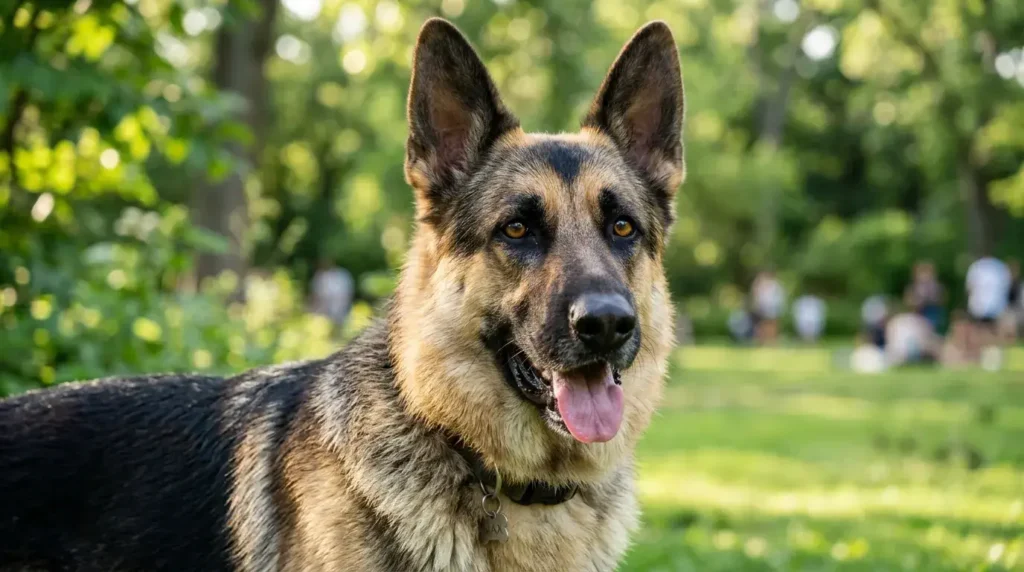
Weight: 50-90 lbs | Height: 22-26 inches | Energy Level: High
The German Shepherd is one of the most versatile dogs ever bred. They work as police K-9s, military dogs, service animals, and family companions. That kind of range does not happen by accident.
GSDs are brilliant, fiercely loyal, and incredibly driven. They bond deeply with their primary person and will go to great lengths to protect their family.
Best for: Experienced dog owners, active households, working roles.
Standout trait: Their intelligence is exceptional. The AKC ranks German Shepherds among the top five most intelligent dog breeds, alongside Border Collies and Poodles.
Quick tip: A bored German Shepherd is a destructive German Shepherd. They need daily mental stimulation, not just physical exercise. Puzzle toys, obedience training, and nose work are all great options.
3. Golden Retriever
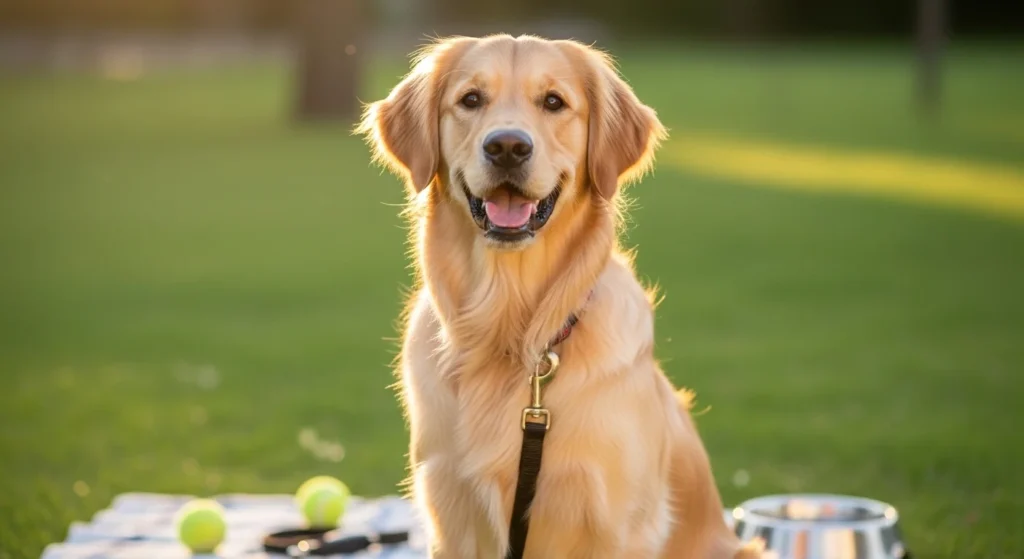
Weight: 55-75 lbs | Height: 21-24 inches | Energy Level: Medium-High
Is there a more universally beloved dog than the Golden Retriever? Ask anyone in America to picture the perfect family dog, and there is a good chance they are picturing a Golden.
Goldens are patient, gentle, and almost impossibly cheerful. They greet everyone like a long-lost friend. They are also remarkably emotionally intelligent, which is why they are so widely used in therapy and emotional support roles.
Best for: Families with young children, first-time owners, those looking for a therapy or service dog.
Standout trait: Golden Retrievers are genuinely joyful dogs. They have a unique ability to lighten up any room.
Quick tip: Goldens are also known as “Velcro dogs.” They want to be near their people at all times. They do not do well with long periods of isolation, so factor that into your daily routine.
4. Rottweiler
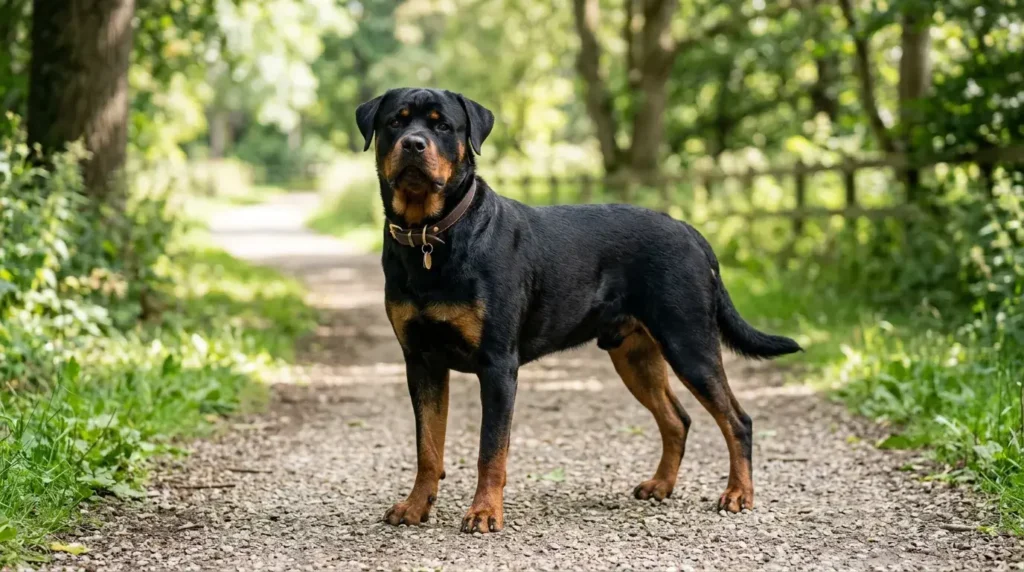
Weight: 80-135 lbs | Height: 22-27 inches | Energy Level: Medium
Here is a breed that gets a bad rap for no good reason. The Rottweiler is one of the most misunderstood dogs in America.
Yes, Rottweilers are powerful and protective. But at home, with a family that raised them right, they are affectionate, calm, and surprisingly silly. They love their people deeply and are known to be especially gentle with children they grew up with.
Best for: Experienced dog owners, confident handlers, those wanting a protective companion.
Standout trait: Rottweilers are natural protectors with a strong instinct to guard their family. That instinct needs to be channeled through early socialization and consistent training.
Quick tip: Rottweilers benefit enormously from learning dog body language signals early on. Understanding how your Rottie communicates helps you build a relationship built on trust, not dominance.
5. Bernese Mountain Dog
Weight: 70-115 lbs | Height: 23-28 inches | Energy Level: Medium
If labs are the energetic jocks of the large dog world, Bernese Mountain Dogs are the calm, gentle professors. They are big, fluffy, easygoing, and seem to have mastered the art of just being present.
Originally bred in the Swiss Alps as farm dogs, Berners are used to cold weather and wide-open spaces. But they adapt well to family life in American suburbs, as long as they have a yard to hang out in.
Best for: Families with space, multi-pet households, cold-weather climates.
Standout trait: Berners are famous for their gentle temperament with children. They are patient almost to a fault. One thing to know: they shed a lot. Like, a whole lot.
Quick tip: Berners are lower energy than Labs or Shepherds, which makes them a wonderful choice for families who want a big, loving dog without the constant need for intense exercise.
6. Great Dane
Weight: 110-175 lbs | Height: 28-32 inches | Energy Level: Low-Medium
Meet the gentle giant of the dog world. The Great Dane holds the record as the world’s tallest dog breed, according to Guinness World Records. Yet despite their towering stature, Great Danes are famously calm, affectionate, and remarkably easygoing indoors.
They are often called “apartment dogs in disguise” because they spend a lot of time just lounging around. They do not need hours of vigorous exercise. They just need your company.
Best for: Owners with space, those who want a calm temperament in a large body.
Standout trait: Great Danes have a signature move called “leaning,” where they press their full body weight against you as a sign of affection. It sounds sweet. It is. It also weighs 150 pounds.
Quick tip: Great Danes are deep-chested dogs, which makes them prone to bloat. Learn more about deep-chested dog breeds and how to manage feeding safely for this body type.
7. Boxer
Weight: 50-80 lbs | Height: 21-25 inches | Energy Level: High
Boxers are the class clowns of the large dog world. They are playful, goofy, bouncy, and absolutely hilarious to live with. Dog trainers often call the Boxer the “Peter Pan breed” because they stay in a puppy-like mindset for years into adulthood.
Boxers are incredibly loyal and fiercely devoted to their families. They are also brave, which makes them solid watchdogs despite their silly personalities.
Best for: Active families, owners who enjoy playtime and interaction.
Standout trait: Boxers communicate with their whole body. Wiggly butt, spinning in circles, jumping straight up in the air. Life with a Boxer is never boring.
Quick tip: Boxers are brachycephalic, meaning they have shorter snouts. They can overheat quickly, so keep outdoor activities short during hot American summers.
8. Doberman Pinscher
Weight: 60-100 lbs | Height: 24-28 inches | Energy Level: High
The Doberman Pinscher looks like it was designed in a lab specifically to be impressive. Sleek, athletic, and alert, the Doberman is one of the most capable working dogs ever developed.
But beneath that polished exterior is a dog that is madly in love with its owner. Dobermans are sometimes called “velcro Dobies” because they follow their person from room to room.
Best for: Experienced owners, those wanting a loyal guardian and athletic companion.
Standout trait: Dobermans rank among the most trainable dogs in the world. They respond quickly to commands and thrive with structure and consistent leadership.
Quick tip: Socialization is critical for Dobermans. Expose them early to new people, environments, and situations. A well-socialized Doberman is a joy. An under-socialized one can become anxious and reactive.
9. Siberian Husky
Weight: 35-60 lbs | Height: 20-23 inches | Energy Level: Very High
Okay, technically Huskies are on the border of medium and large. But ask any Husky owner and they will tell you: there is nothing medium about this dog. They are big personalities in a medium-ish body.
Huskies were bred for one purpose: running. Long distances. In freezing temperatures. For hours. That working heritage means they have enormous energy reserves that need to go somewhere.
Best for: Active, experienced owners. Cold climates. Patient households.
Standout trait: Huskies talk. They howl, groan, moan, and “woo-woo” at you in what can only be described as full conversations. It is simultaneously hilarious and exhausting.
Quick tip: Huskies are escape artists. They can jump, dig, and wriggle their way out of almost anything. Secure fencing is a non-negotiable. And always keep them on a leash outside of fenced areas.
10. Saint Bernard
Weight: 120-180 lbs | Height: 26-30 inches | Energy Level: Low-Medium
Saint Bernards are the grandpas of the large dog world. Calm, kind, patient, and completely unflappable. Originally bred as Alpine rescue dogs in Switzerland, Saints are famous for their extraordinary patience with children.
They drool. A lot. Consider this a fair warning and buy stock in paper towels before bringing one home.
Best for: Families with space, those who want a calm, patient giant.
Standout trait: Saints have an almost supernatural patience. They are incredibly tolerant of toddlers, other pets, and general household chaos. They are one of the most family-friendly large dog breeds you will find.
Quick Profiles: More Large Breeds Worth Knowing
Not every large breed needs a full essay. Here are five more breeds you should know about:
| Breed | Weight | Key Personality Trait | Best For |
|---|---|---|---|
| Irish Wolfhound | 105-120 lbs | Noble, calm, dignified | Owners wanting a quiet giant |
| Weimaraner | 55-90 lbs | Athletic, velcro dog, smart | Active, experienced owners |
| Alaskan Malamute | 75-100 lbs | Strong-willed, stubborn, loyal | Cold climates, experienced handlers |
| Cane Corso | 85-110 lbs | Confident, protective, bonded | Experienced owners wanting a guardian |
| Bloodhound | 80-110 lbs | Gentle, nose-driven, stubborn | Families who love laid-back dogs |
Bonus: If you are drawn to athletic, working-style breeds, you might also want to read our full profile on the Blue Heeler dog breed, a medium-to-large herding dog known for incredible intelligence and energy.
How to Pick the Right Large Dog Breed for Your Home and Lifestyle
Knowing the breeds is one thing. Matching the right breed to your actual life is another.
Here are the five things that matter most:
1. Your living space A Great Dane can actually do fine in an apartment if it gets daily walks. A Siberian Husky will lose its mind in a studio with no yard. Think about your space honestly.
2. Your activity level Be honest here. Not what you aspire to do, but what you actually do. A German Shepherd needs an active owner. A Bernese Mountain Dog is happy with moderate daily walks.
3. Your household makeup Kids? Other dogs? Elderly family members? Breeds like Goldens, Labradors, and Saint Bernards are famously gentle. Breeds like Dobermans and Cane Corsos do better in calmer, adult-led homes.
4. Your experience level First-time dog owner? Stick to the more forgiving breeds like Labradors, Golden Retrievers, and Boxers. Save the Rottweilers and Dobermans for when you have more experience under your belt.
5. Your daily schedule Large, smart breeds cannot be left alone all day. If you work long hours, factor in dog walkers, daycare, or a breed that handles alone time better. Building a solid daily dog care routine before you bring your dog home makes a massive difference.
There is no perfect breed. There is only the right breed for the life you actually live.
5 Big Myths About Large Dog Breeds, Debunked
Let us bust some common misconceptions that might be holding you back from your perfect dog.
Myth 1: Large dogs need a massive house.
Fact: Activity level matters more than square footage. Many large, calm breeds like Great Danes and Saint Bernards do surprisingly well in apartments. What they really need is consistent exercise, not square footage.
Myth 2: Big dogs are harder to train than small dogs.
Fact: Some of the world’s most trainable breeds are large dogs. German Shepherds, Labrador Retrievers, Dobermans, and Golden Retrievers all rank at the top of obedience lists. Small dogs, actually, are often harder to train because owners let bad behavior slide. A 10-pound dog jumping on you is annoying. An 80-pound dog doing the same thing is a real problem, so large dog owners tend to train more seriously.
Myth 3: Large breeds are naturally aggressive.
Fact: According to the American Veterinary Medical Association (AVMA), dog aggression is far more related to individual history, training, and socialization than breed or size. A poorly socialized dog of any size can be reactive. A well-raised large breed is gentle and calm.
Myth 4: Large dogs do not live long enough to form deep bonds.
Fact: Yes, large breeds tend to have shorter average lifespans than small breeds. But 9 to 12 years of deep, daily companionship is not a small thing. It is a whole chapter of your life. Many large breed owners say the depth of that bond makes every year feel bigger.
Myth 5: Large dog breeds cost too much for average families.
Fact: Costs vary enormously by breed, diet, and care habits. Many large breed owners in the USA manage perfectly well with smart planning, bulk buying of food, and pet insurance. The upfront adoption or purchase cost is often the biggest investment.
Pro Tips for Owning a Large Dog Breed (From People Who Have Been There)
These are not the generic tips you find everywhere. These are the things experienced large dog owners wish someone had told them on day one.
Start training at 8 weeks, not 8 months. Your fluffy 15-pound puppy is adorable when they jump on you. That same behavior in a 90-pound adult dog is a problem. Start basic commands, leash manners, and boundaries immediately.
Crate training is a gift, not cruelty. A crate is a dog’s safe space. For large breed puppies who can accidentally destroy furniture, chew through walls, or swallow dangerous objects, a properly sized crate is genuinely important. Introduce it positively and early.
Socialization is more than “meeting other dogs.” Expose your large breed puppy to skateboards, strollers, kids, elevators, busy streets, and loud noises. A well-socialized large dog is confident and calm in the world. An under-socialized one is anxious and reactive. The difference is enormous. Learn to read your dog’s signals by understanding dog body language.
Buy gear that actually fits from the start. Harnesses, leashes, beds, and crates need to be sized appropriately right away. A collar that works at 15 pounds will not work at 80. Buy ahead, not behind.
Plan for mental enrichment, not just physical exercise. Large, intelligent breeds need their brains worked just as much as their bodies. Puzzle feeders, training games, nose work, and even basic obedience sessions count as mental exercise. A mentally tired dog is a calm, happy dog.
Know the calm breeds if high energy is not your thing. Not all large breeds are intense. If you want a big, easygoing companion, check out our full guide to calmest dog breeds before you decide.
Expert Tip: According to the American Pet Products Association (APPA) 2023-2024 National Pet Owners Survey, about 65% of U.S. households own a pet, and dogs remain the most popular. Large breed ownership is growing, especially among millennials with homes and outdoor lifestyles. Being prepared before your dog arrives is the single best thing you can do for both of you.
Final Thoughts: Finding Your Perfect Large Breed Match
Large dog breeds come in dozens of shapes, temperaments, energy levels, and personalities. There is a big dog out there for practically every kind of person.
The key is being honest about your lifestyle, your space, your experience, and your schedule before falling in love with a breed just because of how it looks.
Because here is the truth: the right large dog for you is not necessarily the most popular breed or the prettiest coat. It is the one that fits your actual daily life and makes both of you genuinely happy.
Whatever breed wins your heart, one thing is guaranteed. Life with a large dog is louder, messier, more expensive, and infinitely more full of love than life without one.
Frequently Asked Questions About Large Dog Breeds
What is considered a large dog breed?
Most veterinary and kennel organizations, including the AKC, classify dogs weighing between 50 and 100 pounds as large breeds. Dogs over 100 pounds are generally classified as giant breeds. Keep in mind that different sources use slightly different cutoffs, so these ranges are general guidelines rather than hard rules.
What are the most popular large dog breeds in the USA?
Based on AKC registration data, the most popular large breeds in the USA include the Labrador Retriever, German Shepherd, Golden Retriever, Rottweiler, and Boxer. Labs, Goldens, and German Shepherds have consistently topped the charts for decades.
What large dog breeds are best for families with kids?
The Golden Retriever, Labrador Retriever, Bernese Mountain Dog, Boxer, and Saint Bernard are widely considered the best large breed dogs for families with children. They share a common set of traits: patience, gentleness, playfulness, and a high tolerance for the general chaos that kids bring. Always supervise interactions between children and dogs regardless of breed.
Are large dog breeds harder to take care of than small dogs?
Different, not harder. Large breeds need more food, more space, and more exercise than small dogs. They can also be physically harder to manage if untrained. But many large breeds are actually easier to train than their small counterparts. The key is starting early, being consistent, and matching your lifestyle to your breed’s needs.
What large dog breeds are good for first-time owners?
The Labrador Retriever, Golden Retriever, Boxer, and Bernese Mountain Dog are the most recommended large breeds for first-time dog owners. They are forgiving of rookie mistakes, respond well to positive training, and have naturally friendly, adaptable temperaments. They are not as high-strung or as powerful as breeds like Dobermans or Rottweilers, which are better suited for experienced handlers.
What is the biggest dog breed in the world?
The Great Dane holds the Guinness World Record for the tallest dog breed, with some individuals standing over 42 inches tall on all fours. The English Mastiff, on the other hand, is often considered the heaviest breed, with males regularly exceeding 200 pounds. Both are among the most beloved giant breeds in the USA for their calm, gentle personalities.
Looking to go deeper on a specific breed or topic? Explore more of our guides on dog breeds, training, and everyday pet care on our site.