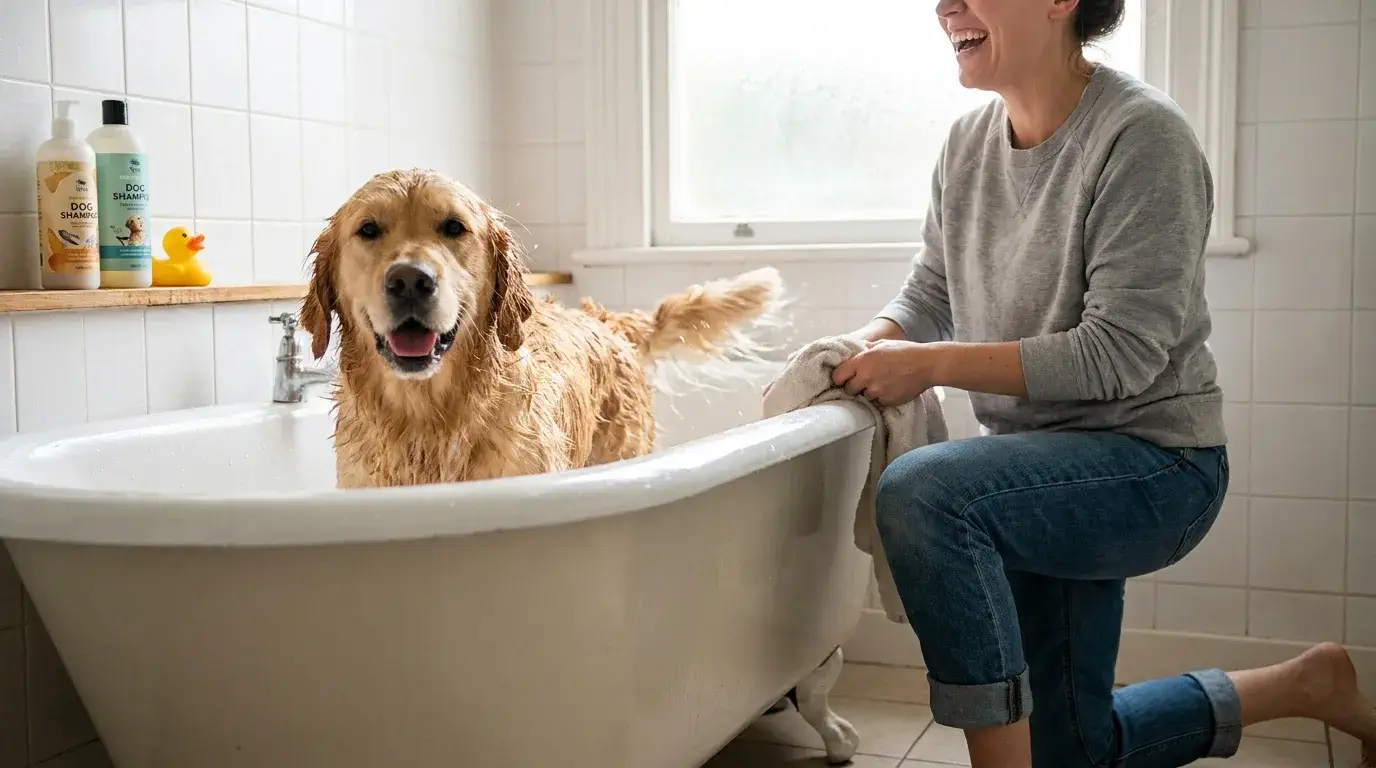
Bathing a big dog at home feels like a rodeo, until you read this.
You’ve got a soaking wet 80-pound Labrador, three soaked towels, and shampoo on the bathroom ceiling. The dog shakes, you’re drenched, and somehow the floor drain is clogged with fur.
Sound familiar? You’re not alone.
Bathing a big dog at home is one of those things that sounds simple in theory but turns into absolute chaos without the right game plan. Most large breed owners either give up and pay a groomer every few weeks or just… avoid bath time entirely. Neither option is great.
Here’s the good news. Learning how to bathe a big dog at home doesn’t require a professional setup or a miracle. It just requires the right prep, the right tools, and a handful of tricks that actually work.
This guide walks you through everything, from supplies to step-by-step technique, drying hacks, mess prevention, and pro tips you won’t find anywhere else. By the end, bath time will still be a workout, but it’ll be a controlled one.
Skip the Groomer (Sometimes) — Here’s Why Home Baths Make Sense
Professional grooming is expensive for large breeds.
According to Rover’s cost of dog parenthood, the average grooming session for a large dog in the USA costs between $75 and $100 or more, depending on breed and location. If you’re bathing your dog every 4-6 weeks, that adds up to $900-$1,200 a year just for baths.
Home baths cut that cost dramatically. They also eliminate the stress some dogs feel during car rides or in busy grooming salons.
There’s another benefit people overlook: bonding. Spending focused time with your dog, even during something like a bath, strengthens your relationship. Understanding your dog’s body language during grooming also helps you catch early signs of discomfort or skin issues.
That said, home baths work best as maintenance washes between professional grooming appointments. For complex haircuts, breed-specific styling, or dogs with serious coat conditions, your groomer is still your best friend.
| Factor | Home Bath | Professional Grooming |
|---|---|---|
| Average Cost | $5-$15 (supplies) | $75-$100+ per session |
| Time Required | 30-45 minutes | Drop-off/pickup: 2-4 hours |
| Convenience | High (on your schedule) | Requires appointment |
| Stress for Dog | Low (familiar environment) | Can be high for anxious dogs |
| Quality of Results | Good with practice | Consistently professional |
| Best For | Regular maintenance washes | Full grooming, styling, trims |
Dog Bath Tools and Supplies Checklist (Don’t Skip This Step)
Here’s the truth about messy dog baths. The chaos usually starts before the water does.
Most owners turn the water on, drag their dog into the bathroom, and then realize they forgot the shampoo in the other room. Now you’re leaving a wet dog unattended while you sprint down the hallway. Never ends well.
Gathering everything beforehand is the single most underrated step in the entire process.
Essential Supplies List
Here’s exactly what you need before bath day:
- Dog-safe shampoo (large breed or coat-specific formula)
- Dog conditioner (optional but great for long or double coats)
- Non-slip bath mat for the tub or shower floor (this is non-negotiable for safety)
- Handheld shower sprayer or detachable hose with good pressure control
- 3-4 large microfiber towels or a dedicated dog bath towel
- Rubber curry brush or soft-bristle scrub brush
- Waterproof apron or designated old clothes for yourself
- Bag of small treats for positive reinforcement throughout
- Cotton balls (optional) to loosely place near ears during rinsing
- Squeeze bottle to dilute and apply shampoo evenly
Expert Tip: Dilute your dog shampoo in a squeeze bottle before applying it. Mix roughly one part shampoo to three parts warm water. It spreads through a thick coat much faster, lathers better, and rinses out cleaner. This one trick alone cuts rinse time in half.
Setting Up Your Bathing Space
Before your dog takes a single step into the bathroom, prep the space.
Lay old towels or a waterproof mat on the floor around the tub. This catches water splashback and keeps you from slipping. Remove any bathroom rugs that you don’t want soaked. Place a drain hair catcher in the tub to protect your pipes from a fur avalanche.
Set all your supplies on the edge of the tub or within arm’s reach. You should never need to leave your dog’s side once the bath starts.
According to the American Kennel Club’s grooming guidelines, a calm, well-prepared bathing environment significantly reduces anxiety in dogs and makes the process smoother for both pet and owner.
Step-by-Step Guide to Washing a Large Dog at Home (The Right Way)
Alright, let’s get into the actual bath. Follow these steps in order and you’ll avoid 90% of the typical problems.
Step 1: Brush Before You Wash
Never skip this step, especially with large breeds.
Wet fur tangles and mats almost instantly. Brushing dry fur first removes loose hair, breaks apart any small tangles, and helps shampoo reach the skin instead of sitting on top of a fur barrier. Five minutes of brushing before the bath saves you twenty minutes of fighting knots during it.
Step 2: Get the Water Temperature Right
Lukewarm is your target. Not warm, not cool, lukewarm.
Test the water temperature on the inside of your wrist before wetting your dog. Dogs are sensitive to heat, and water that feels comfortable to your hand may actually be too warm for them. Cold water makes dogs tense up and resist the whole process.
According to VCA Animal Hospitals, lukewarm water is the safest and most comfortable choice for dogs of all coat types.
Step 3: Wet the Coat Thoroughly
Use your handheld sprayer and work from the neck down. Hold the sprayer close to the skin to penetrate through thick or dense coats.
Don’t rush this step. A large double-coated breed like a Husky or Bernese Mountain Dog can take 3-4 minutes just to get fully saturated. Dry patches underneath the outer coat will make shampooing uneven and rinsing harder.
Save the head and face for last.
Step 4: Apply Shampoo Correctly
Squeeze your diluted shampoo onto your dog in sections: back, sides, belly, legs, and tail.
Use your rubber curry brush or fingertips to work it down to the skin with circular motions. This also gives you a chance to feel for any lumps, bumps, or skin irritation you might not have noticed otherwise. Understanding your dog’s normal body is part of being a responsible owner.
Step 5: Rinse Completely (This Step is Huge)
This is where most people go wrong.
Shampoo residue left in the coat causes itching, dryness, and skin irritation. According to the ASPCA’s pet care resources, inadequate rinsing is one of the most common causes of post-bath skin problems in dogs.
Rinse from top to bottom. Keep going until the water runs completely clear and you feel no slipperiness in the coat. When you think you’re done, rinse for another 60 seconds. Seriously.
Step 6: Tackle the Face and Ears Carefully
Never spray water directly at your dog’s face.
Use a damp washcloth to gently wipe the face, forehead, and around the eyes. For breeds with floppy ears, loosely place cotton balls near the ear canal during rinsing to keep moisture out. Water trapped in the ear canal is a setup for discomfort and infection.
Step 7: The Towel-Off Strategy
Start with a large microfiber towel and press it firmly into the coat. Don’t rub. Pressing and squeezing removes water far more efficiently than rubbing, and it doesn’t create tangles in longer coats.
Cover your dog completely and let the towel absorb for 30-60 seconds before moving to a fresh one. For most large breeds, you’ll need at least two or three full-size towels.
How to Dry a Big Dog Fast (Without Soaking Your Entire Bathroom)
Here’s a scene every large breed owner knows. You finish the bath, feel great about yourself, and then your dog shakes approximately 40 gallons of water onto every surface in the room.
Timing is everything. Immediately after turning off the water, cover your dog with a towel before they shake. Wrap it around their back and hold gently. It won’t stop every shake, but it contains the first big one.
Towel Drying Technique for Large Breeds
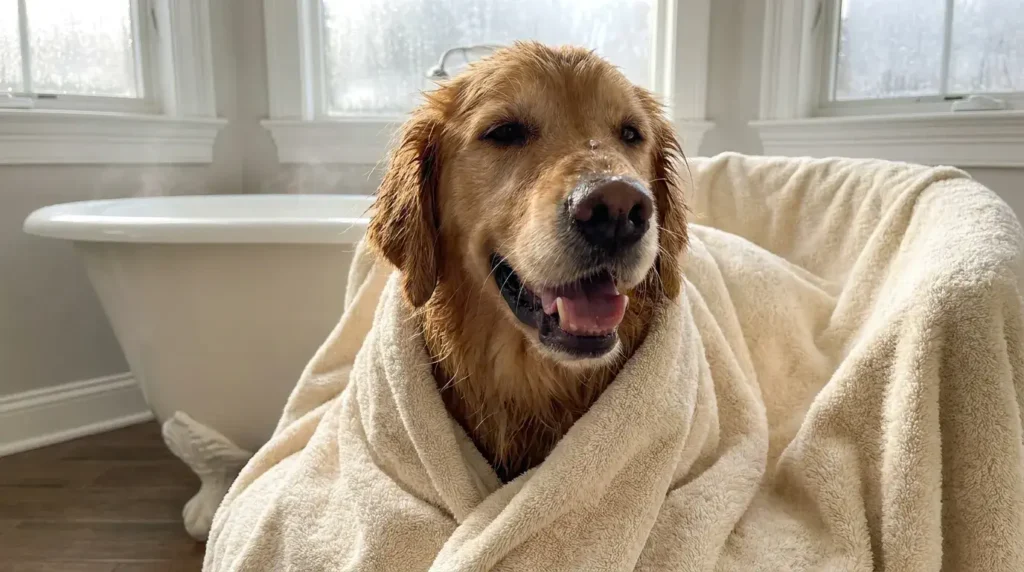
Use the press-and-absorb method described above. For a dog between 60-100 lbs, budget 3-4 large microfiber towels. They absorb far more water than standard bath towels and dry faster between uses.
Using a Dog Hair Dryer or Human Blow Dryer
A dog-specific force dryer speeds up drying time dramatically, especially for double-coated breeds. Human blow dryers work in a pinch on the lowest heat setting only.
Keep the dryer moving constantly. Never hold it still on one spot. Keep it at least 6 inches from the coat. If your dog is nervous around the noise, run the dryer nearby during non-bath times with treats so they associate the sound with something positive.
Air Drying Tips
Air drying works fine in warm weather for short-coated breeds like Boxers or Great Danes. For thick-coated or double-coated breeds, air drying takes hours and can leave moisture trapped against the skin. In cooler climates, make sure your dog stays warm and away from drafts until fully dry.
Keep Bathroom Clean While Washing Your Dog
Here is what nobody tells you about home dog baths. The cleaning up afterward can take longer than the bath itself if you’re not prepared.
These tips will change that.
Before the Bath: Mess-Prevention Setup
- Remove bathroom rugs before your dog enters
- Lay waterproof mats or old towels around the tub perimeter
- Install a drain hair catcher (find them at any hardware store for under $5)
- Close the toilet lid and clear the counter of anything you don’t want wet
During the Bath: Splash Control
The number one splashing mistake is holding the sprayer too far away from the dog’s coat. Keep it close to the skin. It controls water direction and actually rinses more effectively.
Use your shower curtain or glass door to block splash zones. Keep one hand on your dog at all times. A calm dog splashes less, and a non-slip mat gives them the confidence to stand still instead of scrambling.
For owners dealing with the challenge of bathing a big dog in a small bathroom without mess, the key is working in a consistent, methodical direction: front to back, top to bottom. No wild movements, no spraying across the room.
Expert Tip: Use a grooming tether with a suction cup base on the tub wall. It keeps your dog in position without you needing to hold them, and it frees up both your hands. Find them online for $10-$20 and they’re genuinely game-changing.
After the Bath: Quick Cleanup Routine
- Wipe down tub walls and the surrounding floor immediately while surfaces are still wet
- Remove the drain hair catcher and toss the fur before it dries and sticks
- Shake towels out in your backyard or garage before tossing them in the wash
- A five-minute post-bath wipe-down takes care of everything before it dries and hardens
Pro Tips and Common Mistakes When Bathing a Big Dog at Home
This is where we get into the stuff that makes a real difference.
7 Pro Tips for a Smoother Bath Time
- Tire your dog out first. Take a long walk or have a good play session before bath time. A calm, tired dog is easier to bathe than a bouncy, hyped-up one.
- Use a lick mat on the tub wall. Smear some dog-safe peanut butter or wet food on it. Your dog will be too busy licking to panic.
- Practice entering the tub without water. On non-bath days, lure your dog into the dry tub with treats and let them hop right back out. It removes the fear association.
- Dilute your shampoo in a squeeze bottle before applying. Covered earlier, but worth repeating. It’s a total game-changer.
- Bathe right after exercise. Your dog’s pores are open and their muscles are relaxed. The shampoo works better and they stand still more.
- Always end with warm water. A final warm rinse helps your dog relax and signals the bath is almost over.
- Keep sessions under 20 minutes for dogs prone to anxiety. Shorter, positive experiences build better bath-time behavior over time.
5 Common Mistakes to Avoid
| Mistake | Why It’s a Problem | What to Do Instead |
|---|---|---|
| Skipping the pre-bath brush | Creates instant mats when wet | Always brush dry coat first |
| Using human shampoo | Wrong pH strips dog’s skin oils | Use dog-specific, pH-balanced formula |
| Spraying directly in the ears | Can cause moisture buildup | Use cotton balls and a washcloth |
| Rushing the rinse | Residue causes itching and skin issues | Rinse until water runs clear, then rinse again |
| Letting a wet dog roam free | Wet fur picks up dirt immediately | Towel and dry before releasing them |
If your dog is naturally anxious about baths, it helps to understand their overall temperament. Some breeds are simply more sensitive to new experiences. Check out this guide on Calmest Dog Breeds if you’re thinking about your next dog or want context on why your current dog reacts the way they do.
What to Do When Your Big Dog Makes Bath Time Harder
Not every dog walks calmly into the tub and stands perfectly still. Real dog ownership looks messier than that.
How to Bathe a Big Dog Who Hates Water
Start small. Don’t try to go from zero to full bath in one session if your dog is genuinely terrified.
Begin by bringing your dog into the dry bathroom with treats. Next session, run the water while they eat treats nearby. Then wet just their paws. Build up slowly over several sessions. According to the American Veterinary Society of Animal Behavior, gradual desensitization paired with positive reinforcement is the most effective way to reduce fear responses in dogs.
Consistency matters more than speed here. For more on building trust through daily routines, the guide on Daily Dog Care Routine is a great starting point.
How to Bathe a Heavy Dog Without Lifting
If your dog weighs 80+ pounds, you’re not lifting them. Don’t hurt your back trying.
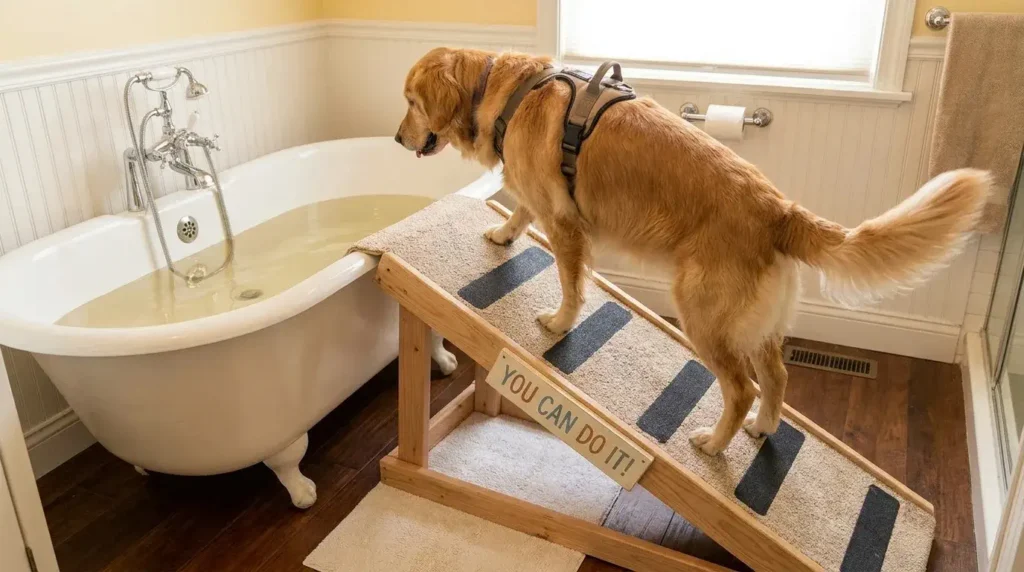
Instead, train them to step into the tub on their own. Use a non-slip bath step or ramp if needed. Lure them with high-value treats and reward every small movement toward the tub. Most large dogs learn this within a few sessions.
Walk-in showers are honestly the best option for very large or older dogs. No ledge to step over, no awkward positioning, and much easier for you to move around them.
Bathing in a Small Bathroom: Space-Saving Tips
A small bathroom feels even smaller with a German Shepherd inside it.
Use your bathtub instead of attempting to give a large dog a stand-up wash in a small shower stall. Keep the shower curtain closed on one side to limit your dog’s escape options. Work methodically from one end of the dog to the other so you’re not constantly repositioning in a tight space.
If your dog tends to get anxious in enclosed spaces, understanding their dog body language signals can help you recognize when they need a short break versus when they’re just being dramatic. Knowing the difference matters.
Bath Time Doesn’t Have to Be a Battle: You’ve Got This
Let’s recap the essentials. Prep everything before the water turns on. Use a non-slip mat and a handheld sprayer. Rinse longer than you think you need to. Dry thoroughly before releasing your dog into the rest of the house.
Those four things alone will transform your dog’s bath experience.
The honest truth is that bathing a big dog at home gets easier every single time. Your dog gets more comfortable, you get more efficient, and eventually it becomes just another part of your routine. Not a dreaded event; just a Tuesday afternoon.
And there’s something genuinely satisfying about a clean, fluffy 90-pound dog who smells like oatmeal shampoo curled up next to you on the couch. Worth every wet towel.
If you’re new to building routines with your dog, the 3-3-3 Puppy Rule is a great read for setting healthy expectations in a new dog relationship from day one.
Frequently Asked Questions About Bathing Large Dogs at Home
How often should I bathe my large dog at home?
Most large breeds do well with a bath every 4-6 weeks. Dogs who spend a lot of time outdoors or have skin conditions may need more frequent washes. Bathing too often strips the natural oils from your dog’s coat and can cause dryness and irritation. When in doubt, check with your veterinarian for breed-specific advice.
What’s the best shampoo for bathing a large dog at home?
Look for a pH-balanced, sulfate-free shampoo designed specifically for dogs. Oatmeal-based or aloe vera formulas are excellent for sensitive skin. For large breeds with thick coats, a 2-in-1 shampoo-conditioner saves time and keeps the coat hydrated. Never use human shampoo, even baby shampoo, as the pH is wrong for dogs.
How do I keep my big dog calm during a bath?
Exercise them beforehand, use a lick mat with peanut butter on the tub wall, and maintain a calm, low voice throughout. Warm water and a non-slip mat give your dog a sense of security. Treats throughout the process reinforce that bath time leads to good things.
Can I bathe my large dog in a regular bathtub?
Absolutely. A standard bathtub works well for most large breeds with the right setup: a non-slip mat, a handheld sprayer, and supplies within reach. For very large or elderly dogs, a walk-in shower is often easier because there’s no ledge to step over.
How do I get my big dog to step into the bathtub on their own?
Practice entering the dry tub on non-bath days with high-value treats. Lure them in, reward immediately, and let them walk right back out. Repeat until they step in confidently. A rubber bath step or ramp helps senior dogs or dogs with joint concerns get in without jumping.
How long does it take to bathe a large dog at home?
Plan for 30-45 minutes including the pre-brush, the bath, and basic drying. Double-coated breeds like Samoyeds or Huskies can take closer to an hour. Having all your supplies prepped beforehand cuts total time significantly and keeps the experience stress-free for both of you.