So you did it. You brought home the fluffiest, wiggliest little tornado of a puppy and now your older dog is giving you that look. You know the one. The “excuse me, what is that thing?” stare from across the living room.
It’s one of the most exciting moments for any dog owner. It’s also one of the most nerve-wracking.
Will they get along? What if the older dog growls? What if there’s a full-on scuffle before you even get the puppy’s collar on?
Deep breath. You’re not alone in this.
A lot of pet owners across the U.S. face this exact situation every year. And yes, without the right approach, things can get tense fast, jealousy, growling, resource guarding, the whole drama.
But here’s the good news: introducing a puppy to an older dog safely is 100% doable. With a little patience, the right steps, and some know-how on dog behavior, you can set both pups up for a beautiful friendship.
Understanding Dog Behavior Before the First Meeting
Why does your older dog feel threatened by a new puppy?
Here’s the thing; your older dog doesn’t see a cute puppy. They see an intruder.
Dogs are territorial by nature. Your older dog has claimed that couch, that food bowl, and honestly, probably you as their own. A new puppy showing up out of nowhere? That’s a big deal in the dog world.
According to the American Kennel Club, older dogs may feel anxious, stressed, or even threatened when a new pet enters their established space. It’s not meanness, it’s instinct.
What does dog body language actually tell you?
Reading the room (literally) before and during introductions can prevent a lot of drama. Here’s what to watch for:
Green flags (relaxed dog):
- Loose, wiggly body movement
- Soft eyes, relaxed ears
- Tail wagging in a wide, easy sweep
- Sniffing calmly and moving away
Red flags (stressed or threatened dog):
- Stiff, frozen posture
- Tail held high and rigid
- Hard, fixed stare
- Low growling or showing teeth
- Hackles raised along the back
A growl isn’t always a fight waiting to happen. It’s actually communication. Your older dog is saying “hey, back off a little.” Respecting that signal is key.
When we visited dog parks in Austin, we noticed something fascinating; older dogs almost always set clear boundaries with puppies through body language before any real conflict happened. The puppies that respected those signals, they got along just fine within minutes.
Understanding what your dogs are “saying” to each other is honestly half the battle. It helps you step in at the right moment and stay calm when things look scarier than they actually are.
Preparing Your Home for a Smooth Introduction
What’s the best way to set up your home before the puppy arrives?
Think of it like this, you wouldn’t throw a surprise party in someone’s bedroom without asking. Same energy applies here.
Before your puppy even steps through the front door, your home needs a little restructuring. A few simple changes can make a huge difference in how that first meeting goes.
Here’s what to do before the big day:
- Create separate spaces. Each dog needs their own safe zone. A crate, a corner, a separate room, something that’s theirs alone.
- Set up baby gates. These are lifesavers. They let the dogs see and smell each other without direct contact. Low pressure, high value.
- Remove shared resources. Pick up food bowls, chew toys, and bones. Resource guarding is one of the biggest triggers for dog fights, especially early on.
- Don’t rearrange the older dog’s space. Keep their bed, their crate, their usual spots exactly where they are. Familiarity helps them feel secure.
What is scent swapping and does it actually work?
Yes, and it’s easier than it sounds.
A few days before the first meeting, swap a blanket or toy between the two dogs. Let your older dog sniff the puppy’s scent and vice versa. This gives both dogs a “heads up” before the face-to-face moment.
It’s like introducing yourself over text before meeting in person. Takes a little edge off.
This small step alone can make the first real interaction noticeably calmer. Totally worth the two minutes it takes.
Step-by-Step Guide to Introduce a Puppy to an Older Dog Without Fighting
What’s the safest way to introduce a new puppy to an older dog?
This is the section you’ve been waiting for. Let’s get into it.
There’s no need to just “wing it” and hope for the best. A structured, step-by-step approach makes the whole process smoother — for you and your dogs.
Step 1: Start with Scent Introduction
Before any face-to-face meeting, let the sniffing begin — from a safe distance.
Swap bedding, toys, or even a worn t-shirt between the two dogs. Place the puppy’s blanket near your older dog’s space and watch their reaction. Curious sniffing? Great sign. Stiff body and growling? Give it another day or two before moving forward.
Scent is everything to a dog. Getting familiar through smell first removes a huge chunk of the “stranger danger” feeling.
Step 2: First Meeting on Neutral Ground
This one is big. Do not do the first meeting inside your home.
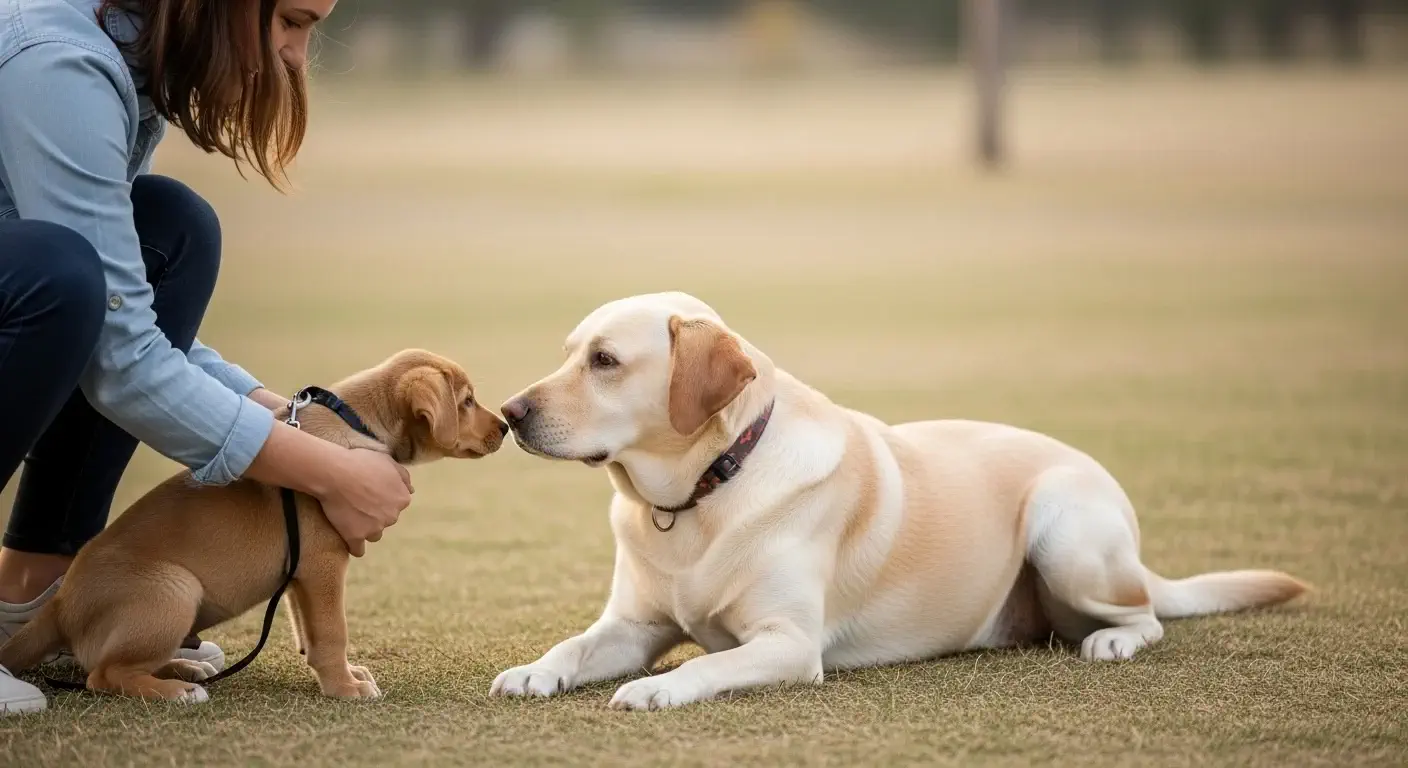
Pick a neutral spot — a quiet park, an empty parking lot, a neighbor’s yard. Somewhere your older dog hasn’t claimed as their territory. Both dogs should be on leashes, handled by separate people if possible.
Let them approach each other naturally. Don’t force it. Keep the leashes loose — a tight leash actually signals tension to your dog and can make things worse.
Allow a few seconds of sniffing, then calmly walk them side by side. Parallel walking is a game changer. It lets them exist together without the pressure of a direct face-off.
The AKC recommends keeping this first outdoor meeting brief and positive — no longer than 10 to 15 minutes max.
Step 3: Keep the First Interaction Short
Seriously, less is more here.
Five to ten minutes of calm interaction is plenty for the first meeting. End it on a good note — before either dog gets overstimulated or stressed. You want both dogs walking away thinking “hey, that wasn’t so bad.”
Reward both dogs with treats and calm praise after the interaction. You’re building a positive association from day one.
Step 4: Supervised Home Introduction
Okay, the outdoor meeting went well. Now it’s time to bring the puppy home — but slowly.
Bring the puppy inside while your older dog is in a separate room or their crate. Let the puppy explore a limited area first. Then, with both dogs on leash or separated by a baby gate, allow them to see each other in the home environment.
Keep the energy calm. No squealing, no excited crowds of family members rushing in. The calmer you are, the calmer they’ll be.
Watch your older dog closely. Give them plenty of reassurance and attention. They need to know they’re still your number one.
Step 5: Gradually Increase Interaction Time
This is where patience really pays off.
Each day, allow a little more supervised time together. Short play sessions, shared walks, calm co-existing in the same room. Build familiarity slowly and consistently.
Don’t rush to the “let them roam freely together” stage. That comes after trust is built — not before.
Think of it like a slow friendship forming. Some dogs click in a few days. Others take a couple of weeks. Both are completely normal.
Puppy and Older Dog First Meeting Tips (Do’s and Don’ts)
What should you do (and avoid) during the first introduction?
Sometimes it’s not just what you do — it’s what you don’t do that makes all the difference.
Here’s a quick, practical cheat sheet to keep handy:
The Do’s
- Stay calm and confident. Dogs pick up on your energy instantly. If you’re anxious and tense, they will be too. Take a breath and act like everything is totally fine — because it will be.
- Reward good behavior immediately. The second your older dog sniffs the puppy calmly or walks away without reacting, treat and praise them. That’s the behavior you want to reinforce.
- Give your older dog extra attention. This is huge. Your older dog needs to feel like they haven’t lost their place in the family. Extra cuddles, one-on-one walks, and special treats go a long way.
- Let interactions happen at their own pace. If either dog wants space, honor that. Forced friendship rarely works — for dogs or humans.
The Don’ts
- Don’t force them together. Pushing two dogs into each other’s faces is a fast track to a bad reaction. Let them set the pace.
- Don’t punish growling. We know it looks scary. But growling is communication. Punishing it teaches your dog to skip the warning and go straight to snapping. Not what you want.
- Don’t leave them alone together too soon. Even if things seem great, unsupervised time should wait until you’re fully confident both dogs are comfortable. A few good interactions don’t mean they’re ready to be left alone together.
- Don’t forget the older dog. In all the puppy excitement, it’s easy to accidentally sideline your older dog. Make sure they still feel seen, loved, and secure.
Small adjustments in your behavior can completely change how this introduction goes. Keep it low-key, keep it positive, and trust the process.
What to Do If the Older Dog Growls or Shows Aggression
Should you be worried if your older dog growls at the new puppy?
Not automatically — but you should pay attention.
Growling is actually healthy dog communication. It’s your older dog saying “hey, you’re too close” or “I’m not comfortable right now.” In a weird way, a growl is a good thing. It means your dog is warning before escalating.
The problem only starts when we ignore those warnings — or worse, punish them.
Here’s how to handle it the right way:
When to observe vs. when to step in
It’s okay to observe if:
- The growl is low and the older dog moves away afterward
- The puppy backs off and both dogs settle down
- There’s no lunging, snapping, or pinning involved
Step in calmly if:
- The growling is escalating into snapping or lunging
- The puppy is cornered or showing fear
- Your older dog is stiff, locked in, and not backing down
Stepping in doesn’t mean yelling or grabbing. Calmly redirect your older dog’s attention with their name, a treat, or a gentle leash guide away from the situation.
What to do right after a tense moment
- Separate both dogs without drama. No scolding, no big reactions. Just calmly put them in their separate spaces.
- Give everyone time to decompress. Even 15 to 20 minutes apart can reset the energy completely.
- Don’t force a “make up” interaction right after. Let them both settle before trying again.
- Shorten the next interaction. Go back a step if needed. There’s zero shame in slowing down the process.
What about serious aggression?
If your older dog is consistently lunging, snapping, or showing intense aggression beyond normal warnings, it’s time to bring in a professional.
A certified dog trainer or animal behaviorist can assess what’s really going on and give you a personalized plan. No blog post replaces that when things get serious. Check out our guide on how to choose the right dog trainer if you’re not sure where to start.
According to the American Veterinary Society of Animal Behavior, punishment-based corrections during dog introductions can actually increase aggression long term. Positive, calm redirection is always the safer route.
Using Crate Training and Controlled Spaces Effectively
How does crate training help during a dog introduction?
A lot of people feel guilty about crates. Like they’re punishing their dog.
But here’s the truth — a crate is actually a safe haven. When introduced properly, dogs genuinely love having their own cozy, quiet space. And during a new puppy introduction, crates become an absolute lifesaver.
How to use crates and spaces smartly
Try the rotation method. This is simple and super effective. One dog gets free roam time while the other chills in their crate or separate room. Then you switch. This way both dogs get time to relax, explore, and decompress — without constant toggling between excitement and tension.
Use baby gates for visual separation. Gates let the dogs see and smell each other without full contact. It’s low-pressure exposure that builds familiarity gradually. Think of it as a “getting to know you” phase with a safety net.
Watch for overstimulation. Puppies have a lot of energy. Older dogs get tired and irritated fast. When you notice your older dog starting to disengage or stiffen up, that’s your cue to separate them before things get tense.
A well-rested dog is a calmer dog. Giving both pets regular breaks throughout the day makes the whole introduction process smoother and less stressful for everyone — including you.
Crates aren’t a punishment. They’re a peace-keeping tool. Use them without guilt.
Puppy Socialization with Older Dogs: Building a Healthy Bond
How do you help a puppy and older dog actually become friends?
Getting through the introduction without a fight is step one. But building a real bond between your dogs? That’s the good stuff.
The key word here is gradual. You can’t rush a friendship — not between people, and definitely not between dogs.
Simple ways to build that bond naturally
Go on parallel walks together. This is one of the best bonding tools out there. Walking side by side in the same direction creates a shared experience without forcing direct interaction. It builds calm companionship over time.
We’ve seen this work wonders firsthand. Even dogs that were awkward around each other indoors would visibly relax after a 20-minute walk together. Something about moving forward together just clicks for them.
Create positive shared experiences. Feed them near each other — at a safe distance at first, then gradually closer. Do training sessions with both dogs present. Play calm games in the same space. Every good moment they share is a deposit in the trust bank.
Let the older dog set the play rules. Puppies are enthusiastic and relentless. Your older dog will teach the puppy appropriate play behavior naturally — if you give them the space to do it.
According to the American Kennel Club, early positive socialization experiences shape a puppy’s behavior and confidence for life. Making those experiences calm and rewarding pays off for years to come.
Patience here really does build something beautiful.
Signs Dogs Are Getting Along (Green Flags to Watch)
How do you know if your dogs are actually bonding?
Sometimes it’s hard to tell if things are going well or if you’re just getting lucky. Here’s the good news — dogs are pretty honest communicators. When they’re genuinely comfortable with each other, their body language makes it obvious.
Watch for these green flags and do a little happy dance when you spot them.
Positive signs to look out for
Play bows. This is one of the best things you can see. A play bow — front legs stretched forward, bottom in the air — is a dog’s way of saying “hey, I want to play and I come in peace.” It’s basically a friendly invitation.
Relaxed, loose body language. No stiffness, no hard stares. Both dogs moving around each other with soft, wiggly energy is a beautiful sign.
Taking turns during play. Healthy dog play looks a little rough sometimes. But if both dogs are taking turns chasing, pinning, and bouncing back up happily — that’s totally normal and positive.
Sleeping near each other. This one is huge. Dogs don’t sleep near threats. If your older dog voluntarily naps close to the puppy, the trust is building beautifully.
No resource guarding. Both dogs eating calmly, ignoring each other’s toys, and not hovering protectively over their stuff? That’s genuine comfort right there.
Mutual grooming. If they start licking each other’s faces or ears, honestly just grab your phone and take a video. That’s friendship goals right there.
How Long Does It Take for a Puppy to Get Used to an Older Dog?
Is there a timeline for when dogs finally settle in together?
This is probably the most common question pet owners ask — and honestly, there’s no single magic answer. But there is a general range that gives most people peace of mind.
Most dogs start showing signs of comfort with each other within a few days to a few weeks. Some pairs click surprisingly fast. Others need a full month or two to really settle into a comfortable rhythm together.
It depends on a few key factors:
- Temperament. A laid-back older dog adjusts faster than an anxious or territorial one.
- Age gap. A very young puppy paired with a senior dog may need extra patience and more managed interactions.
- Past experiences. Dogs that have lived with other dogs before tend to adapt more smoothly.
- Your consistency. How structured and calm you keep the introduction process makes a massive difference.
A study published in Applied Animal Behaviour Science found that consistent, positive early interactions significantly reduced long-term tension between dogs sharing a household.
The biggest mistake people make? Expecting things to be perfect in 48 hours and panicking when they’re not.
Trust the process. Stay consistent. Most dogs get there, they just need time to do it on their own terms.
Common Mistakes to Avoid During Dog Introduction
What are the biggest mistakes pet owners make when introducing dogs?
Even well-meaning dog owners can accidentally make the introduction process harder. The good news? These mistakes are totally avoidable once you know what to watch for.
Mistakes that slow down (or derail) the process
Rushing the whole thing. This is the number one mistake. You’re excited, the puppy is adorable, and you just want everyone to be best friends already. Totally understandable. But pushing too fast creates stress and can set back the entire process by weeks.
Ignoring your older dog’s emotions. In all the new puppy excitement, it’s surprisingly easy to accidentally make your older dog feel invisible. They notice. And a dog that feels insecure or replaced is more likely to act out. Keep showing your older dog love, attention, and consistency throughout the process.
Letting the puppy pester the older dog constantly. Puppies have zero concept of personal space. Without supervision, they’ll bounce on, nip at, and follow your older dog relentlessly. That’s a fast track to a snapping incident. Step in and give your older dog breaks before frustration builds up.
Skipping supervision too soon. Things seem great for three days and suddenly you’re leaving them alone together unsupervised. This is risky. Even friendly dogs can have a bad moment when no one’s watching. Wait until you’re genuinely confident in their dynamic before giving them full unsupervised access.
Making introductions in a high-energy environment. Loud households, excited kids running around, lots of chaos — that’s overwhelming for both dogs during an already stressful transition. Keep things calm and quiet especially in those early days.
Avoid these pitfalls and you’re already ahead of the curve.
Conclusion: You’ve Got This
Is introducing a puppy to an older dog really doable?
Absolutely. One hundred percent. Yes.
It might feel overwhelming right now, especially when your older dog is giving the puppy the side-eye and you’re standing there holding your breath. But remember, almost every multi-dog household started exactly where you are right now.
The secret isn’t perfection. It’s patience, consistency, and a willingness to go at your dogs’ pace instead of your own.
Take it one step at a time. Celebrate the small wins; a calm sniff, a shared walk, a nap on the same side of the room. Those little moments are everything.
With the right approach, most dogs don’t just tolerate each other. They become genuine companions. And honestly, watching that bond form is one of the most rewarding things about being a dog owner.
You’ve got the tools. Now trust the process and enjoy the journey.
Frequently Asked Questions
1. How do I introduce a puppy to an older dog for the first time?
Start on neutral ground outside the home. Keep both dogs on leashes, let them sniff briefly, then walk them side by side. Keep the first meeting short, around 10 minutes and end on a calm, positive note. Don’t rush the home introduction until the outdoor meeting goes smoothly.
2. What should I do if my older dog growls at my new puppy?
Don’t panic and don’t punish the growl. A growl is communication, your older dog is setting a boundary. Calmly separate them, give both dogs time to decompress, and try again with a shorter, more controlled interaction. If growling escalates to snapping or lunging consistently, consult a certified dog trainer.
3. How long does it take for dogs to adjust to each other?
Most dogs start settling in within a few days to a few weeks. Some pairs take up to two months to fully relax around each other. It depends on temperament, past experiences, age, and how consistently you manage the introduction process. Patience really is the magic ingredient here.
4. Can an older dog hurt a puppy during introduction?
Yes, especially if introductions are rushed or left unsupervised. An older dog can seriously injure a small puppy with one snap or bite. Always supervise early interactions closely and never leave them alone together until you’re fully confident in their dynamic.
5. Should I keep my puppy and older dog separated at first?
Yes, absolutely. Use crates, baby gates, or separate rooms to manage their interactions safely in the beginning. Controlled, limited exposure is far more effective than throwing them together and hoping for the best. The rotation method; one dog out at a time, works really well in those early days.
6. What are the signs that my dogs are bonding well?
Watch for relaxed, loose body language, play bows, taking turns during play, sleeping near each other, and zero resource guarding behavior. Mutual grooming, licking each other’s ears or faces is one of the sweetest signs of genuine trust and friendship forming between your dogs.