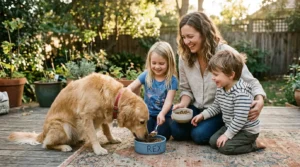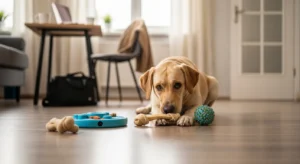
You wake up. Your dog is already staring at you. Tail wagging. Eyes full of hope.
Sound familiar? Most dog owners in America start their mornings the same way. But then comes the question nobody really teaches you: What exactly should I be doing for my dog every single day?
Here’s the honest truth. A consistent daily dog care routine is the single most powerful thing you can do for your pup. It reduces anxiety, prevents behavior problems, and builds a bond that’s hard to put into words.
This post walks you through everything, morning to night, in a simple, no-fluff checklist. Whether you have a hyper golden retriever or a lazy beagle who’d sleep until noon, this guide works for you.
Why Your Dog Desperately Needs a Daily Routine
Dogs are not spontaneous creatures. They thrive on predictability.
According to the American Kennel Club, dogs that follow a consistent daily schedule show fewer signs of stress and destructive behavior. When your dog knows what comes next, their nervous system relaxes.
Think about it this way. You’d feel anxious too if you never knew when your next meal was coming.
A good dog care checklist does more than keep you organized. It:
- Regulates your dog’s digestion and hunger signals
- Reduces barking, chewing, and anxious pacing
- Strengthens the trust between you and your pup
- Helps puppies learn faster through repetition
This applies equally to a bouncy 10-week puppy and a calm 7-year-old lab. Structure is a gift you give them every day.
Dog Morning Routine: The First 2 Hours Set the Tone
Mornings are everything in how to care for a dog daily. What happens in the first two hours shapes your dog’s mood and energy for the rest of the day.
First Things First: The Morning Potty Break
The moment your feet hit the floor, your dog needs to go outside.
No scrolling Instagram first. No brewing coffee. Potty break first.
Adult dogs can usually hold it through the night. But puppies younger than 6 months genuinely cannot. According to the ASPCA’s resources, young pups need a bathroom break roughly every 2 hours during the day.
On rainy mornings when your dog plants their paws and refuses to move. Grab a treat, step outside with them, and celebrate when they finally go. Yes, even at 6 AM. Especially at 6 AM.
Morning Feeding: Timing and Portions Matter
Most adult dogs do well eating between 7 and 8 AM. Consistency here is the key.
Irregular feeding times confuse your dog’s digestive system. Their body starts producing stomach acid based on expected meal times. Skip or delay a meal often enough, and you may notice restlessness or even grass-eating.
Here is a quick reference feeding schedule based on dog size:
| Dog Size | Recommended Morning Feed Time | Typical Portion (Dry Kibble) |
| Small (under 20 lbs) | 7:00 – 7:30 AM | 1/4 to 1/2 cup |
| Medium (20-50 lbs) | 7:00 – 8:00 AM | 1 to 1.5 cups |
| Large (50-90 lbs) | 7:00 – 8:00 AM | 2 to 3 cups |
| Extra Large (90+ lbs) | 7:00 – 8:30 AM | 3 to 4.5 cups |
Always follow your specific food brand’s guidelines and your vet’s advice for your individual dog.
Fresh water should be available at all times, not just at meals.
Expert Tip: Use mealtime as a mini-training session. Ask your dog to sit and wait before placing the bowl down. It takes 10 extra seconds and reinforces calm behavior consistently.
Morning Walk or Exercise Session
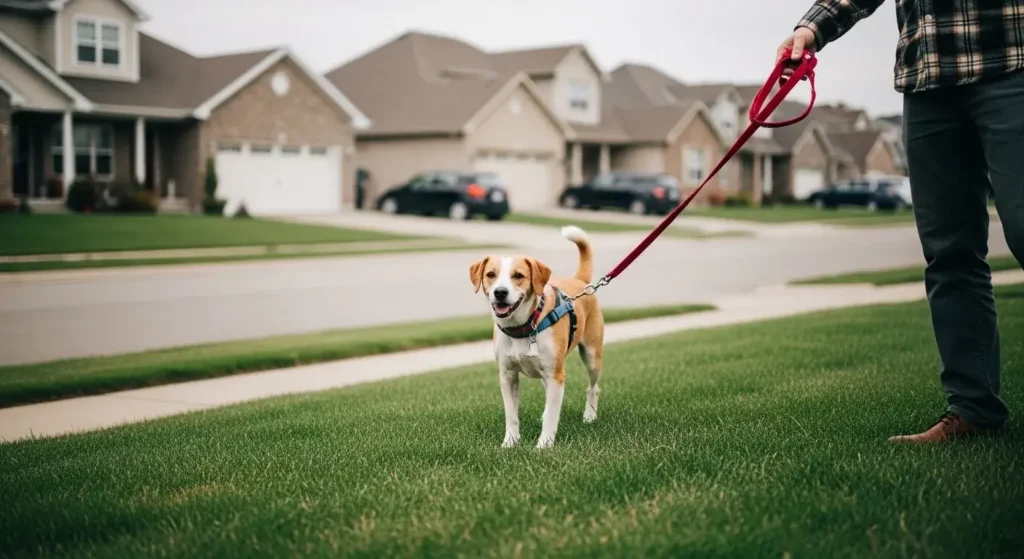
This is the big one. Do not skip this.
A proper dog exercise routine in the morning does two things. It burns off pent-up overnight energy, and it gives your dog vital mental stimulation through new smells and sights.
Research published in Applied Animal Behaviour Science found that dogs who receive regular physical activity display fewer problematic behaviors like excessive barking and furniture destruction.
Walk duration by energy level:
- Low-energy breeds (Basset Hound, Bulldog): 20-30 minutes
- Medium-energy breeds (Labrador, Poodle): 30-45 minutes
- High-energy breeds (Border Collie, Vizsla): 45-60+ minutes
One important note: a potty walk is not an exercise walk. Let your dog sniff freely on walks. That sniffing is genuinely tiring for their brain. A 20-minute sniff walk can be more satisfying than a 30-minute power walk with no stops.
Midday Dog Care: What Happens While You’re at Work
This is the part most people skip in a dog care routine for busy owners. But it really matters.
The Midday Potty Break
For puppies and senior dogs, midday relief is non-negotiable.
The general rule for puppies is simple: they can hold their bladder for roughly one hour per month of age. A 3-month-old puppy maxes out at around 3 hours.
If you cannot get home midday, here are your real options:
- Hire a dog walker (apps like Rover or Wag make this easy)
- Ask a trusted neighbor or friend
- Enroll in a doggy daycare on work-from-office days
- Use a pet camera with treat dispenser as a short-term bridge
Mental Stimulation Does Not Have to Take Hours
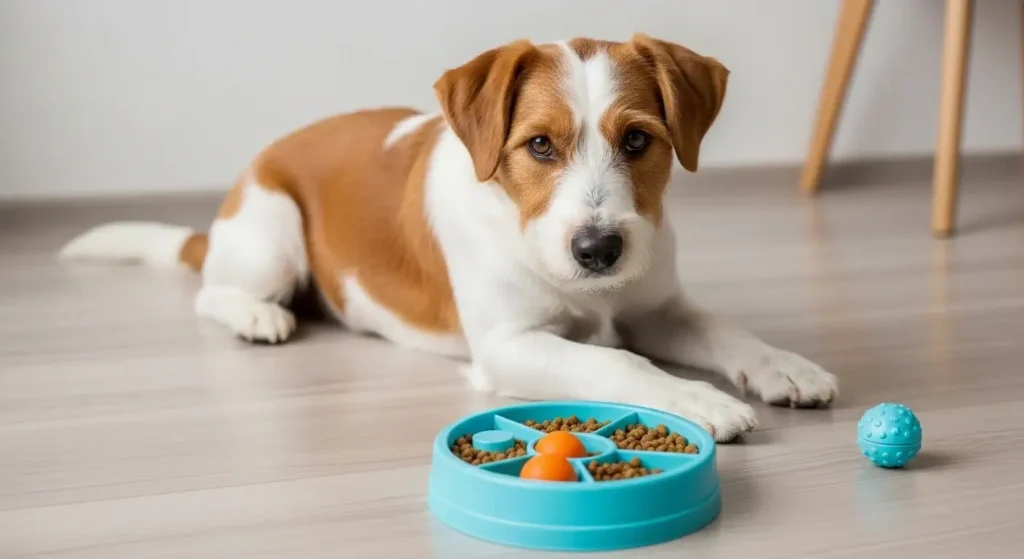
Here is something most dog care articles miss completely. Physical exercise and mental stimulation are not the same thing.
A dog who walks for an hour but does nothing else mentally will still be bored. A dog who spends 15 minutes working a puzzle feeder? Genuinely tired.
The American Veterinary Medical Association emphasizes that dog mental stimulation activities are just as important as physical ones for overall wellbeing.
Quick midday enrichment ideas that actually work:
- Food-stuffed Kong toy (freeze it the night before for extra difficulty)
- Snuffle mat with kibble hidden inside
- Lick mat with a thin layer of plain peanut butter
- “Find it” game: scatter treats across the floor and let them hunt
Ten minutes of this can genuinely settle an anxious dog for hours.
Afternoon and Evening: Wind Down With Your Dog the Right Way
After work is where the real bonding happens. Most US dog owners have their best dog moments between 5 and 8 PM. Protect that window.
Evening Walk or Playtime Session
Your dog has been home, possibly alone, for hours. They need to move.
For medium to high energy breeds, a second walk or active backyard play session is important. This does not need to be long. Even 20 focused minutes of fetch or tug-of-war satisfies a dog more than a passive 40-minute stroll.
If you have a yard, try rotating activities:
- Fetch with a tennis ball
- Flirt pole (a favorite for herding breeds)
- Simple agility weave poles or jumps
- Tug-of-war with a rope toy
If you do not have a yard, local dog parks work great. Plus, the socialization is a huge bonus.
Evening Feeding: Dinner for Your Dog
Aim for dinner between 5 and 6 PM. The reason this timing matters is digestion.
Feeding your dog too close to bedtime means their body is still processing food when they try to sleep. This can disrupt sleep quality for both of you.
According to PetMD’s nutritional guidance, most adult dogs do best on a twice-daily feeding schedule spaced 8 to 12 hours apart.
After dinner, keep things calm. No intense play sessions right after eating.
Quick Grooming Check: 5 Minutes is All it Takes
You do not need a full grooming session every day. But a quick daily check makes a real difference over time.
Here is your dog grooming schedule broken into daily versus weekly tasks:
| Task | Daily | Weekly |
|---|---|---|
| Quick coat brush (long-haired breeds) | Yes | — |
| Check eyes for discharge | Yes | — |
| Check paws for cuts or debris | Yes | — |
| Full brush (short-haired breeds) | No | 2-3x per week |
| Ear cleaning check | No | Weekly |
| Teeth brushing | No | 3-4x per week |
| Nail length check | No | Weekly |
| Bath | No | Every 4-6 weeks |
Daily touch from grooming also keeps your dog comfortable with handling. This makes vet visits much less stressful for everyone involved.
Dog Nighttime Routine: Setting Your Pup Up for Restful Sleep
The dog nighttime routine is probably the most underrated part of a dog’s day. Most people just turn the lights off and hope for the best.
The Last Potty Trip of the Day
Take your dog out one final time before bed. Ideally 30 to 60 minutes before you plan to sleep.
This simple step prevents middle-of-the-night accidents and the frantic wake-up that follows. If you walk them in the dark, use a reflective leash or a small clip-on light for their collar. Safety first, even at 10 PM.
Expert Tip: Feed dinner early enough so your dog’s last potty trip actually produces results. A dog that ate at 9 PM may not be ready to go by 10 PM.
Creating a Calm Bedtime Environment
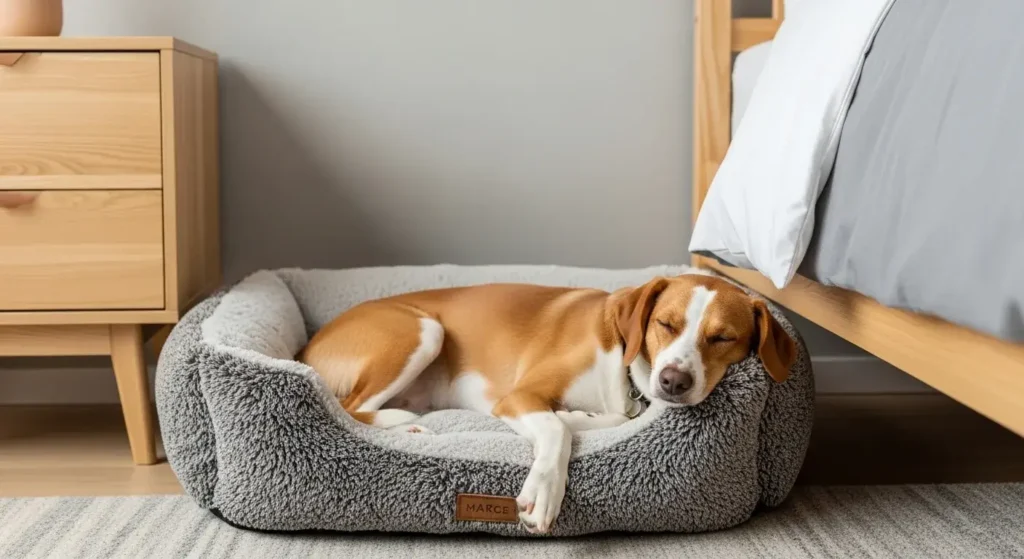
Dogs pick up on household energy. When the TV blares and kids are running around at 10 PM, your dog stays alert and wound up.
As part of your bedtime routine for dogs checklist, create signals that tell your dog the day is winding down:
- Lower your voice and move more slowly
- Dim lights in the living area
- Guide your dog to their designated sleep spot
- Give a calm verbal cue like “bedtime” or “go to your spot” consistently
Over time, these cues become powerful. Say “bedtime” and your dog walks to their crate or bed on their own. It feels like magic but it is just consistency.
For dogs with separation anxiety at night, crate training provides security, not punishment. According to the American Humane Society, a crate mimics a den environment and gives anxious dogs a safe, predictable space.
A Quick End-of-Day Connection Moment
Before you call it a night, give your dog 5 minutes of calm, intentional connection.
Not playtime. Not training. Just quiet petting, talking softly, maybe a gentle scratch behind the ears.
This moment lowers cortisol levels in both of you. Studies on human-animal interaction from Frontiers in Psychology have shown that even brief calm physical contact with a pet measurably reduces stress markers.
Your dog will sleep better. You probably will too.
Pro Tips and Common Mistakes in a Dog’s Daily Routine
5 Pro Tips From Experienced Dog Owners
- Batch prep the night before. Measure out tomorrow’s food, fill the water bowl, and put the leash by the door before bed. Morning you will be grateful.
- Use every meal as a micro-training moment. Sit before the bowl goes down. Wait before the walk starts. These habits add up fast.
- Rotate enrichment toys weekly. Novelty is what makes mental stimulation work. Rotate a rotation of 6 to 8 toys so each one feels fresh.
- Track changes in routine behavior. If your dog suddenly stops eating at their usual time or skips their morning potty, that pattern is worth noticing early.
- Adapt seasonally. Summer heat means shorter outdoor sessions in the middle of the day. Winter cold means investing in a decent dog coat for short-haired breeds and booties for icy sidewalks.
4 Common Mistakes Dog Owners Make
Even well-meaning dog owners fall into these traps regularly.
Mistake 1: Treating a potty walk as an exercise walk.
Your dog needs both, separately. A 5-minute bathroom trip does not count as their daily exercise.
Mistake 2: Only exercising physically, never mentally.
Physical tiredness and mental tiredness feel very different to a dog. A bored brain causes just as much trouble as an under-exercised body.
Mistake 3: Inconsistent feeding times.
Feeding at 7 AM one day and 10 AM the next genuinely confuses your dog’s body. Hunger hormones are real, and irregular feeding creates restlessness.
Mistake 4: Going from high energy to lights out.
You would not sprint laps and then immediately try to sleep. Your dog cannot either. Build a 30-minute wind-down window before bed, every night.
Your Complete Daily Dog Care Checklist at a Glance
Save this. Print it. Stick it on your fridge.
| Time of Day | Task | Notes |
|---|---|---|
| Morning (7-8 AM) | Potty break | First thing, no delays |
| Morning (7-8 AM) | Fresh water | Refill bowl daily |
| Morning (7-8 AM) | Breakfast | Consistent time daily |
| Morning (8-9 AM) | Walk or exercise session | 20-60 min depending on breed |
| Midday (12-1 PM) | Potty break | Essential for puppies and seniors |
| Midday (12-1 PM) | Enrichment activity | Puzzle toy, snuffle mat, Kong |
| Evening (5-6 PM) | Second walk or play session | 20-40 minutes active time |
| Evening (5-6 PM) | Dinner | 8-12 hours after breakfast |
| Evening (6-7 PM) | Quick grooming check | Eyes, paws, coat |
| Nighttime (9-10 PM) | Final potty break | 30-60 min before bed |
| Nighttime (10 PM) | Calm bonding time | 5 minutes of quiet connection |
| Nighttime (10 PM) | Settle in sleep spot | Same spot every night |
How to Adapt This Routine to Your Real Life
Life gets busy. Here is how to scale this dog morning routine and daily schedule to your actual situation.
For busy owners: Focus on the non-negotiables. Morning potty plus breakfast, a midday break (or hired help), an evening walk plus dinner, and a short bedtime routine. Even on your worst days, those four pillars hold the foundation.
For puppy owners: Double the potty breaks. Triple your patience. A solid puppy daily schedule revolves around eating, playing, and sleeping in short repeated cycles throughout the day. Expect naps every 2 hours and do not skip them.
For senior dogs: Shorten walk distances and increase frequency. Gentle movement is better than long intense sessions. More frequent potty breaks may be needed as bladder control decreases with age.
Final Thoughts: Consistency is the Greatest Gift You Can Give Your Dog
You do not need to be the most energetic dog owner on the block. You do not need the fanciest toys or the biggest yard.
What your dog needs more than anything is you, showing up the same way every single day.
A simple, consistent daily dog care routine is what separates a stressed, anxious dog from a calm, happy, well-adjusted one. Morning walks, regular meals, midday enrichment, a gentle evening wind-down, and a peaceful bedtime. That’s it.
Try this routine for one week. Watch your dog’s behavior shift. You will feel the difference before the week is even over.
Your dog is already waiting to show you what a little structure can do.
Frequently Asked Questions About Daily Dog Care
What should I do with my dog every day?
At minimum: two potty breaks, two meals, one walk or play session, and a calm wind-down before bed. Add a midday enrichment activity and a daily grooming check and you have covered all the bases for a genuinely happy dog.
How often should you walk your dog daily?
Most adult dogs need at least one 20 to 30 minute walk per day. High-energy breeds like Border Collies, Huskies, or Vizslas need two or more substantial walks daily. Puppies do best with shorter, more frequent outings rather than one long walk.
What is a good dog care routine for busy owners?
Focus on four pillars: a morning potty break and breakfast, a midday break (use a dog walker or pet sitter if needed), an evening walk and dinner, and a short bedtime routine. Even 10 extra minutes of enrichment with a puzzle toy makes a real difference in your dog’s day.
What is a good bedtime routine for dogs?
A good bedtime routine for dogs checklist includes a final potty break 30 to 60 minutes before sleep, a calm 5-minute bonding moment, and guiding your dog to their designated sleep spot with a consistent cue word. Same steps, same time, every night.
How do I create a daily schedule for a puppy?
Puppies need potty breaks every 1 to 2 hours, three to four small meals per day, short play sessions of 10 to 15 minutes, and multiple naps. Build everything around wake time, meals, and bedtime. Puppies learn fast when life is predictable.
What counts as mental stimulation for dogs?
Puzzle feeders, sniff walks, basic training sessions, interactive toys, lick mats, and snuffle mats all count. Even hiding kibble around the living room and letting your dog hunt for it provides serious mental exercise. Ten focused minutes of this is worth more than an extra lap around the block.