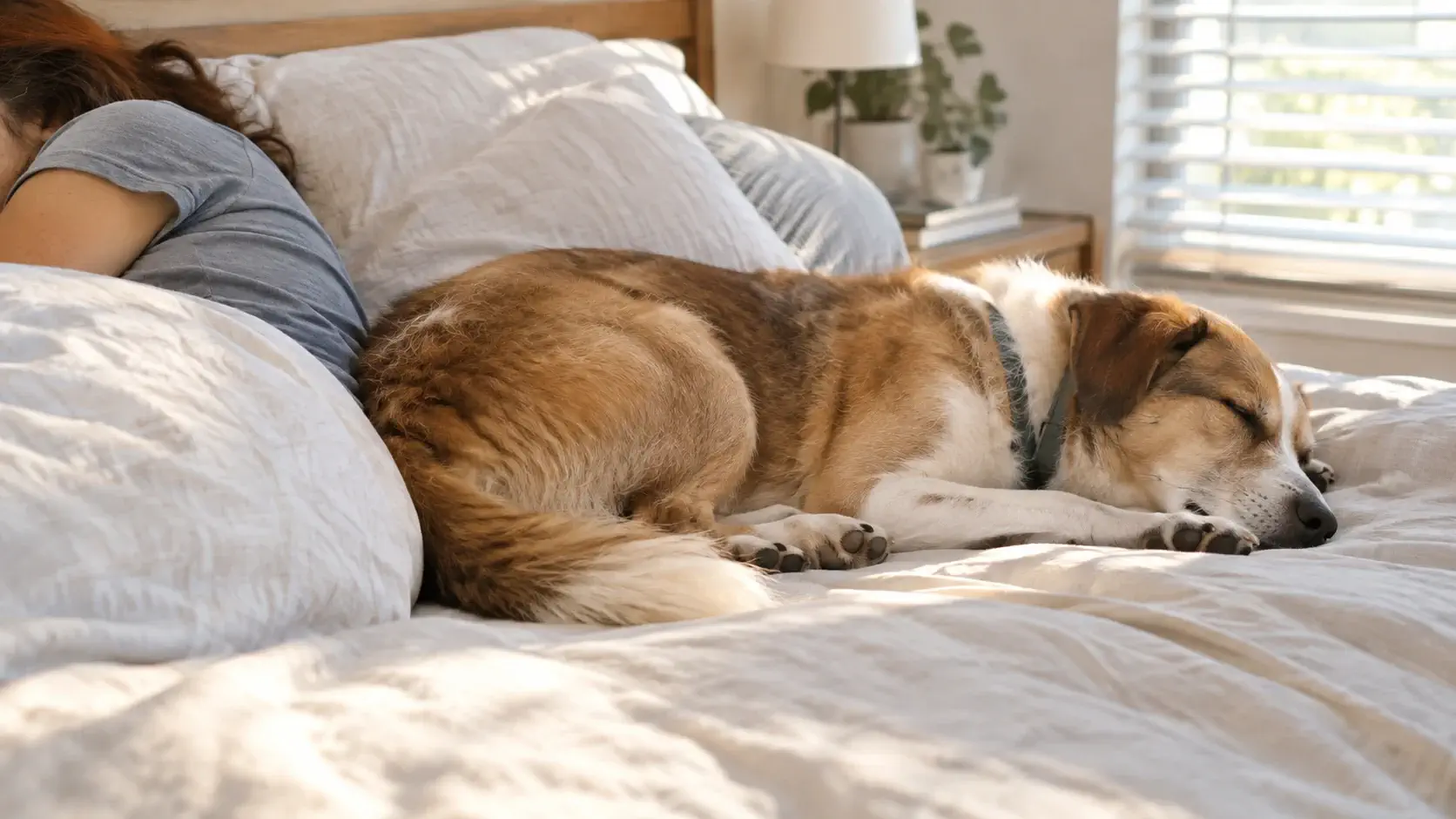
You slide into bed after a long day. Your dog spins twice, flops down, and aims his rear end right at you.
Rude? Not really. It’s one of the biggest compliments a dog can give.
So, why does my dog sleep with his butt towards me? Most of the time, he trusts you, feels safe, and wants to stay close. In this post, I’ll walk you through seven real reasons, what other sleeping positions mean, and how to change the habit if it bugs you.
(Quick note: this is behavior talk, not medical advice.)
Why Does My Dog Sleep with His Butt Towards Me? The Short Answer
Your dog most likely does this because he feels safe with you. He’s also keeping watch, staying warm, or enjoying your scent.
Here’s the quick version:
- Trust: He’s comfortable showing his vulnerable side.
- Protection: He’s facing outward like a little lookout.
- Comfort: You’re warm, familiar, and cozy.
Context matters, though. Breed, age, and your home setup all change the story. Let’s dig in.
7 Real Reasons Your Dog Sleeps with His Rear Toward You
1. Does He Trust You Completely?
Yes, this is the most common reason. Turning your back on someone means you’re not worried about them.
Dogs work the same way. A dog who sleeps back-to-you feels no need to watch you.
Think of it like a friend who dozes off on your couch mid-movie. That’s trust.
This is one of the clearest signs your dog trusts you when sleeping. It’s a vulnerable sleeping posture for dogs, and he chooses it near you on purpose.
2. Is He Guarding You?
Sometimes, yes. Facing outward lets him watch the door, window, or hallway while you rest.
Your body covers his back. His eyes and ears cover the room. Teamwork!
According to veterinary behaviorist Dr. Klein in an AKC article on dog sleeping positions, guardian and herding breeds tend to sleep in ways that keep them alert. Klein’s line, “form follows function,” fits nicely.
If your dog is a German Shepherd or a Border Collie, expect more guarding behavior in dog sleeping habits. My neighbor’s shepherd faces the front door every single night. Nobody sneaks past him.
Expert Tip: Notice which way his head points. Ears toward the door? He’s on lookout duty. Ears relaxed and floppy? He’s just cozy.
3. Is It a Social Sleeping Instinct?
Partly, yes. Dogs are social animals, and many like sleeping in contact with their group.
You’ve probably heard this called “pack instinct.” I’ll be honest, that phrase is a bit outdated. The American Veterinary Society of Animal Behavior (AVSAB) has pushed back on rigid “alpha and pack” thinking for pet dogs.
Still, the canine pack sleeping instincts idea holds a kernel of truth. Dogs feel safer near their people.
That’s why dog back-to-back sleeping cuddle time feels so natural to them. Your bed is the den. You’re family.
4. Is He Sharing Scent and Feeling Safe?
Probably, yes. Dogs live through their noses.
When he presses his rear against you, your scents mix. Familiar smells calm him down.
Some people call this scent marking and safety behavior. I’d call it comfort. He isn’t claiming you like a tiny landlord. He’s wrapping himself in “home.”
This also explains why your dog presses his rear against you while sleeping. He wants a solid, familiar wall of you at his back.
5. Does He Just Want Warmth?
Often, yes. Your body is a heater with a heartbeat.
Small breeds, short-coated dogs, and puppies love this most. Think Chihuahuas, Greyhounds, and Frenchies.
His rear is also a big, warm, easy surface to tuck against your legs. Winter nights make this even more common.
That’s classic comfort and warmth pet behavior. If your dog gets clingier when the thermostat drops, this is why.
6. Is It a Learned Habit?
Sometimes, and it’s your fault. Kind of. Dogs repeat what works.
If you laugh, scratch his rump, or say “aww,” he learns it pays off. Congratulations, you trained him without meaning to.
Many owners accidentally reward this. I did it myself with a rescue pup years ago. One belly-butt scratch and the pattern was locked in.
7. Does He Want Closeness Without the Pressure?
For some dogs, yes. Face-to-face contact can feel intense.
Shy dogs, rescues, and sensitive pups often prefer side-by-side closeness. Sleeping back-to-back lets them stay near you and still feel in control.
It’s the dog version of sitting next to someone at a movie instead of staring at them. Comfortable, close, low pressure.
What Do Other Dog Sleeping Positions Mean?
Every sleeping position tells a small story. Here’s a quick guide to common dog sleeping positions with owner meaning.
The positions below are based on general behavior patterns. According to The Wildest, poses like the donut, sphinx, and “Superman” each point to different comfort needs.
| Sleeping Position | What It Usually Suggests | Trust/Comfort Level |
|---|---|---|
| Butt toward you | Trust, lookout mode, warmth | High |
| Belly up | Very relaxed, or cooling off | Very high |
| Curled donut | Conserving warmth, feeling cozy | Medium to high |
| Sphinx pose | Ready to jump up if needed | Medium (alert) |
| Superman sprawl | Cooling down, playful energy | Medium to high |
| Head on you | Affection, wants contact | High |
Notice something? Butt-toward-you sits near the top of the trust scale. That’s a good sign.
Can Tail, Ears, and Paws Tell Me More?
Yes, and they matter as much as the rear end. Reading the full picture helps you tell “relaxed and trusting” from “just tolerating.”
Check these clues:
- Tail: Loose and soft usually means relaxed. Tucked tight can mean he’s uneasy or cold.
- Ears: Floppy and still means calm. Swiveling means he’s monitoring sounds.
- Paws: Gentle twitching often shows he’s dreaming.
- Breathing: Slow and even is a great sign.
Watching dog tail positioning during sleep is a simple trick most owners skip. For more, check our guide on dog body language.
Expert Tip: Compare his sleeping posture across a week. One odd night means little. A sudden, lasting change deserves a note. If it worries you, mention it to your vet.
Is It Normal for My Dog to Sleep with His Rear Toward My Face?
Yes, it’s very common. Awkward? Absolutely. Harmless? Usually.
Dogs pick the head-of-bed spot because your scent is strongest there. He’s not trying to insult your morning breath.
Now the fun part. You might get a tail flick in your nose. You might wake up nose-to-fluff. Welcome to dog parenthood.
Here’s a fair heads-up on bed-sharing. A Mayo Clinic study on dogs and human sleep followed 40 healthy adults for seven nights. It found that dogs in the bedroom didn’t hurt sleep, but dogs on the bed slightly lowered sleep quality.
So the choice is personal. Here’s how it stacks up:
| Dog on the Bed | Dog Beside the Bed |
|---|---|
| Pros: Warmth, bonding, comfort | Pros: Fewer wake-ups, more space |
| Cons: More night disruptions, hair | Cons: Less snuggle time |
| Best for: Calm, settled sleepers | Best for: Light sleepers, restless dogs |
What Should I Do If I Want My Dog to Sleep Differently?
Start by figuring out what actually bothers you. Then gently redirect him without punishment.
Here’s my step-by-step plan for what to do if your dog keeps turning his butt toward you in bed.
Step 1: Pin Down the Real Problem
Is it smell? Space? Hair? Solve that one issue first.
Hair problem? A washable throw blanket helps. Space problem? Give him a defined spot.
Step 2: Redirect Gently, Don’t Punish
Use a calm cue like “shift” or “turn.” Reward him when he rotates or moves.
Never push him away roughly. Harsh reactions can confuse him and hurt your bond.
Step 3: Offer a Better Spot
Try a cozy bed at the foot of your bed. Add a bolster he can lean against.
A blanket that smells like you works wonders. If you want an extra-cute project, try our DIY pet fur crafts ideas to turn shed fur into something useful.
Step 4: Stay Consistent for 1 to 2 Weeks
Dogs learn routines fast, but they need repetition. Same cue, same reward, every night.
If you want him sleeping in his own space entirely, read our guide to train a dog to sleep alone.
Expert Tip: A predictable evening helps enormously. Last walk, potty break, water, then bed. A steady daily dog care routine makes bedtime calmer.
Myths vs. Facts, Common Mistakes, and Pro Tips
Let’s clear up the biggest misunderstandings. A lot of online advice gets this wrong.
Myths vs. Facts
| Myth | Fact |
|---|---|
| “He’s being disrespectful.” | He’s showing trust and comfort. |
| “He’s trying to dominate me.” | Dominance theory is outdated for this behavior. AVSAB’s dominance position statement says most unwanted pet behaviors come from accidental rewards, not rank-seeking. |
| “Facing away means he doesn’t love me.” | Facing away often means he feels very safe. |
| “I must correct this right away.” | It’s harmless unless it bothers you. |
Common Mistakes Owners Make
- Pushing him away harshly. This can make him anxious.
- Reading it as “bad behavior.” You’ll miss the affection.
- Changing his spot suddenly. Dogs love routine.
- Laughing or treating every time. You’ll reinforce it by accident.
Pro Tips from Everyday Experience
- Watch his facing direction. It shows what he’s monitoring.
- Use a breathable throw. It handles hair and smell.
- Try a “bed buddy” pillow. Pressers love leaning on something.
- Do a pre-bed potty walk. Fewer restless flips at 2 a.m.
At the dog park, I’ve seen owners swap notes on this exact topic. Almost everyone says the same thing: “Mine does it too!” You’re in good company.
Conclusion: A Little Butt, A Lot of Love
Your dog sleeping with his rear toward you is almost always a good sign. It means trust, protection, warmth, social instinct, or a sweet habit you helped create.
Now you know how to read the signs. Watch his tail, ears, and overall mood. If the habit bugs you, redirect kindly and stay consistent.
Next time he backs into you at bedtime, remember what he’s saying. “I’ve got your back. Literally.”
What’s your dog’s favorite sleeping position? Tell us in the comments!
Frequently Asked Questions
Why does my dog sleep with his butt towards me?
He trusts you, feels safe, and often wants warmth. He may also act as a lookout while you sleep. It’s normal and usually affectionate.
Does my dog sleeping facing away mean he doesn’t like me?
No. It’s typically the opposite. Dogs rarely turn their backs on anyone they feel uneasy around.
Why does my dog press his rear against me while sleeping?
Pressing gives him warmth, security, and familiar scent. That steady contact helps him relax deeply.
Is it normal for my dog to sleep with his rear toward my face?
Yes. He picks that spot because your scent is strongest near the pillow. If it bothers you, offer a bed at the foot instead.
Should I stop my dog from sleeping this way?
Only if it bothers you. Try a calm “shift” cue, reward the new position, and give him a cozy alternative spot.
Why does my dog sleep with his back to me, but only sometimes?
Mood, room temperature, energy level, and household changes all play a role. Occasional changes are normal. If a lasting shift worries you, chat with your vet.