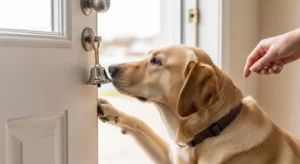
It’s 2 AM, you’re finally in that deep, blissful sleep… and then scratch scratch scratch. Your dog is pawing at your bedroom door like a tiny midnight ghost, whining just loud enough to make sleep impossible.
Sound familiar? You’re not alone.
Whether you just brought home a new puppy or adopted an older dog who’s never slept solo, night time struggles are one of the most common challenges pet owners face. I’ve seen it first hand at dog parks in Austin, where half the conversations between owners are basically “Did YOUR dog let you sleep last night?”
The good news? Learning how to train a dog to sleep alone at night is totally doable. It doesn’t require fancy gadgets, a professional trainer, or losing your sanity.
It just takes the right approach, a little patience, and some consistency.
This guide walks you through everything step-by-step, in a gentle, stress-free way, so both you and your pup can actually get some rest. Peaceful nights are closer than you think.
Why Dogs Struggle to Sleep Alone at Night
So why does your dog lose it the moment you leave the room?
It’s not a drama. It’s actually deeply wired into who they are.
Dogs are pack animals. In the wild, sleeping alone meant being vulnerable to predators. So their instinct says: stay close to the group, stay safe. When you leave, your dog isn’t being needy for fun. They genuinely feel exposed.
Here’s what’s usually going on:
Pack Mentality. Dogs see your family as their pack. Sleeping apart from the pack feels unnatural and even a little scary to them. You’re their safe person, and you just walked out.
New Environment Anxiety. New smells, new sounds, new everything. A newly adopted dog or a puppy in a fresh home is basically running on sensory overload. Of course they can’t settle down.
Lack of Routine. Dogs thrive on predictability. If bedtime is different every night, your dog never really knows what’s coming. That uncertainty? It keeps them on edge.
Dog Separation Anxiety at Night. Some dogs experience a deeper emotional distress when left alone, especially at night. According to the American Kennel Club, separation anxiety is one of the top behavioral issues in dogs. It’s not bad behavior. It’s fear.
Understanding why your dog cries is the first step to actually fixing it. You’re not dealing with a stubborn troublemaker. You’re dealing with a worried little soul who just needs to feel safe.
And that, you can absolutely help with.
Preparing Your Dog for Independent Sleep
Before you start training, is your dog actually set up for success?
This part is where most people skip ahead too fast. They jump straight into training without laying the groundwork first. And then wonder why nothing sticks.
Think of it like this: you can’t expect someone to sleep comfortably in a strange room with no blanket, no pillow, and the lights blaring. Your dog feels the same way.
Here’s how to prep before training even begins:
Create a Cozy Sleep Space
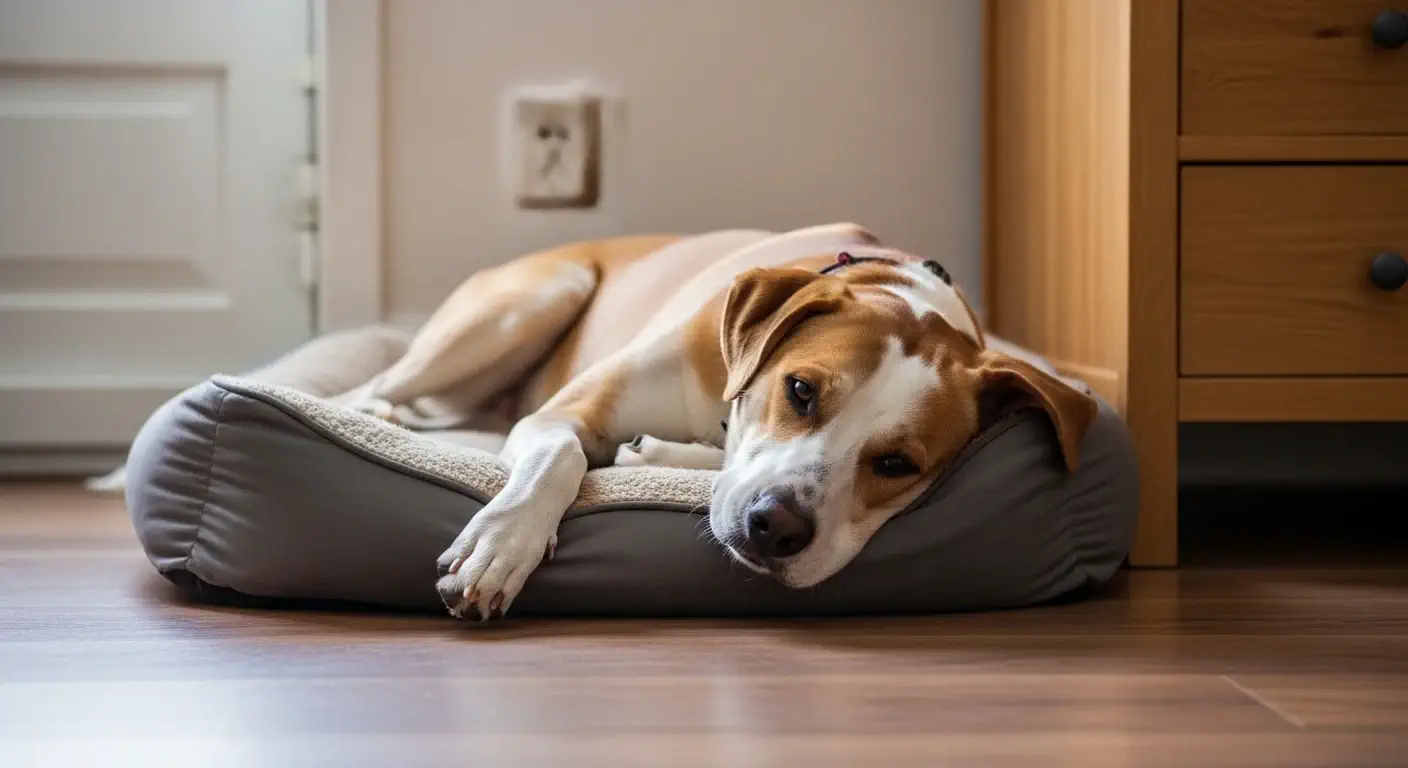
Give your dog their own dedicated spot. A crate, a dog bed, or even a comfy corner with their favorite blanket. The goal is to make it feel like their space, somewhere they actually want to be.
Add a worn t-shirt of yours nearby. Your scent is incredibly calming to them. It’s like leaving a little piece of yourself behind.
Build a Consistent Puppy Sleep Schedule
Same bedtime. Every night. Dogs are creatures of habit, and a predictable puppy sleep schedule training routine works like magic over time.
Try something like: evening walk → dinner → quiet time → sleep. Repeat it nightly until your dog starts anticipating it on their own.
Burn That Energy Before Bed
A tired dog is a sleepy dog. Make sure your pup gets solid exercise and some mental stimulation in the evening. A game of fetch, a short training session, or even a puzzle toy can do wonders.
No one sleeps well when they’re wound up. Dogs included.
Comfort plus routine equals security. Once your dog feels safe in their space and knows what to expect each night, the actual training becomes so much smoother.
You’re basically building a “safe den” feeling, and that foundation changes everything.
Step-by-Step Guide to Train Your Dog to Sleep Alone at Night
Okay, so how do you actually train a dog to sleep alone without the midnight concert?
Here’s the thing: there’s no magic trick. But there is a method that works, and it’s simpler than you’d think. The key is going slow, staying consistent, and not caving at 2 AM (we’ll talk about that).
Let’s break it down step by step.
Step 1: Start With Short Separations
Don’t go from “sleeping together every night” to “okay, you’re on your own, buddy” overnight. That’s a recipe for chaos.
Start small. During the day, have your dog hang out in their sleep spot for short stretches while you’re nearby. Ten minutes. Then fifteen. Then thirty.
You’re teaching them: this spot is safe, and you always come back. That message is everything.
Step 2: Build a Bedtime Routine
Same time. Same sequence. Every single night.
A solid routine might look like this:
- 7:30 PM: Evening walk
- 8:00 PM: Dinner
- 8:30 PM: Calm quiet time (no rough play)
- 9:00 PM: Lead them to their sleep spot, give a treat, say a consistent cue like “bedtime” or “go to bed”
- Lights out
Within a week or two, your dog will start winding down on their own as the routine kicks in. It’s honestly a little magical when it clicks.
Step 3: Use Positive Reinforcement
Reward the behavior you want to see more of.
When your dog settles quietly in their spot, even for a few minutes, praise them softly or drop a treat. You’re telling them: calm and quiet = good things happen.
On the flip side, avoid rushing over the moment they whine for attention. If you do, you’ve just taught them that whining works. And trust me, they will use that lesson relentlessly.
Ignore the attention-seeking whines. Reward the calm. Simple in theory, harder at 3 AM, but so worth it.
Step 4: Gradually Increase Distance
This is where you slowly create more independence, without your dog feeling abandoned.
Start by sitting near their sleep spot until they settle. Then move to the doorway. Then just outside the room. Then down the hall.
Each move should feel like a small, barely noticeable shift to your dog. Take a few nights at each stage before moving further. If they regress, back up a step. No big deal.
Progress isn’t always a straight line. Some nights will feel like you’ve nailed it. Other nights will feel like you’re starting from scratch. Both are completely normal.
Step 5: Stay Consistent (This Is the Secret Sauce)
Here it is. The step that makes or breaks everything.
Do not give in randomly at 2 AM.
We’ve all been there. The whining goes on, you’re exhausted, and suddenly letting them jump into bed “just this once” sounds incredibly reasonable. But that one exception? It resets the whole process.
Your dog learns: if I cry long enough, they come. And now you’ve got a dog with a very effective strategy and zero plans to stop using it.
Consistency isn’t cruel. It’s actually the kindest thing you can do because it gives your dog clarity. They learn what to expect, and that predictability helps them relax.
Stay the course. Even on the hard nights. Especially on the hard nights.
This whole process, done right, is genuinely one of the most rewarding things you’ll do as a dog owner. Watching your pup confidently curl up and drift off in their own space? Absolute gold.
Crate Training for Night-time Sleep
Is a crate really necessary, or does it just feel mean?
This is probably the most common question first-time dog owners ask. And honestly, it’s a fair one. A crate looks like a cage. But to a dog, when introduced correctly, it feels like a cozy den.
Think of it like this: dogs are naturally den animals. A small, enclosed space actually feels secure and calm to them, not trapped.
The crate is not a punishment. It’s their bedroom.
How to Make the Crate Feel Like Home
Don’t just toss your dog in and close the door. That’s a fast track to crate hatred. Instead, ease them in gradually:
- Place their favorite blanket and a worn piece of your clothing inside
- Toss treats in throughout the day so they wander in on their own
- Feed meals near or inside the crate to build positive associations
- Never force them in, let curiosity do the work
Tips for Training a Puppy to Sleep Alone in a Crate at Night
Puppies especially take to crates well when introduced early. Here’s what works:
- Keep the crate in your bedroom initially, close enough that they can hear and smell you
- Cover it with a light blanket to create that cozy den feel
- Use a consistent cue like “crate time” every night
- Drop a small treat inside right before lights out
If your pup is struggling, check out resources on how to choose the right dog trainer who can walk you through crate training hands-on.
One thing to remember: a crate should never be used for long hours as a fix for inconvenience. It’s a sleep and safety tool, not a babysitter.
Done right, crate training for nighttime routine creates a dog who actually trots into their crate willingly at bedtime. And yes, that’s as satisfying as it sounds. 🐶
How to Stop Your Dog from Crying at Night
Your dog is crying at night. Do you go check on them or tough it out?
This is the part where most well-meaning owners accidentally make things worse. Because the answer isn’t always the same, and knowing the difference is everything.
Let’s break it down clearly.
When to Ignore the Crying
If your dog is whining purely for attention, going to them immediately teaches them that crying = you appear. That’s a powerful lesson, and they will repeat it every single night.
Attention-seeking whines usually sound repetitive and frustrated. There’s no urgency to them. Just persistence.
In these moments, do not go in. Do not call out to them. Even negative attention is still attention to a dog.
Wait for a pause in the crying, then quietly reward the silence with a calm, soft word. You’re reinforcing the quiet, not the noise.
When You Should Check on Them
Not all crying is manipulation. Sometimes your dog genuinely needs you.
Go check if:
- The crying sounds distressed or panicked, not just whiny
- Your puppy might need a bathroom break, especially young ones can’t hold it all night
- It’s their very first few nights home
- Something in the environment changed, like a storm or strange noise
A quick, calm check is fine. Keep it boring though. No cuddles, no big reactions. Just a soft “it’s okay” and back to bed.
Use Calming Cues
A consistent bedtime phrase like “it’s okay, go to sleep” in a low, calm voice works wonders over time. Said enough nights in a row, it becomes a sleep trigger on its own.
You can also try:
- A white noise machine or soft background music to muffle startling sounds
- A ticking clock wrapped in a blanket near their bed, it mimics a heartbeat and genuinely soothes many dogs
- Calming sprays like dog-safe lavender or DAP (Dog Appeasing Pheromone) diffusers, which veterinarians often recommend for anxious dogs
The goal is to make nighttime feel predictably calm and safe, not something to stress about.
With time and consistency, the crying gets less. Then occasional. Then one night you realize it just… stopped. And that night feels like a genuine victory. 🏆
Common Mistakes to Avoid
Think you’re doing everything right but still not seeing progress.
Sometimes it’s not what you’re doing. It’s what you’re accidentally doing wrong. These mistakes are super common, totally understandable, and pretty easy to fix once you spot them.
Letting Them Sleep With You “Just This Once”
Oh, this one is sneaky. It’s 3 AM, you’re exhausted, and your dog is right there being adorable. So you cave. Just tonight, right?
Wrong. That one exception communicates loud and clear: crying long enough gets results. Now you’ve reset the entire process. One “just this once” can undo two weeks of progress overnight.
Inconsistent Routines
Skipping the bedtime walk some nights, feeding at different times, letting them crash on the couch randomly. Dogs need predictability to feel secure. Inconsistency keeps them anxious and confused.
Pick a routine and stick to it, even on weekends.
Punishing Fear-Based Behavior
Scolding a dog for crying at night doesn’t teach them to stop. It teaches them that nighttime is stressful and unpredictable. That makes anxiety worse, not better.
Always respond to fear with calm reassurance, never frustration.
Moving Too Fast
Rushing through the gradual steps because “they seemed fine last night” is a classic mistake. Slow and steady genuinely wins this race. Pushing too fast leads to setbacks that take even longer to undo.
Avoid these pitfalls and your training timeline shortens dramatically. 🐕
How Long Does It Take for a Dog to Sleep Alone?
So when can you actually expect a full night of uninterrupted sleep?
Honest answer: it depends. But here are some realistic timelines to set your expectations straight.
Puppies
Most puppies start showing real improvement within a few days to two weeks of consistent training. Their brains are like sponges right now, soaking up routines fast. The younger you start, the quicker it clicks.
Older or Newly Adopted Dogs
These guys might take a little longer, anywhere from two to six weeks depending on their history and temperament. A dog who spent years sleeping in someone’s bed isn’t going to flip overnight. And that’s completely okay.
The Honest Truth
Progress isn’t linear. Some nights will feel like you’ve completely cracked the code. Other nights will feel like a chaotic orchestra of whining, scratching, and sighing. 🎻🐕
Both are normal. Both are part of the process.
Don’t measure success night by night. Look at the overall trend over two to three weeks. If things are generally improving, you’re winning, even if last Tuesday was rough.
Patience isn’t just a virtue here. It’s literally the whole game.
Special Tips for the First Night Home
What about that very first night? The scariest one for everyone involved?
The first night home is genuinely the hardest, for your dog and honestly for you too. Here’s how to make it as smooth as possible.
- Keep the crate close to your bed initially. Your presence nearby is deeply reassuring. You don’t have to share your bed, just be within earshot and scent range.
- Use familiar scents. If possible, ask the shelter or breeder for a small blanket or toy that smells like where your dog came from. That familiar smell is like a security blanket.
- Expect some crying. It’s normal. It doesn’t mean you’re failing. It means your dog is adjusting to a brand new world.
- Stay calm yourself. Dogs read your energy instantly. If you’re anxious and hovering, they feel that. Relaxed and confident sends a much better message.
The first night is just one night. Tomorrow gets easier. 🌙
Conclusion
You’ve got everything you need. Now it’s just about showing up consistently.
Training your dog to sleep alone at night isn’t about being tough or ignoring your dog’s feelings. It’s about giving them something even better than company: confidence.
A dog who can sleep peacefully on their own is a happier, more secure dog overall. And you? You finally get to sleep through the night like a functioning human being.
Remember the formula: patience plus consistency equals success. Every calm night builds on the last one. Every time you stick to the routine, you’re investing in weeks of peaceful sleep ahead.
It won’t be perfect immediately. There will be setbacks. But one day soon, your dog will trot over to their spot at bedtime without any drama, curl up, and drift off like they’ve been doing it forever.
And honestly? That moment makes every hard night completely worth it. 🌙🐾
FAQs
1. How do I train my dog to sleep alone at night without crying?
Start with gradual separation, build a consistent bedtime routine, and use positive reinforcement to reward calm behavior. Never rush the process, slow and steady gets results.
2. How long does it take for a dog to learn to sleep alone?
Puppies usually adjust within a few days to two weeks. Older or newly adopted dogs may take two to six weeks depending on their history and temperament.
3. Should I ignore my dog crying at night?
Ignore repetitive attention-seeking whines, but do check on your dog if the crying sounds genuinely distressed, panicked, or if they might need a bathroom break.
4. Is crate training necessary for nighttime sleep?
It’s not mandatory, but it’s highly effective. A properly introduced crate gives your dog a secure, den-like space that actually helps them settle faster and sleep better.
5. Why does my dog bark or cry when left alone at night?
It usually comes down to pack instinct, separation anxiety, an unfamiliar environment, or simply a lack of consistent routine. It’s emotional, not bad behavior.
6. What is the best way to train a puppy to sleep alone on the first night?
Keep their crate close to your bed initially, use familiar scents, expect some crying, and stay calm. Closeness plus comfort on night one builds the trust that makes future nights easier.