You grab your keys, slip on your shoes, and head out the door for work. Your dog stares at you with those big, soulful eyes like you just committed a crime. And honestly you feel guilty the whole drive in.
You’re not alone. Millions of American dog owners deal with this every single morning.
The real question is – what’s your dog actually doing while you’re gone for 8 hours? Probably napping… for a bit. Then sniffing every corner of the house. Then maybe chewing your favorite couch cushion. Or barking at the mailman like it’s a full-time job.
Boredom in dogs is real, and it shows up in some seriously frustrating ways: destroyed shoes, non-stop barking, or a hyperactive furball the moment you walk in the door.
But here’s the good news, it’s completely fixable.
In this guide, you’ll find practical, easy-to-follow ways to keep your dog entertained while you’re at work. From the perfect morning routine to the best toys, indoor games, and mental stimulation tricks, we’ve got everything covered.
Your dog deserves a good day too. Let’s make that happen.
Why Dogs Get Bored When Left Alone
So why does your dog go full “chaos mode” the second you leave? It’s not spite (even though it can feel that way when you find your throw pillow destroyed). Dogs get bored for some pretty clear reasons — and understanding them makes solving the problem a whole lot easier.
1. Lack of Mental Stimulation
Here’s something most people don’t realize: dogs need mental exercise just as much as physical activity.
Think of your dog’s brain like a muscle. If it doesn’t get used, your dog gets restless, frustrated, and looks for ways to “self-entertain.” Spoiler: their version of entertainment rarely matches yours.
A quick sniff walk or a puzzle toy can tire a dog out faster than a 20-minute jog. That’s how powerful mental stimulation really is.
2. Separation and Routine Disruption
Dogs are creatures of habit. They thrive on routine and they genuinely love being around their humans.
When you leave every morning, your dog notices. The house gets quiet. Their “pack” disappears. That shift in energy can leave them feeling unsettled and anxious.
It’s worth learning to understand your dog’s body language — those subtle signs of stress or boredom often start well before any destructive behavior kicks in.
3. Breed and Age Factors
Not all dogs are built the same.
A Border Collie or a Labrador left alone for 8 hours? That’s a recipe for disaster. These high-energy breeds need serious stimulation. A Basset Hound or a senior Shih Tzu? They’re probably napping most of the day anyway.
Age matters too. Puppies and young adult dogs have way more energy to burn compared to older, calmer dogs.
Common signs your dog is bored:
- Chewing furniture, shoes, or random household items
- Excessive barking or howling (your neighbors definitely notice)
- Pacing back and forth near windows or doors
- Destructive digging — yes, even indoors
- Going absolutely wild the moment you get home
Recognizing these signs early is key. Because a bored dog isn’t a bad dog — they’re just a dog with nowhere to put all that energy.
How Long Can Dogs Stay Entertained Alone?
Can a dog really stay busy for 8 hours straight while you’re at work?
Short answer: nope. And honestly, that’s completely okay.
Dogs aren’t wired to be “on” all day. Even the most energetic breeds naturally cycle through bursts of activity followed by rest. Expecting your dog to play non-stop for 8 hours is like expecting yourself to sprint a marathon. Not happening.
The Natural Cycle Most Dogs Follow
Here’s what a typical alone-time day actually looks like for most dogs:
- Initial exploration phase — sniffing around, checking out the house after you leave (30–60 minutes)
- Rest and sleep — yep, dogs sleep a LOT when alone, often 12–14 hours a day according to the American Kennel Club
- Short bursts of play — interacting with toys, looking out the window, light activity
- Back to napping — rinse and repeat
So your dog isn’t suffering through 8 lonely hours of staring at the wall. They’re mostly sleeping, with little pockets of activity sprinkled in.
Why Variety is the Secret Weapon
The goal isn’t to keep your dog busy every single minute. The goal is to make sure those active pockets are genuinely engaging and stimulating.
That means rotating toys, setting up little “activities” before you leave, and building a solid morning routine. A dog that gets good mental and physical engagement before you head out? They’ll settle into that rest cycle much more peacefully.
Think quality over quantity, always.
Pre-Work Routine: Set Your Dog Up for Success
Does what you do before leaving actually matter?
100% yes. In fact, your morning routine is probably the single biggest factor in how your dog behaves while you’re gone.
A dog that gets zero attention before you leave is like a kid sent to school without breakfast, restless, unfocused, and looking for trouble. But a dog that gets proper morning engagement? They settle in beautifully.
Here’s how to nail it.
1. Morning Exercise Boost
Before anything else move that body.
Even a brisk 15–20 minute walk does wonders. It burns off pent-up energy, satisfies their curiosity through all that glorious outdoor sniffing, and signals to their brain that the “active” part of the day has happened.
No time for a walk? A quick 10-minute play session in the backyard works too. Fetch, tug-of-war, or even just running around like a goof together gets the job done.
The goal is simple: a tired dog is a calm dog.
2. Feed Smart, Not Fast
Skip the regular bowl if you can.
Instead, use a slow feeder or a puzzle feeder for your dog’s morning meal. This turns breakfast into a mini brain workout. Your dog has to work for the food, which adds another layer of mental stimulation right before you head out.
Stuffing a Kong toy with their kibble mixed with a little peanut butter and freezing it overnight is one of the oldest tricks in the book — and it still works like a charm.
3. Create a Safe and Engaging Space
Before you grab your keys, take two minutes to set up your dog’s space intentionally.
That means:
- Dog-proofing the area — nothing chewable, toxic, or dangerous within reach
- Leaving out one or two engaging toys (not ten — we’ll talk about that mistake later)
- Setting up a cozy rest spot with a familiar blanket or an old t-shirt that smells like you
- Letting in natural light if possible — dogs love watching the world go by through a window
Think of it as setting the stage for a good day. A little effort in the morning pays off in a big way by the time you get home.
A solid morning routine doesn’t just reduce boredom — it builds a healthy rhythm your dog actually starts to look forward to. That consistency is everything.
Best Toys to Keep Dogs Busy for Hours
What can you actually give your dog to keep them busy while you’re at work?
The right toys are absolute game-changers. Not just any toys though — we’re talking about toys that engage your dog’s brain, satisfy their instincts, and keep them occupied long after you’ve pulled out of the driveway.
Here’s what actually works.
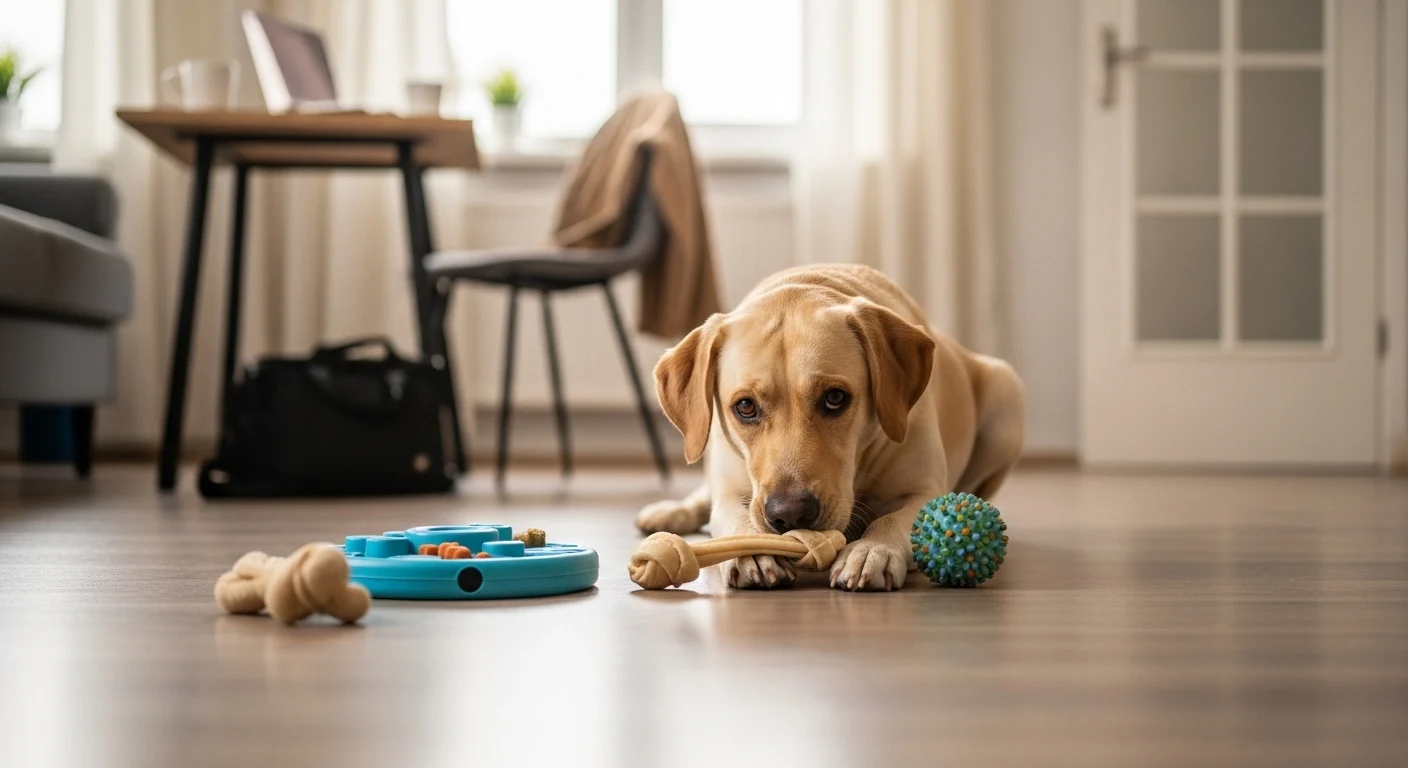
1. Interactive Puzzle Toys
Puzzle toys are hands down one of the best investments you can make for a home-alone dog.
These are toys that make your dog think. They hide treats behind sliding panels, spinning compartments, or lift-able covers. Your dog has to figure out how to get the reward — and trust me, they will work at it with full focus.
The mental effort involved is surprisingly exhausting for them. A 15-minute puzzle session can leave some dogs ready for a solid nap. That’s exactly what you want.
What to look for:
- Difficulty levels that match your dog’s experience (start easy, go harder)
- Durable, non-toxic materials
- Easy to clean — because soggy kibble smell is nobody’s friend
2. Chew Toys for Long Engagement
Dogs chew. It’s instinct. So instead of fighting it, give them something safe and satisfying to chew on.
Long-lasting chew toys made from durable rubber or nylon keep dogs occupied for extended stretches. They’re also great for dental health as a bonus.
Quick safety tips:
- Always match toy size to your dog’s breed and chewing strength
- Avoid toys with small parts that can break off and be swallowed
- Stick to non-toxic, pet-safe materials — always check the label
Frozen stuffed toys take this up a notch. Fill a rubber chew toy with a mix of peanut butter, banana, or plain yogurt and freeze it overnight. Your dog will spend a good chunk of the morning working through that frozen goodness.
3. The Rotating Toy Strategy
Here’s a trick that most pet owners don’t use — but absolutely should.
Instead of leaving all your dog’s toys out at once, rotate them weekly.
Put away most of the toys and only leave two or three out at a time. Then swap them out every few days. To your dog, a toy they haven’t seen in a week feels brand new and exciting all over again.
It’s the same psychology behind why kids go crazy for old toys they rediscover in a closet. Novelty is stimulating — and you can create it without spending a single extra dollar.
Simple rotating schedule:
- Monday/Tuesday: Puzzle toy + rubber chew
- Wednesday/Thursday: Rope toy + treat-dispensing ball
- Friday/Weekend: Bring back their “favorites” as a little end-of-week treat
The variety keeps things fresh, keeps your dog engaged, and honestly makes your toy budget stretch way further.
Toys alone won’t solve everything — but paired with a good routine and some mental stimulation, they’re incredibly powerful tools in your dog-entertainment arsenal.
Indoor Games for Dogs (Even When You’re Not Home)
Can you set up games for your dog before you leave that they can actually play solo?
Absolutely yes. And the best part? Most of these take less than 5 minutes to set up and cost almost nothing.
These aren’t games you play with your dog — these are games your dog plays on their own while you’re sipping coffee at your desk. Smart, right?
1. Treat Hunt (DIY Treasure Game)
This one is stupidly simple and dogs absolutely love it.
Before you leave, hide small treats around the house. Under a cushion, behind a door, near their bed, tucked beside a toy. Scatter them across different rooms if your dog has free roam of the house.
When your dog wakes up from their first nap, their nose kicks into gear. Suddenly the whole house becomes an adventure map. They’ll spend a solid chunk of time sniffing out every single treat you’ve hidden.
Quick setup tips:
- Use small, low-calorie treats so you’re not accidentally overfeeding
- Start with easy hiding spots and gradually make it harder over time
- Stick to areas your dog is allowed to explore safely
2. Stuffed Toy Challenges
We touched on this earlier but it deserves its own spotlight here.
Take a rubber toy, stuff it with something delicious, freeze it overnight, and leave it out when you head to work. Your dog will lick, chew, and puzzle their way through it for a surprisingly long time.
Great stuffing ideas:
- Peanut butter mixed with kibble (make sure it’s xylitol-free — that stuff is toxic to dogs)
- Plain mashed banana with a little plain yogurt
- Canned pumpkin puree (dogs go wild for this one)
- Wet dog food mixed with dry kibble
The frozen version lasts way longer than room temperature. A well-stuffed frozen toy can keep a medium-sized dog busy for 30–45 minutes easily.
3. Scent-Based Games
Here’s something fascinating about your dog: their nose is estimated to be 10,000 to 100,000 times more sensitive than yours, according to researchers at Alexandra Horowitz’s Dog Cognition Lab at Barnard College.
That nose is a powerhouse — and scent-based games tap directly into it.
Easy scent games to set up before work:
- Muffin tin game: Place treats in a few cups of a muffin tin, then cover all the cups with tennis balls. Your dog sniffs out which ones have the treats and paws off the balls.
- Box puzzle: Put a treat inside one of several cardboard boxes placed around the room. Let your dog sniff them out and “open” the right one.
- Scent trails: Drag a treat along the floor in a winding trail leading to a hidden reward at the end.
These games work with your dog’s natural instincts instead of against them. And a dog that’s used their nose hard? They’re genuinely tired in the best possible way.
Setting these up becomes a quick 3-minute morning habit that pays off all day long.
Mental Stimulation Ideas That Work Like Magic
Is mental stimulation really as effective as physical exercise for dogs?
Yes — and science backs it up. According to canine behavior experts, mental activity can tire a dog out just as effectively as a long walk. Sometimes even more so.
A dog that spends time solving problems, learning, and engaging their brain is a genuinely calmer, happier dog. Think of it as the difference between a boring desk job and a day full of interesting challenges. One leaves you restless, the other leaves you satisfyingly tired.
1. Food Puzzles and Brain Games
Food puzzles go beyond just keeping your dog busy — they actively engage problem-solving instincts that dogs are hardwired to use.
In the wild, dogs spent hours working to find food. Modern pet life hands them a bowl twice a day and calls it done. Food puzzles bridge that gap beautifully.
Easy brain games to try:
- The cup game: Place a treat under one of three cups, shuffle them around, let your dog find it
- Snuffle mats: These textured mats hide kibble within fabric strips — your dog roots through it with their nose to find every piece
- Treat-dispensing balls: Your dog rolls the ball around the floor and kibble falls out piece by piece
Start simple and increase difficulty gradually. Watching your dog figure something out for the first time is genuinely one of the most satisfying things ever.
2. Training Refreshers
Here’s one most people never think of — leaving your dog with a “training task” before you go.
Right before heading out, run through 5 minutes of basic commands. Sit, stay, shake, spin — whatever they know. End on a successful note, reward generously, then leave.
That little mental workout primes their brain and burns some energy before your day even starts.
You can also use recorded training videos playing softly in the background. Some dogs genuinely engage with the sounds and visual cues. It sounds quirky but plenty of pet owners on Reddit swear by it.
If you’ve been thinking about leveling up your dog’s training game, checking out a guide to choosing the right dog trainer is a great starting point — especially for high-energy breeds that need more structured mental challenges.
3. Window Watching and Visual Stimulation
Never underestimate the power of a good view.
A window perch or a cleared windowsill gives your dog a front-row seat to the outside world. Squirrels, neighbors, passing cars, birds — it’s basically live TV for dogs. Genuinely entertaining for hours.
A few things to keep in mind:
- Make sure the window is secure and your dog can’t push it open
- Avoid windows that get intense direct afternoon sun — overheating is a real risk
- A comfortable spot to sit or lie near the window makes it even better
For extra visual stimulation, some pet owners leave nature documentaries or “dog TV” channels playing on a low volume. There are actual YouTube channels designed specifically for dogs with birds, squirrels, and gentle outdoor sounds. Weird but it works.
The beautiful thing about mental stimulation is that it compounds. A dog that gets consistent brain engagement becomes calmer, more focused, and way less destructive over time. Small daily efforts add up to a genuinely happier dog.
Preventing Separation Anxiety with Smart Activities
How do you help a dog feel okay about being left alone?
First, let’s clear something up. Not every dog that barks or chews when alone has clinical separation anxiety. Many dogs are simply bored, under-stimulated, or just not used to alone time yet.
That said, helping your dog feel genuinely comfortable when you leave is one of the kindest things you can do for them. And the good news? A few simple strategies make a massive difference.
1. Gradual Independence Training
If your dog panics the moment you reach for your keys, they need to practice being alone in small, manageable doses.
Start with just a few minutes. Step outside, wait five minutes, come back in. No big dramatic hellos or goodbyes — keep it casual and low-key. Gradually stretch that time to 15 minutes, then 30, then an hour.
The goal is teaching your dog that you always come back. Every single time.
Quick tips for gradual training:
- Practice on weekends when you have more flexibility
- Leave a puzzle toy or stuffed chew toy each time you step out — it creates a positive association with your departure
- Keep your leaving routine calm and consistent — excited goodbyes actually increase anxiety
2. Comfort Items and Familiar Scents
Your scent is genuinely comforting to your dog. It sounds sweet and it absolutely is.
Leave an old t-shirt or a worn hoodie in your dog’s favorite resting spot before you head out. Something that smells like you. It won’t replace your presence but it does provide a layer of comfort that helps them settle.
Other comfort items that work well:
- Their favorite blanket or bed
- A specific toy they associate with relaxed downtime
- A cozy crate if your dog is crate trained — many dogs genuinely love having their own safe den space
If your dog ever seems confused or upset and you’re not sure why, brushing up on how to apologize to your dog the right way can actually help rebuild that sense of trust and security between you two.
3. Background Noise Strategy
Complete silence can actually feel unsettling for dogs. Think about it — when you’re home, there’s always some level of ambient noise. Your voice, the TV, kitchen sounds, music. When you leave, that silence is jarring.
Filling that silence helps more than most people expect.
Options that work well:
- Calming music or classical playlists — there’s actual research from the Scottish SPCA and University of Glasgow suggesting dogs show lower stress levels with certain types of music playing
- TV on a low volume — familiar voices and background noise mimic a lived-in home feeling
- White noise machines — great for dogs in apartments who get triggered by hallway sounds or neighbors
Keep the volume moderate. The goal is gentle background ambiance, not a concert.
Building comfort around alone time is a gradual process — not an overnight fix. But with consistent effort and the right strategies, most dogs settle into it beautifully. Patience is everything here.
Creating a Daily “Entertainment Schedule” for Your Dog
Does having a set schedule actually make a difference for dogs left alone?
It really does. Dogs thrive on predictability. When they know what to expect and when, their overall stress levels drop significantly. A loose daily rhythm gives their brain and body a framework to follow — even when you’re not there to guide it.
You don’t need a military-style timetable. Just a general flow that repeats consistently.
A Sample Daily Schedule for Your Home-Alone Dog
Here’s a realistic, easy-to-follow example that works for most dogs:
Morning (Before You Leave)
- 6:30 AM: Brisk walk or backyard play session (15–20 minutes)
- 7:00 AM: Breakfast via puzzle feeder or stuffed frozen toy
- 7:30 AM: Quick 5-minute training refresher, then you head out
- Set up treat hunt, leave one or two rotating toys out, background noise on
Mid-Morning (While You’re at Work)
- 8:00–10:00 AM: Dog explores, works through puzzle toy and treat hunt
- 10:00 AM onward: Natural rest and sleep cycle kicks in
Midday (Optional)
- If possible, a midday visit from a dog walker or neighbor for a short bathroom break and a little interaction goes a long way — especially for puppies or high-energy breeds
Afternoon
- Dogs typically cycle through another light activity phase, window watching, chewing on their rotation toy
- Followed by another rest period before you return
Evening (When You’re Home)
- 6:00 PM: Active play or walk — this is bonding time, make it count
- 7:00 PM: Dinner
- Later evening: Quiet wind-down, cuddle time, calm interaction
Why This Works
The schedule isn’t about controlling every minute of your dog’s day. It’s about creating natural anchor points — moments your dog comes to expect and look forward to.
Over time, your dog’s internal clock actually adjusts to this rhythm. They know the morning toy is coming. They know the evening walk is coming. That anticipation alone keeps them calmer and more settled throughout the day.
Start with just the morning and evening anchors if the full schedule feels overwhelming. Even small consistency creates big results.
Mistakes to Avoid When Leaving Your Dog Alone
Are you accidentally making your dog’s alone time harder without realizing it?
Most pet owners are doing their best — but a few common habits can actually work against you. The good news is these are all easy fixes once you know about them.
The Most Common Mistakes Pet Parents Make
1. Leaving too many toys out at once
More toys sounds better, right? Actually, no.
When your dog has 15 toys scattered across the floor, nothing feels special or exciting. It’s overwhelming and oddly unstimulating. Stick to two or three intentionally chosen toys per day. Quality of engagement beats quantity every single time.
2. Skipping the morning exercise
This one is huge.
Leaving a dog with full, unburned energy alone for 8 hours is basically setting up a demolition crew in your living room. Even 15 minutes of movement before you leave makes a noticeable difference in how calm your dog is throughout the day.
3. Having zero routine
Dogs don’t do well with unpredictability.
If your dog never knows when you’re leaving, when you’re coming back, or what to expect throughout the day, their baseline anxiety stays elevated. Consistency in timing and routine is one of the simplest and most powerful things you can offer your dog.
4. Ignoring mental stimulation completely
Physical exercise gets all the attention but mental engagement is equally important.
A dog that goes all day without any brain activity gets restless fast. Puzzle toys, scent games, and treat hunts take minutes to set up and fill that gap beautifully.
5. Making departures and arrivals overly dramatic
It feels natural to give your dog a big loving goodbye before work and a huge excited greeting when you get home.
But those dramatic moments actually heighten your dog’s emotional response to your comings and goings. Keep departures calm and low-key. When you get home, wait a minute or two before giving big greetings. It sounds counterintuitive but it genuinely helps your dog stay more settled.
None of these mistakes make you a bad pet parent. They’re just patterns worth noticing and adjusting. Small tweaks to your daily habits add up to a genuinely happier, calmer dog over time.
Bonus Tips for Busy Pet Parents
Looking for a few extra tricks to make your dog’s solo days even better?
These are the little extras that busy pet owners swear by. None of them are complicated or expensive — just smart, practical additions to everything you’ve already set up.
Quick Wins Worth Trying
Rotate toys every week
We mentioned this earlier but it’s worth repeating because it works so well.
Set a weekly “toy swap” reminder on your phone. Pack away the current toys, bring out the stored ones. Your dog gets the excitement of “new” toys without you spending a single extra dollar. Five minutes of effort, maximum impact.
Consider a midday dog walker or pet sitter
If your budget allows, even one or two midday visits per week makes a meaningful difference — especially for puppies, senior dogs, or high-energy breeds.
It breaks up the alone time, adds a bathroom break, and gives your dog a little human interaction mid-day. Apps like Rover make finding a trusted local walker pretty simple these days.
Use technology to your advantage
Pet tech has come a long way and honestly some of it is pretty brilliant:
- Pet cameras with two-way audio — check in on your dog during your lunch break, say hello, see what they’re up to
- Automatic treat dispensers — some connect to your phone and let you send a treat remotely, which is equal parts practical and ridiculously fun
- GPS trackers — great peace of mind if your dog has outdoor access
These tools won’t replace real interaction but they bridge the gap nicely on long work days.
Small additions, big payoff. Even picking just one or two of these to try this week puts you ahead of the game.
Conclusion
So, can you keep your dog happy and entertained while you’re at work all day?
Absolutely yes. And you don’t have to be a perfect pet parent to pull it off.
The truth is, your dog doesn’t need you home every minute. They need smart engagement, a consistent routine, and a handful of well-chosen activities that work with their natural rhythms. That’s it.
Start small. Pick one thing from this guide and try it tomorrow morning. Maybe it’s a frozen stuffed toy before you leave. Maybe it’s hiding treats around the house. Maybe it’s finally committing to that 15-minute morning walk.
Small changes stack up fast. And before you know it, your dog goes from anxious and destructive to calm, content, and genuinely okay with solo time.
You clearly care deeply about your dog’s wellbeing — the fact that you’re reading a guide this detailed proves that. That love and attention makes all the difference.
Your dog is lucky to have you. Now go make their day a little more exciting, even from the office.
Frequently Asked Questions (FAQs):
1. How do I keep my dog entertained while I’m at work all day?
Focus on three things: a solid morning routine with exercise, engaging toys like puzzle feeders and chew toys, and fun solo activities like treat hunts and scent games. A consistent daily schedule ties it all together beautifully.
2. What are the best ways to entertain a dog when home alone for 8 hours?
Rotate puzzle toys, set up DIY treat hunts before you leave, and use frozen stuffed toys for extended engagement. Background noise like calming music or TV also helps keep them settled throughout the day.
3. Are there easy activities to keep my dog from getting bored at home?
Yes, and they’re simpler than you think. Treat hunts take two minutes to set up. Scent games using a muffin tin and tennis balls are a huge hit. Frozen stuffed toys keep dogs busy for 30–45 minutes easily. All low effort, high reward.
4. What can I give my dog to stay busy while alone?
Interactive puzzle toys, frozen stuffed rubber toys, durable chew toys, and treat-dispensing balls are your best friends here. Rotate them weekly to keep things feeling fresh and exciting for your dog.
5. How can I prevent my dog from getting anxious when left alone?
Practice gradual independence training starting with short departures. Leave comfort items with your scent. Keep your departures calm and low-key. Add background noise like music or TV to fill the silence. Consistency over time is what really makes the difference.
6. Do dogs sleep all day when left alone?
Pretty much, yes — and that’s completely normal. According to the American Kennel Club, dogs sleep anywhere from 12 to 14 hours a day. They naturally cycle between short bursts of activity and longer rest periods. Your job is simply to make those active bursts genuinely engaging and stimulating.