
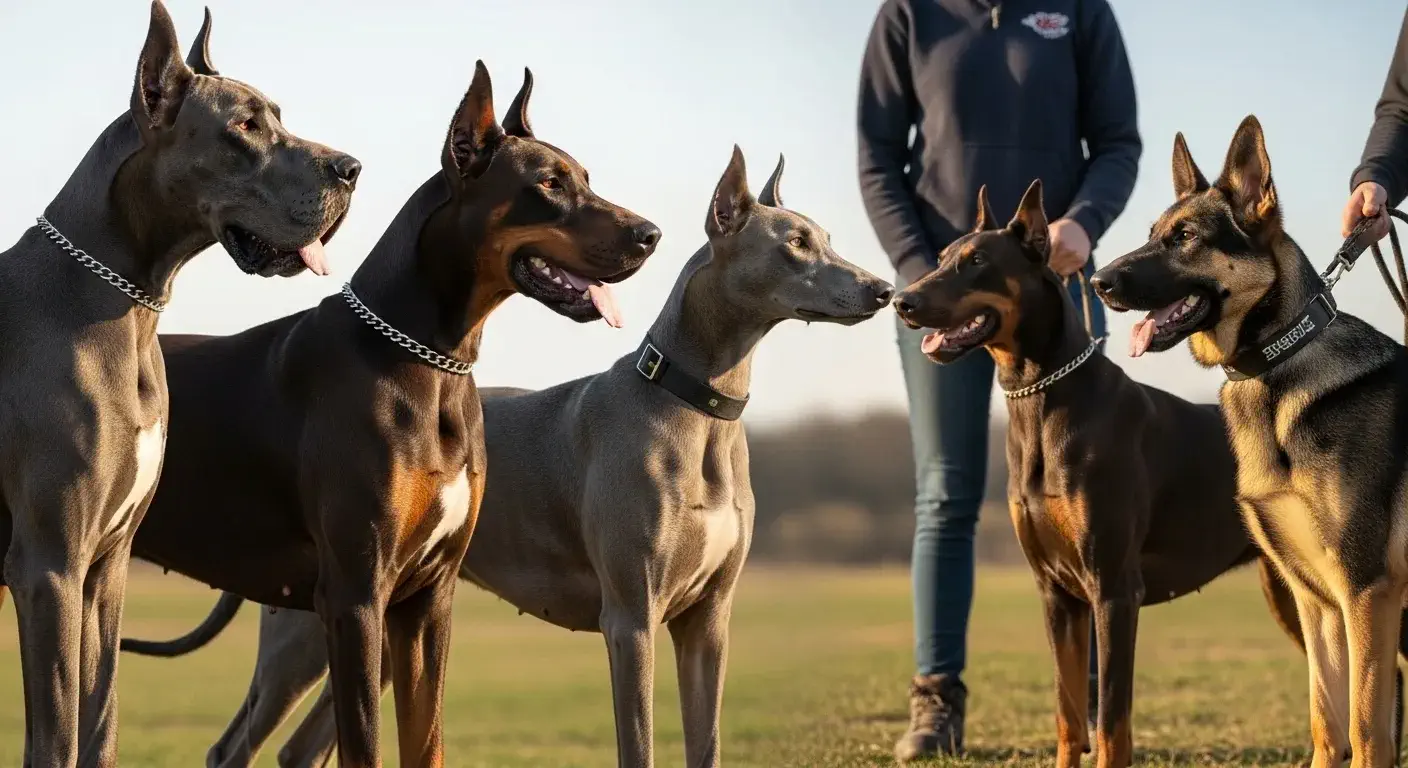
Ever looked at two dogs side by side and thought, “Wow, they look so different”?
Like, a Bulldog and a Greyhound are both dogs. But their bodies? Completely different stories.
One thing that often goes unnoticed is a dog’s chest shape. And honestly, it matters more than most people think.
Some dogs have what’s called a deep chest, where the chest drops down low, almost reaching their elbows. It gives them that lean, athletic, almost regal look. Think of a Doberman standing tall in someone’s front yard. That silhouette? That’s a deep chested dog.
But it’s not just about looks. A dog’s chest structure affects how they breathe, how fast they run, how much energy they have, and even what kind of care they need.
In this guide, you’ll learn:
- What deep chested dogs actually are
- The different chest types in dogs
- A complete list of deep chested breeds (big and small!)
- The real benefits of owning one
- Plus, practical care tips every owner should know
Whether you’re a longtime dog parent or just thinking about bringing a pup home, this one’s for you. Let’s dig in!
Want to understand your dog even better? Check out our post on Decoding Dog Body Language to learn what your pup is really trying to tell you.
What are Deep Chested Dogs?
So, what exactly is a deep chested dog?
A deep chested dog is a dog whose chest drops down deep, from the top of the shoulders all the way to the sternum (that’s the breastbone at the bottom of the chest). When you look at them from the side, their chest nearly reaches their elbows or sometimes goes even lower.
Visually, picture a narrow but tall chest. Not wide like a barrel, but deep like a well. That’s the key difference.
A Greyhound is a perfect example. Look at one from the side and you’ll notice that long, deep chest tucked up at the belly. A Doberman Pinscher has the same thing going on. So does the elegant Weimaraner, which a lot of people in the US keep as family pets and hunting companions.
Why does this body shape even exist?
It’s all about performance. That deep chest creates more room for the lungs and heart to expand. More lung space means more oxygen. More oxygen means more stamina and speed.
These dogs were often bred for running, hunting, or working long hours. Their bodies literally evolved to do a job, and the deep chest is a big part of that design.
According to the American Kennel Club (AKC), many sporting and working breeds share this chest structure because it directly supports their physical demands.
So in short, a deep chested dog is built for action, endurance, and yes, a whole lot of style.

Dog Chest Types Explained
Did you know dogs don’t all have the same chest shape? Here’s how they break down.
There are three main chest types you’ll see in dogs. Once you know them, you’ll start noticing the differences everywhere, at the dog park, on your street, even in movies.
1. Deep Chest Dogs
These dogs have a chest that’s tall and narrow, dropping low toward the belly.
The ribs curve inward rather than outward, giving that lean, tucked-up look from the side. Their waist is usually well-defined too, which adds to that athletic silhouette.
Breeds like the Greyhound, Doberman Pinscher, and German Shepherd are classic examples. These dogs are built for speed, endurance, and sustained physical activity.
2. Barrel Chest Dogs
Now flip that image completely.
Barrel chested dogs have a chest that’s wide and rounded, almost like a drum. Their ribs push outward instead of down. This gives them a stocky, solid, powerful look.
Think Bulldog or Basset Hound. They’re not built for sprinting. They’re built for strength, stubbornness (ha!), and being absolutely adorable on the couch.
3. Broad Chest Dogs
Broad chested dogs sit somewhere in the middle. Their chest is wide but not as dramatically rounded as a barrel chest.
Breeds like the Labrador Retriever and Rottweiler fall here. They’re sturdy, strong, and still pretty athletic. A lot of American families love these dogs because they balance power with friendliness really well.
How does chest shape affect movement?
Simply put, deep chested dogs move fast and far. Barrel chested dogs move with power and purpose. Broad chested dogs are the all-rounders, strong but versatile.
Understanding your dog’s chest type also helps you understand their energy levels, exercise needs, and even how they carry themselves during a walk. And speaking of understanding your dog better, Decoding Dog Body Language is a great next read once you’re done here!
Deep Chest vs Barrel Chest Dogs
What’s the real difference between a deep chest and a barrel chest dog?
They might both be dogs, but their bodies work in pretty different ways. Here’s a simple side-by-side breakdown.
| Feature | Deep Chest Dogs | Barrel Chest Dogs |
|---|---|---|
| Shape | Narrow, tall, drops low | Wide, rounded, drum-like |
| Rib Direction | Curves inward and downward | Pushes outward |
| Waist | Well-defined, tucked up | Less defined |
| Built For | Speed and endurance | Strength and power |
| Examples | Greyhound, Doberman | Bulldog, Basset Hound |
Let’s talk movement.
A deep chested dog like a Greyhound can hit speeds up to 45 mph. That deep chest gives their lungs room to work overtime. Every stride is long, efficient, and powerful.
A barrel chested dog like a Bulldog? Not so much on the speed front. But they’re incredibly sturdy. Their wide chest supports a heavy, muscular frame built for holding ground, not chasing it.
Think of it this way.
A deep chested dog is like a sports car. Sleek, fast, built for the open road.
A barrel chested dog is like a pickup truck. Solid, dependable, and absolutely unbothered by anything.
Neither is better. They’re just built for different lives, different owners, and different adventures.
If you’re an active person who loves morning runs or hiking trails, a deep chested breed might match your energy perfectly. If you prefer Netflix marathons and slow Sunday walks, a barrel chested buddy might be your person.

Why Do Some Dogs Have Deep Chests?
Ever wondered why certain dogs are built so differently from others? Here’s the answer.
It all starts with genetics and purpose.
Dogs weren’t always just pets. For thousands of years, they were workers. Hunters. Herders. Guards. And the jobs they did shaped the bodies they developed over generations.
Dogs bred to chase prey over long distances, like Greyhounds and Whippets, needed bigger lung capacity to keep going without burning out. A deeper chest gave their heart and lungs more room to expand, pump harder, and deliver oxygen to muscles faster.
It’s basically nature’s performance upgrade.
Breeding played a huge role too.
Humans selectively bred dogs for specific traits. Faster dogs were bred with faster dogs. More enduring dogs were paired together. Over hundreds of years, certain breeds developed naturally deeper chests as a result.
The AKC notes that many sporting, hound, and working group breeds share this deep chested structure, precisely because those groups were historically bred for demanding physical roles.
And it’s not just about speed.
A deeper chest also means better stamina during long activity sessions. Whether it’s a German Shepherd working a full shift with law enforcement or a Labrador spending a day retrieving game in a field, that chest structure quietly does a lot of the heavy lifting.
So basically, when you see a deep chested dog, you’re looking at centuries of purposeful design. Pretty cool, right?
Complete List of Deep Chested Dog Breeds
Looking for a full breakdown of deep chested breeds? Here’s your go-to list.
Whether you want a giant gentle companion or a small speedy sidekick, there’s a deep chested dog for every lifestyle. Let’s break them down by size.
1. Large Deep Chested Dog Breeds
Great Dane
The Great Dane is basically a horse that thinks it’s a lapdog. Seriously, ask any Great Dane owner in the US and they’ll tell you the same story.
Their chest is dramatically deep, dropping well below the elbows. Despite their massive size, they’re gentle, loving, and surprisingly calm indoors. They’re often called the “Apollo of Dogs” for good reason.
Doberman Pinscher
Sleek, powerful, and seriously elegant. The Doberman’s deep chest gives them that iconic athletic silhouette that turns heads on every walk.
They’re incredibly loyal and intelligent, making them popular as family protectors and working dogs across America.
German Shepherd
One of the most versatile working dogs on the planet. German Shepherds have a strong, deep chest that supports their demanding roles in police work, military service, and search and rescue.
They’re also one of the most popular family dogs in the US, according to AKC registration data year after year.
Greyhound
The Greyhound is basically the Ferrari of the dog world.
Their chest is narrow but incredibly deep, perfectly designed for explosive speed and long distance running. Fun fact: Greyhounds can reach speeds of up to 45 mph, making them the fastest dog breed on earth.
Off the track though? Total couch potatoes. Many rescued Greyhounds become the most relaxed pets you’ll ever meet.
Labrador Retriever
America’s favorite dog for over 30 years straight, according to the AKC.
Labs have a broad, deep chest that gives them strength and endurance, perfect for retrieving game, assisting people with disabilities, and being the world’s most enthusiastic fetch partner.
They’re friendly, goofy, and absolutely obsessed with food. If you’ve ever owned a Lab, you already know.
2. Medium Deep Chested Dog Breeds
Boxer
Boxers are the class clowns of the dog world, full of energy, personality, and zero personal space boundaries.
Their deep, broad chest gives them a powerful, muscular look. They’re incredibly loyal family dogs and absolutely love being around kids.
Dalmatian
Made famous by a certain Disney movie, Dalmatians are actually serious athletes underneath those spots.
Their deep chest supports impressive stamina. Historically, they ran alongside horse-drawn carriages for miles without breaking a sweat. Today, they make active, playful companions for energetic families.
Standard Poodle
Don’t let the fancy haircut fool you. Standard Poodles are athletic, intelligent, and deeply (pun intended) misunderstood.
Their deep chest supports strong lung capacity, which is why they were originally bred as water retrievers in Germany. They’re also hypoallergenic, which makes them super popular with allergy-prone pet owners across the US.

3. Small Deep Chested Dog Breeds
Dachshund
Yes, even the little sausage dog makes this list!
Dachshunds have a surprisingly deep chest relative to their small body. It was actually essential for their original job, which was burrowing into tight underground tunnels to hunt badgers. That chest gave them the lung power to do it.
Today they’re mostly burrowing under blankets, but the chest structure remains.
Whippet
Think of a Whippet as a Greyhound’s smaller, equally speedy cousin.
Their chest is deep and narrow, built for short bursts of incredible speed. They’re gentle, quiet, and loving at home, but absolute rockets when they get outside to run.
Italian Greyhound
The Italian Greyhound is basically a Greyhound that got put in the dryer. Tiny, elegant, and surprisingly athletic for their size.
Their deep chest is proportionally similar to their larger Greyhound relatives. They love warmth, cuddles, and showing off their elegant little frames at every opportunity.
Benefits of Deep Chested Dog Breeds
So why would someone specifically choose a deep chested dog? Turns out, there are some pretty great reasons.
These breeds bring a unique combination of physical ability, personality, and yes, straight up good looks to the table. Here’s what makes them stand out.
Better Stamina and Endurance
Deep chested dogs are built to go the distance.
That extra chest depth gives their heart and lungs more room to work efficiently during physical activity. Whether it’s a long morning run, a hiking trail, or an intense game of fetch at the park, these dogs keep up without tiring quickly.
If you’re an active person looking for a workout buddy, a deep chested breed will absolutely match your energy.
Efficient Breathing During Activity
More chest space means better airflow, plain and simple.
Their expanded lung capacity allows oxygen to move through their body faster and more efficiently. This is why breeds like Greyhounds and Dalmatians are such incredible athletes. Their bodies are basically fine tuned engines.
Ideal for Working and Sporting Roles
Deep chested breeds dominate in working, sporting, and service roles for a reason.
German Shepherds serve in law enforcement. Labrador Retrievers lead the pack in therapy and assistance dog programs across the US. Greyhounds have a centuries long history in racing and hunting. Their chest structure isn’t just aesthetic, it’s genuinely functional.
That Undeniable Elegant Look
Let’s be honest, deep chested dogs are stunning.
That lean, defined silhouette with the deep chest and tucked up waist gives them a naturally athletic, almost aristocratic appearance. Walking a Doberman or a Greyhound down the street? People notice. Every single time.
Are Deep Chested Dogs More Prone to Bloat?
You’ve probably heard this mentioned before. But what does it actually mean?
Let’s talk about it honestly, without the scary medical jargon.
Bloat, officially called Gastric Dilatation-Volvulus (GDV), is a condition where a dog’s stomach fills with gas and sometimes twists. It’s more commonly discussed in large, deep chested breeds, and for good reason.
The body structure of deep chested dogs, that long, narrow chest and relatively open abdominal space, is thought to give the stomach a little more room to shift around. This can potentially increase the risk compared to shorter, stockier breeds.
Which breeds are most commonly mentioned?
According to the American Kennel Club, breeds like Great Danes, Doberman Pinschers, German Shepherds, Standard Poodles, and Weimaraners are among those most frequently associated with bloat discussions.
Great Danes in particular are often cited, with some studies suggesting they have a significantly higher lifetime risk compared to other breeds.
But here’s the important part.
Bloat isn’t a guaranteed outcome for every deep chested dog. Millions of deep chested dogs live long, healthy, happy lives without ever experiencing it.
Awareness is the real goal here, not fear.
A few simple habits can make a big difference:
- Avoid feeding large meals right before or after exercise
- Use a slow feeder bowl to prevent gulping food too fast
- Split daily meals into two or three smaller portions
- Watch for warning signs like a distended belly, restlessness, or unproductive retching
- Talk to your vet about your specific breed’s risk level
Your vet is always your best resource for personalized guidance on this topic.

How to Care for Deep Chested Dog Breeds
Owning a deep chested dog is incredibly rewarding. But they do have a few specific care needs worth knowing about.
The good news? None of it is complicated. A little awareness goes a long way with these breeds. Here’s your simple, practical care guide.
1. Feeding Habits
Food is where deep chested dog care really starts.
Because of their body structure and the bloat risk we talked about earlier, how you feed your dog matters just as much as what you feed them.
Here’s what works best:
- Split meals into two or three smaller portions throughout the day instead of one large meal
- Always use a slow feeder bowl to prevent your dog from gulping food down too fast
- Avoid feeding right before or after intense exercise. A good rule of thumb is waiting at least an hour on both sides of activity
- Keep fresh water available at all times, but discourage gulping large amounts of water too quickly after exercise
- Choose a high quality dog food appropriate for your breed’s size and energy level. When in doubt, ask your vet for a recommendation
Think of it like this. You wouldn’t eat a massive Thanksgiving dinner and then immediately go for a sprint. Your dog feels the same way.
2. Exercise Routine
Deep chested dogs are naturally athletic, and most of them genuinely love being active.
But balance is key. Too little exercise leads to boredom and destructive behavior. Too much too soon can cause issues, especially around meal times.
Practical exercise tips:
- Aim for at least 30 to 60 minutes of activity daily depending on the breed. A Greyhound and a Dachshund have very different energy levels, so adjust accordingly
- Include a mix of walking, running, fetch, and mental stimulation like puzzle toys or training sessions
- Avoid vigorous exercise immediately after meals. This is especially important for larger deep chested breeds
- Watch your dog during play. If they seem overly tired, give them a break. They won’t always stop themselves
- Puppies of deep chested breeds need gentler, age appropriate exercise to protect their developing joints and muscles
A tired dog is a happy dog. But a well rested, well exercised dog is the happiest of all.
3. Comfortable Sleeping Space
This one often gets overlooked, but it genuinely matters.
Deep chested dogs, especially larger breeds like Great Danes and German Shepherds, need proper support when they rest. Their size and body structure put extra pressure on their joints over time.
What to look for:
- Choose an orthopedic dog bed with good foam support, especially for larger breeds
- Make sure the sleeping area is spacious enough for them to fully stretch out. A curled up Great Dane is not a comfortable Great Dane
- Keep their sleeping spot in a calm, draft free area of the home
- For older deep chested dogs, raised feeding stations are sometimes recommended to reduce strain during meals. Ask your vet if this is right for your dog
4. Regular Checkups
This one is non negotiable, honestly.
Regular vet visits help catch anything unusual early, which is especially valuable for deep chested breeds given their specific health considerations.
Simple wellness habits:
- Schedule routine vet checkups at least once a year, or every six months for senior dogs
- Keep up with vaccinations, flea, tick, and heartworm prevention as recommended
- Discuss your dog’s specific breed risks with your vet so you’re always one step ahead
- Learn the warning signs of bloat and don’t hesitate to seek emergency care if something seems wrong
- Maintain a healthy weight for your dog. Extra weight puts additional strain on their joints and cardiovascular system
Is a Deep Chested Dog Right for You?
Thinking about bringing a deep chested dog home? Here’s how to know if it’s a good fit.
First, be honest about your lifestyle.
Deep chested breeds are often athletic, energetic, and built to move. If you love outdoor activities, morning runs, or weekend hikes, these dogs will absolutely thrive with you. They’re incredible companions for active owners.
But if your lifestyle is more relaxed, don’t worry. Some deep chested breeds like Greyhounds are surprisingly calm and low energy indoors. It really depends on the specific breed.
Consider your living space too.
Larger deep chested breeds like Great Danes and German Shepherds need room to move comfortably. A spacious home with a yard is ideal. Smaller deep chested breeds like Whippets or Italian Greyhounds can adapt well to apartment living as long as they get regular outdoor exercise.
What about families and first time owners?
Many deep chested breeds are wonderful family dogs. Labrador Retrievers, Boxers, and Standard Poodles are all known for being gentle, patient, and great with kids.
First time owners can absolutely handle these breeds with proper research, training, and commitment.
Quick checklist before you decide:
- Are you physically active or willing to commit to daily exercise?
- Do you have enough space for the breed you’re considering?
- Can you manage two to three smaller meals daily instead of one big one?
- Are you open to regular vet visits and breed specific health awareness?
If you answered yes to most of these, a deep chested dog might just be your perfect match.

Conclusion
Deep chested dogs are truly one of a kind.
From the lightning fast Greyhound to the goofy lovable Labrador, these breeds bring a unique mix of athleticism, elegance, and personality that’s hard to match.
Understanding their body structure helps you become a better, more informed owner. You’ll feed them smarter, exercise them better, and spot potential health concerns earlier.
The key takeaways? Feed smaller meals, avoid exercise right after eating, give them space to move, and visit your vet regularly. Simple habits that make a huge difference.
Most importantly, choose a breed that genuinely fits your lifestyle. The right deep chested dog won’t just be a pet. They’ll be your most loyal, enthusiastic, and possibly fastest best friend.
Ready to welcome one into your home? Do your research, talk to reputable breeders or rescue organizations, and get ready for an incredible journey.
Frequently Asked Questions (FAQs)
1. What is a deep chested dog breed with examples?
A deep chested dog has a chest that drops low toward the elbows. Examples include Greyhounds, Great Danes, and Doberman Pinschers.
2. Are deep chested dogs more prone to bloat?
Large deep chested breeds have a higher discussed risk of bloat. Feeding smaller meals and avoiding exercise after eating helps reduce the risk significantly.
3. What is the difference between deep and broad chest dogs?
Deep chested dogs have a narrow, tall chest built for speed. Broad chested dogs have a wider chest built for strength. Think Greyhound vs Labrador Retriever.
4. Do small dogs also have deep chests?
Yes! Dachshunds, Whippets, and Italian Greyhounds are all small breeds with notably deep chests relative to their body size.
5. Why do deep chested dogs run faster?
Their deep chest creates more lung capacity, allowing better oxygen flow to muscles during activity. More oxygen equals more speed and endurance.
6. How can I take care of a deep chested dog?
Feed smaller meals twice or three times daily, avoid exercise right after eating, provide a supportive bed, and schedule regular vet checkups. Keep it simple and consistent.